भूटानी शरणार्थी शिविरमा आगलागी

बेलडाँगी । झापाको दमकस्थित बेलडाँगी २ विस्तारितमा बुधबार सबेरै लागेको आगोले तीन छाप्रा जलेर नस्ट भएका छन् । उक्त शिविरको सेक्टर A/1 मा उठेको आगोले सुकमान राईको छाप्रा नम्बर ३३, सुरज राईको छाप्रा नम्बर १०८ र धनबहादुर माझीको छाप्रा नम्बर ३५ पूर्णरुपले जलेको थाहा भएको छ ।

आगलागीमा धनबहादुर सामान्य घाइते भए पनि अरु ठूलो धन-जनको क्षति नभएको हाम्रा संवाददाता वीरेन्द्र मगरले जनाएका छन् ।

छिमेकी रनबहादुरको भनाइअनुसार बिहानको अध्यारो भएकाले आगो निकै सल्किसकेपछी मात्र छिमेकीहरूले थाहा पाएका हुन् ।

पिडितहरूलाई हाल अरु राहत नमिलुन्जेल छिमेकीहरूकैमा बस्ने व्यवस्था मिलाइएको सह-सेक्टर प्रमुख याम गुरुङले बताउनु भयो ।

आगलागी पिडितलाई छिट्टै राहत सामग्री जुटाउन पहल थालिएको शिविर सचिव टिकाराम रसाइलीले आश्वासन दिनुभएको छ ।

आगो लाग्नुको कारण भने खुलेको छैन ।

Dr.Bhampa Rai hospitalized

26,644

Dr. Bhampa Rai, chairman of Bhutanese Refugee Repatriation Committee and ardent human rights activist, is hospitalized Monday in Siliguri, West Bengal, India

According to sources in Birtamode and Kathmandu, Dr, Rai was rushed to medical attention after severe internal bleeding occurred in his intestines. He is admitted and being treated at Ananda Lok Hospital in Siliguri, India.

Dr. Rai’s wife, Urmila Rai, suffered kidney failure some four years ago and has been living on dialysis since then.

His treatment and health status is yet to be known.

तदर्थ समितिलाई कार्यकारी कायम राख्दै बामा सम्मेलन सकियो

न्यु ह्याम्सर । भूट्निज अमेरिकन म्युजिक एशोसियसन (बामा) को पहिलो सम्मेलन तदर्थ समितिलाई पहिलो कार्यकारी कायम राख्दै जर्जिया राज्यको एट्लान्टामा सकिएको छ ।

”सम्मेलनले हालको तदर्थ समितिलाई ३ वर्ष नेतृत्व दिन आग्रह गर्दै कार्यकारी समिति तोकेको छ,” बामाका उपाध्यक्ष खेम रिजालले बताए, ”८५-९० गीत-संगीतकर्मी उपस्थित हुनुभयो भने यस क्षेत्रसम्बन्धी अरूको उत्साहजनक उपस्थिति रह्यो ।”

दुई दिने (मे २६-२७) सम्मेलनमा  अग्रज संगीतसाधक प्रताप सुब्बालाई सम्मान, गीत तथा नृत्यसहित एक नयाँ एलबम, चार भिडियो सार्वजनिक गरिएको थियो ।

भूटानी-मूलका गीत-संगीत साधकलाई एकथलोमा ल्याउने तथा अमेरिकन भूट्निज कलालाई संरक्षण, संवर्धन, र विकासको लक्ष राखेर सन् २०१७ जून १७ मा ओहायोको सिन्सिन्याटीमा बामाको स्थापना भएको हो । स्थापनाकै बेला जर्जिया राज्यको एट्लान्टामा पहिलो सम्मेलन गर्ने निर्णय गरिएको थियो ।

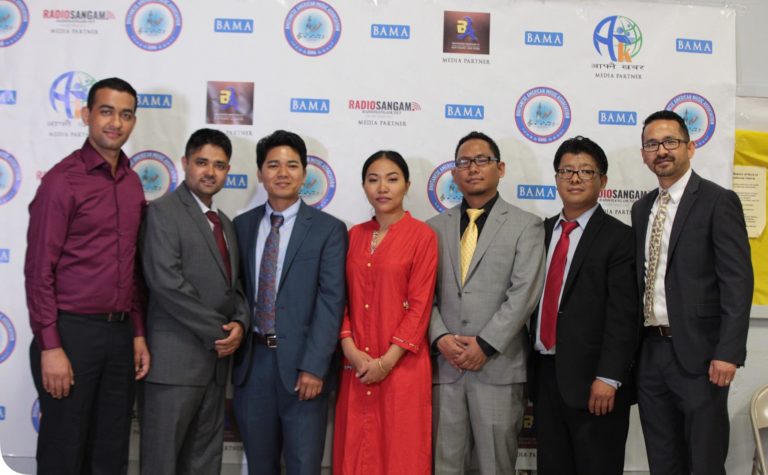
सम्मेलनले कायम राखेको कार्यकारी समितिको अध्यक्ष विकास राई, उपाध्यक्ष खेम रिजाल, सचिव लामिन तामाङ्ग, उप-सचिव नरेश गौतम, कोषाध्यक्ष टीका लामिछाने, र बोर्ड सदस्यहरू: अम्बर तुम्बापो सुब्बा र डम्बर खापुङ्ग हुनुहुन्छ । संस्थाका सल्लाहकारहरू पछि तोकिने संस्थाले जनाएको छ ।

What a success mean to us

Resettled Bhutanese, as a community is doing well, there are many success stories among us and BNS is keen to publish them. When we think intelligently, what should count as a success story? Beating the race for life from among 250 million competitors before birth is a huge achievement. And yet, we never seem to count our worth on that. Success in the traditional sense is how far you are in comparison to your reference. What is that reference for us? In this piece, I will try to ask that very same question in a slightly nonlinear fashion. I will jump here and there but bear with me!

We live in a culture where getting the third position among three is apparently an achievement. There are no dumb people anymore; they are just slow learners. People around you will never say your child is fat and you should stop giving him everything he wants to eat. Your child can be about as sharp as a sack of wet mice, but teachers will still tell he is doing fantastically well for someone whose parents do not speak English as the first language.

 I am going to be a parent, and it frightens me how can I be true to my kids? Should I celebrate the all mediocre bits of success or motivate them for more significant achievements? When I finished my school with first class grades in my class my father would look at my progress report and say he would want me to have better percentages next time. I never felt my dad was not recognizing my achievements. I always understood my dad was proud from deep inside, but he wanted me not to stop and keep working hard. Even today my dad is apparently not pleased with what I have achieved and thinks that I have a long way to go. The same approach will most certainly make me a bad, egoistic parent in today’s context. Should I be that parent who posts FB status with a photo and a text “the proudest parents of –My future kid’s name here–” for my kid graduating from a nursery school?

We are a community in transition What should indeed be rewarded and what should not, is a question relevant and applied to us as a community. Every small success story may sound like an achievement today, but we should also make sure we want to improve continuously as a community. And that probably merit a pride for all.  We eventually should stop using the trump card of “a former refugee” and measure us as an average American, European or Australian. A Facebook publicity of small achievements, especially those of kids and young people may not be an excellent thing. Digital footprints tend to remain forever. If every statement I made about myself during my young age were publicly available today, I wouldn’t be comfortable, let alone proud, to hear it again. Bearing a label of the smart guy can be a burden on its own. I know many who were known to be smartest among peers in younger age, nowhere to be seen later.

A community needs role models to be proud of — even a country does. The fight for “Buddha’s birthplace” proves my point. Not undervaluing the achievements of the current generation, I look forward to a resettled Bhutanese winning something prestigious comparable to a Nobel, an Olympic medal, an Oscar or a Grammy during my lifetime.  That may be an overly ambitious reference, but I know of a great Nepali poet who said, “Fly out to reach the moon”. I have been believing in this maxim since the fourth grade, when I first read that.

Shouldn’t we bother to be proud of achieving anything less? No.  I think we should look behind and see our progress now and then, but we should also prepare to move forward. As I said earlier, we should not always be a former refugee, but a citizen of the adopted countries – a new American or an English, a Dutch or a Norwegian.  Ironically, I am still a refugee!

Khem Raj Gautam was born in Lamidara, Tsirang Bhuatan, now living in  Randers, Denmark. He is the Ph.D fellow at Aarhus University. He can be reached at

k[email protected]

‘Played in dirty water, read in moonlight’-Rudra Timsina

 A refugee child who had never seen the switch of electricity or the remote of a television would have never thought he would be an engineer in his lifetime. How does a kiddo who cannot distinguish between TV and computer imagine being an engineer?

Mr. Rudra Timsina born in Bhutan and grown up in refugee camp and imagine all those?

Rudra with little smile on his face shared his stories that he had a lot of experiences where he walked bare foot to school, slept empty stomach at times in his life and had never seen diapers.

“I and my buddy used to play in dirty stagnant water, read in moon light and had passed winters in little thin sweater which was not good enough to cover the cold.”

Thanks to the education system initiated in the refugee camps by those visionary volunteers in the early 1990s helped young children like Rudra to shine today. Schools established with the motto ‘Education for repatriation’ has produced hundreds of Timsinas and they are excelling in their career in the third countries.

“I started informally going to school at an early age with my uncle, who was a teacher in the camp.”

“By the time I was officially enrolled, I had a good grasp in reading and writing alphabets in both in English and Nepali. Mathematics and science became my favorite subjects since my first grade and remain favorite until now. I studied up to tenth grade from New Horizon Academy in Sanischare Refugee Camp, holding first position in every grade. After 10thgrade, I joined Lord Buddha College in Biratnagar, Nepal and completed 12th grade taking science.”

“When I resettled in concord NH, I was the cashier at Sam’s club; I realized the power of education and joined College at NHTI concord.”

Rudra is sure that he could enter college system in US because of his early beginning in school, and that bore fruit for him.

“After completion of associate degree, I transferred to University of New Hampshire to continue my studies in electrical and computer engineering. I completed two more years there and received a bachelors degree. During my senior year at the university, I worked on a Quadcopter project. Our goal was to build a drone that is capable to transport about 1 Kg of weight and flies with given coordinates. Such drone can be used to transport light weight goods from one place to another (for instance medication)”

Rudra was in Germany  June-August in 2014 to participate in a research study on Human computer interaction (URC) funded by National Science Foundation.

‘The focus of our research was to determine the mental work load based on the contraction and dilation of our pupil. The application of this research was to find out how the external task (like talking on a cell phone) can affect driving ability.’

Rudra boasts of a publication with “Institute of Electrical and Electronics Engineers” (IEEE). The title of the paper is “A compact design of Switched line phased shifter for a phased array antenna”.

He presented this paper at a conference called “Progresses in Electromagnetic Research Symposium (PIERS) in Singapore in November 2017.

Rudra knows about his home country Bhutan only through books and stories, but he shares the same values, cultures and beliefs as fellow Bhutanese. So, he liked serving to the community in the capacity of office assistant at Bhutanese community of NH. Now he is in the board for the same organization which branded its name to building community of New Hampshire

“I was just having hope when I landed to this great land, everything was snatched but never stolen my hope. I’m working as an engineer at a local company, I have never known what internet is and had never used computer before in my life and now I’m working as being engineer.  Life took a  U – turn.”

His message to the forthcoming generations of high school graduates is very clear.  “Even though the third country resettlement was not a primary choice for many of us, we should take this as an opportunity and get most out of it. We should not take it for granted. College enrollment rate among our high school graduates is still low. I see most of our high school graduates seek  entry level jobs after graduation. Education is very important in transforming ourselves and our community and I advise our high schoolers to pursue the route of higher education for their dream job.

“You could be the one to make that big change and make this world a better place,”  he optimizes the future dream.

He borrows memories from his grandparents, parents and pictures to visualize Kokrey, Chirang Bhutan- the hamlet his parents were exiled from. “Like many others; my parents flee the country for a reason. Ethnicity, language, culture and traditional values are the inseparable elements in the life of an individual, community and what we call society. At the difficult times we remained one, we are one and consider one in terms of our rich culture and values. That is my identity and the community I am brought-up from.”

 

बामाको पहिलो सम्मेलन एट्लान्टामा हुँदै

न्यु ह्याम्सर । भूट्निज अमेरिकन म्युजिक एशोसियसन (बामा) को पहिलो सम्मेलन जर्जिया राज्यको एट्लान्टामा मे २६- २७ (शनिबार-आइतबार), २०१८ मा हुन लागेको छ । सम्मेलन स्थल ५१३५ ममोरियल ड्राइभ, स्टोन माउन्टेन, जर्जिया ३००८३ (5135 Memorial Dr., Stone Mountain, GA 30083) हो ।

सम्मेलनको हालको तदर्थ समितिलाई विस्थापित गर्दै नयाँ नेतृत्व चयन गर्दैछ । विभिन्न विषयमा कार्यशाला गरिने बामाले जनाएको छ । दोस्रो दिनको कार्यक्रममा गीत, नृत्यसहित नयाँ एलबम, भिडियो आदि सार्वजनिक गरिने कार्यक्रम छ । बामाले सर्जकहरूलाई नयाँ रिलिजका लागि अध्यक्ष विकास थुलुङ राई (४०४.२८७.६१८४), सचिव लामिन तामाङ्ग (७१६.६०२.६११३), उप-सचिव नरेश गौतम (५१३.३२८.८६३०) र बोर्ड अफ डिरेक्टरका अम्बर तुम्बापो सुब्बा (३३०.७८०.३०८८) मा सम्पर्क गर्न अनुरोध गरेको छ । बामाले देशभरका २ सय ५० भन्दा बढी गीत-संगीत साधक तथा सर्जकलाई इमेल पठाएको र कति जना आउनुहुन्छ भनेपछि तयारी गर्न सजिलो होस् भन्नका लागि इमेल जवाफ मागिरहेको छ ।

भूटानी-मूलका गीत-संगीत साधकलाई एकथलोमा ल्याउने प्रयास स्वरूप बामाको स्थापना सन् २०१७ जून १७ मा ओहायोको सिन्सिन्याटीमा भएको हो । स्थापनाकै बेला पहिलो सम्मेलनको निर्णय गरिएको थियो ।

तदर्थ-समितिको अध्यक्ष विकास राई, उपाध्यक्ष खेम रिजाल, सचिव लामिन तामाङ्ग, उप-सचिव नरेश गौतम, कोषाध्यक्ष टीका लामिछाने, र बोर्ड सदस्यहरू: अम्बर तुम्बापो सुब्बा र डम्बर खापुङ्ग हुनुहुन्छ । संस्थाका सल्लाहकारहरू: प्रताप सुब्बा, अमल थुलुङ्ग, टलमान मगर, शिव चम्लागाईं र भिम गुरूङ हुनुहुन्छ ।

National level conference for Bhutanese leaders

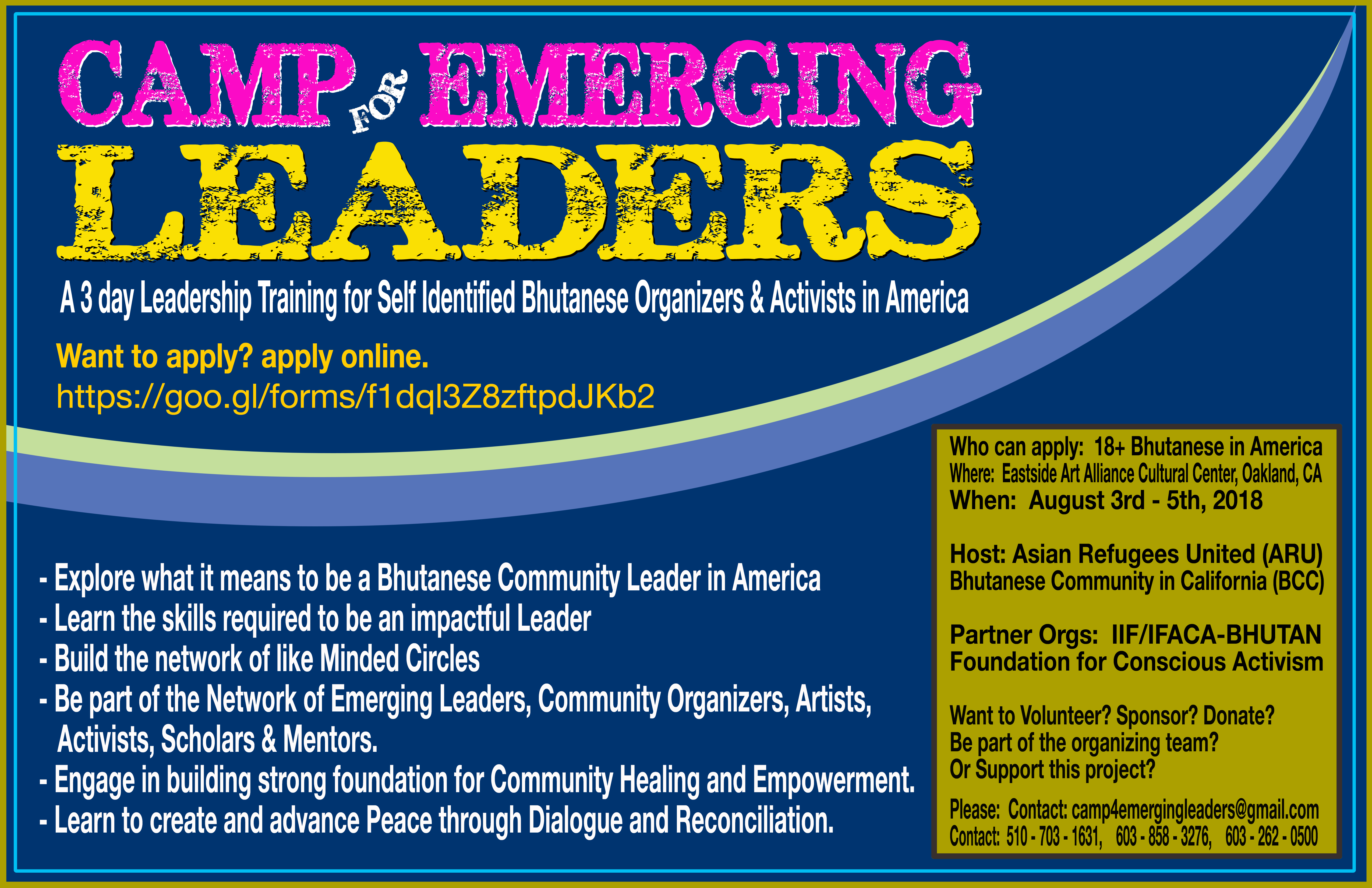
The Bhutanese Community in California (BCC) in association with Asian Refugees United (ARU), IIF/IFACA-BHUTAN, and Foundation for Conscious Activism (FCA) is hosting three days leadership conference for self-identified Bhutanese trailblazers of leadership. The conference will be organized August 3 to 5 this year.

According to Robin Gurung,  member of the organizing committee, the main aim of this leadership training is to explore what it means to be a Bhutanese community leader in America, engage in building a strong foundation for community healing and empowerment, and the best strategies to create and advance peace through dialogue and reconciliation.

Speaking to Bhutan News Service, Gurung said, “Keynote speakers, trainers, and experts to facilitate the seminars are drawn from the restorative justice department, mental health division, human rights organization, non-violence promoters, academia, arts, and spiritual activism.”

The organizers have open the online application for the Bhutanese diaspora living in the United States.

https://docs.google.com/forms/d/1T2hZGbZa_BQNa8fypANclqKQU8piKP8NCZi0hEVXpBY/ed

भाषा सिकाउने दोस्रो किताबका बारे

हाम्रो नेपाली भाषा भाग २ आएको छ । खिम खतिवडाले तयार पारेको यो पुस्तक अप्रिल १५, २०१८ मा आयोवाको डिमोइनमा सार्वजनिक गरिएको हो । किताबमा डा. लक्ष्मीनारायण ढकाल तथा लेखक / सम्पादक खतिवडाको भूमिका छ । हाम्रो नेपाली भाषा भाग १ को तुलनामा यमसा भूमिका छोटा पारिएका छन् । यो स्वागतयोग्य छ ।

यस भागमा व्याकरणमा बढी ध्यान दिइएको छ । परिशिष्ट पूरै शब्दावली र व्याकरणमा केन्द्रित छ । १३ वटा पाठमध्ये ४ संवाद, ३ गीत/कविता, २ गद्य/निबन्ध, ३ कथा, र एक जीवनी छन् । पाठहरू छोटा वाक्य र सरल शब्दमा लेखिएका छन् । पुस्तक ‘परिचय’ शिर्षकको संवादबाट सुरू भए पनि पहिलो पाठ लोकप्रिय बालकवि रामबाबु सुवेदीको लोकप्रिय ‘सात बार सात दिन’ हो । ‘मलाई चकलेट पनि’ शिर्षकको पाठमा अंकको ज्ञान र सामान खरिद गर्दा सूची बनाउन सिकाइएको छ, र यो आवश्यक हो । ‘रामको दिनचर्या’ मा समय-ज्ञान छ भने ‘मामाको कल’ मा नातागोता केलाइएको छ । ‘कागको जुक्ति’ ईसप (ग्रिकका कथावाचक) को लोककथा यहाँ पनि पढ्न सकिन्छ । ‘असल मान्छे बन’ मा बानी र स्वस्थ्य रहने आदतका विषयमा लेखिएको छ । ‘हाम्रा आदिकवि’ भनेर आदिकवि भानुभक्त आचार्यको जीवनी छ । गौतम बुद्धलाई सम्झने कथा ‘को ठूलो ?’ यस पुस्तकको अन्तिम पाठ हो । यसरी हेर्दा समग्रमा सामग्री समायोजन निकै कुशल ढंगले गरिएको देखिन्छ ।

सामान्य शुद्धाशुद्धिका ठाउँहरू भेटिन्छन् । जस्तो: सोमबार र सोमवार दुवै छन् । दुवै लेख्ने चलन भए पनि शिक्षक-शिक्षिकाले एकरूपता खोज्न सक्छन् । त्यस्तै सामान्य त्रुटी नदेखिएका होइनन्: भानुभक्तइलाई (पृ. ३४), उकछिन (पृ. ४१), फ्यँकिदिन्छन् (पृ. ५४), तालिक (पृ. ५६), सुनऊ (पृ. ६९), भूकाल (पृ. ७५) आदि । मनाउनु, बचाउनु, वाण वा बाण, गाउन आदिमा चन्द्रविन्दु चाहिँदैनन् । के के, कुन कुन, को को, कहाँ कहाँ आदिलाई छुट्टाछुट्टै लेख्न सकिन्छ वा बीचमा ‘-‘ राख्दा हुन्छ । तर पुस्तकमा ‘कस्ता-कस्ता’ लेखिएको भेटिन्छ । पूर्णविराम जोडेर लेखेको पाइन्छ तर विराम-चिह्न, उद्वरण-चिह्न, प्रश्न-चिह्न, भुईं-कटहर, राइस-कूकर, स्नान-गृह, प्रेसर-कूकर, वर्तमान-काल, भविष्यत्-काल लेख्दा बीचमा ‘-‘ राख्दा अलि स्पष्ट देखिन्छ, यो चलन हो । नानीहरूलाई बुझाउन सजिलो होला भन्ने आशय । यी जोडेर लेख्नु ठिकै मान्ने हो भने खाने कुरा, व्यवस्था अन्तर्गत किन छुट्टाछुट्टै लेखियो भन्ने प्रश्न उठ्छ । पैंचो लिएका अंग्रेजी शब्दलाई अंग्रेजी उच्चारणमै लेखिदिनु नानीहरूका लागि फाइदाजनक हुनसक्छ: टार्गेट (तारगेट), फेब्रुअरी (फरवरी), अप्रैल (अप्रिल), आदि । के अंग्रेजी महिनाका नामका लागि ‘नेपाली बृहत् शब्दकोश’ लाई आधार बनाउन सकिदैन र ?

करिब १०.९ इन्च लम्बाइ र ८.३ इन्च चौडाइको यो किताब भित्री ९६ आवरण ४ गरी १०० पृष्ठको छ । किताबको मूल्य १२ अमेरिकी डलर राखिएको छ । आवरण र भित्री पानाहरू रङ्गिन छन् । आवरण नन्दु खतिवडाले तयार पारेका छन् । भित्रका चित्र इन्टरनेटसहित विभिन्न स्रोतबाट लिइएका छन् । सन्दर्भ-सामग्रीको सूची अन्तिम पृष्ठमा देखिन्छ ।

हाम्रो पाठशाला, अमेरिका यो किताबको प्रकाशक हो भने वीणा ग्राफिक्स, वाराणसी (भारत) को नाम मुद्रणमा उल्लेछ छ । यो किताब सन् २०१८ मार्चमा छापिएको हो । पहिलो संस्करणमा एक हजार प्रति निकालिएको उल्लेख छ ।

(केही संशोधनसहित अक्षरिकाको मे २०१८ अंकबाट साभार)

‘It takes a village to raise a child’: from Sanischare camp to Stanford

Moving to the United States as a 10 year old, I was ecstatic for the opportunities that were ahead of me. So on April 23, 2009 when the day came for us to leave, I boarded the IOM bus with a smile on my face completely oblivious to the fact that I was in for one hell of a ride.

The date was April 27 2009, we landed in Minneapolis/St. Paul International Airport and our lives began anew. We were taken to our small two-bedroom apartment where we spent most of our time inside for few days, as the thought of getting lost shadowed on us. Then pneumonia hit and I had to be transported to the ER. In the first three days, I had realized one thing and that was “Community”.  If nobody had been there when we didn’t even have a phone to call 911, I don’t know if I would be writing this piece today or not.

Months passed and the financial crisis hit hard on my uneducated parents who were unable to find any source of income in an already weakened job force. Again through the help of some community members and World Relief Minnesota, we were able to find a way out of the issue. I had learned by this point that the “American Dream” had gone to shits and this was all going to be a nightmare. To add insult to my already injured mind, my mom’s medical conditions deteriorated and continued to do so for 5 more years. I spent nights in the ER went to school the next day and sometimes continued the cycle for weeks. Throughout all this, one thing was a constant and that was the fact that no matter how hard it got I always had people in the community that told me to keep at it and soon it will get better. People who visited us when things were bad and even if they were struggling always had some amazing insights to offer. These insights were reassuring and gave me the strength to preserver through the challenges.

People often time tell me “Thakur ta kati talented chhas” (Thakur you are so talented). I find this a misnomer for I feel that I don’t consider myself to be particularly talented. However, what I have found myself succeeding is by way of  diligence and hard work. Education has always been important to me so I made sure that no matter how dire the situation at home I did what I needed to do. Sometimes this meant that I would have to do my homework while waiting for my mom’s doctors to come and check on her or while helping my dad figure things out. There were times where I felt lost in my educational journey  because my peers had parents who could help them but  I on the other hand wished my parent had gone to school.

This taught me one of the most important lessons so far in my young life and that was “Don’t hesitate to ask for help”. So I followed just that as I at times camped outside my high school counselors’ offices, stayed after school getting help and challenging myself to the fullest extent in a high school that didn’t offer much. In following this, I found myself enrolled full time at high school and college while also working part time. Though this meant 3-4 hours of sleep a day for almost two years I continued to fight through the challenges. At the end of this rampant 2 years, I found myself graduating with an Associates Degree few weeks ago getting my high school diploma with a full ride to Stanford University majoring in Computer Science and International Relations with a Human Rights minor.

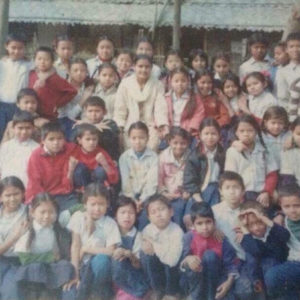
Thakur and friends at NHA/ Photo: Thakur Kharel

I don’t want to preach anything but I hope my story helps encourage other people younger than me to keep working hard. I am going to plead one thing and one thing only and that is directed towards the educated elders in our community. I have one request and it doesn’t require much. I ask you to reach out to the youths in our community particularly those whose parents don’t have the language skills to do much and see how you can help them. If I hadn’t had people like that in my community, I could very well have been selling drugs at this point. So please, if you can extend your hand out and be a mentor to those who may be struggling. Remember like an old African proverb said “it takes a village to raise a kid” – meaning that it takes an entire community of different people interacting with children in order for children to experience and grow in a safe environment.

I am extremely grateful to Mr. Parmananda Khatiwada, Mrs. Mangala Sharma, Dr. Chhabi Timisina, Mr. Rup Koirala and Dil Pokwal for everything they have done for me. I would also like to thank everyone who has ever done a kind deed for me, or spoken one word of encouragement to me, fo it has entered into the make-up of my character and of my thoughts, as well as my success. I am who I am today because of these people.

For readers to know:  Thakur was born in Sanischare refugee camp and attended New Horizon Academy (NHA), the school run by Caritas Nepal for Bhutanese refugee children. His parents are originally from Lamidara (Mendegang) in Tsirang Bhutan.

Editor’s Note: Have a diaspora story you’d like to see us tell? Know of someone in the community who is doing formidable work? We’d love to hear about them. We are in particular seeking stories about women and elders and how they’re integrating into their new communities.

केन्टकीमा ज्ञानज्योति नेपाली पाठशाला

 त्रिविक्रम अधिकारी / लेक्सिङ्गटन, केन्टकी

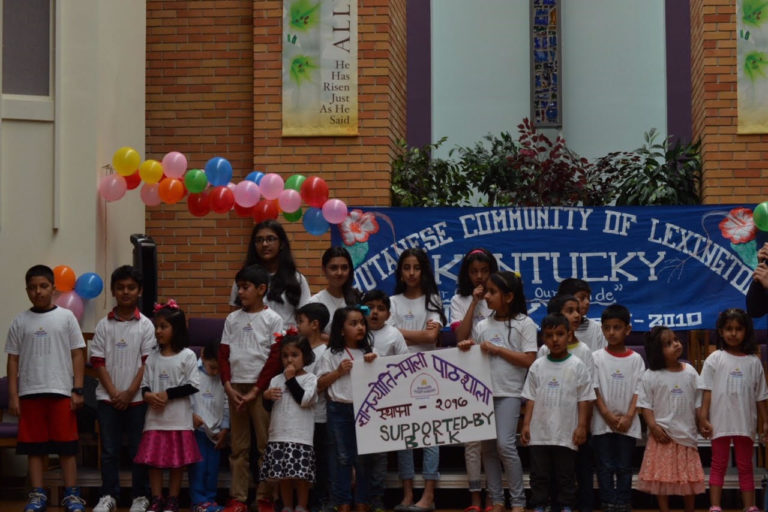
लेक्सिङ्गटन भूटानी समाज, केन्टकीले गत आइतबार अप्रिल २९ (वैशाख १६) मा एक सांस्कृतिक कार्यक्रमबीच नेपाली-भाषा पाठशालाको औपचारिक नामकरण ”ज्ञानज्योति नेपाली पाठशाला” गरेको छ । नेपाली नववर्ष २०७५ को शुभकामना आदान-प्रदान विशेष कार्यक्रममा नेपाली-भाषी भूटानी / नेपाली कलाकारहरूको गीत, नृत्य तथा साहित्यिक प्रस्तुतिहरू गरिएका थिए ।


समाजका अध्यक्ष बुद्ध अधिकारीको सभापतित्वमा भएको कार्यक्रममा केन्टकी रिफ्युजी मिनिस्टरकी संयोजक मेरी कब् प्रमुख अतिथि हुनुहुन्थ्यो । कार्यक्रममा ग्लोबल लेक्सबाट ईसाबेल टेल्लर, पाष्टर मार्क जोन्सन, साहित्यकर्मी शिवलाल दहाल, परदेशी ईन् प्याराडाइजका लेखक डा.गोविन्द रिजाल, गजलकार लक्की रासी, गायक गोविन्द फुँयल, विष्णु डुम्रे, मुरारी गुरागाई, सुसिला केसी, अर्जुन थापा, प्रनिम राई लगायतको विशेष उपस्थिति थियो ।

नेपाली भाषा संरक्षण हेतु नोभेम्बर २०१७ देखि सन्चालनमा आएको उक्त भाषा-कक्षामा ३ देखि १६ वर्षसम्मका विद्यार्थी रहेको शिक्षण सहयोगी चन्द्रा खरेल-बास्तोलाले बताउनु भयो ।

कार्यक्रममा बोल्दै अध्यक्ष बुद्ध अधिकारीले पाठशालालाई सबै लेक्सिङ्गटनबासीले सहयोग गर्नका लागि आव्हान गर्नुभयो ।

नेपाली/भूटानी कलाकारहरूको रमाइला प्रस्तुतिसँगै पाठशालाका बालबालिकाको सामुहिक नेपाली बालगीतले कार्यक्रमलाई अझ आकर्षित बनाएको थियो ।

चन्द्रा खरेल-बास्तोला, मन्जु दियाली, र त्रि-विक्रम अधिकारीको संयुक्त उद्घोषण अनि पवित्रा खरेलको स्वागत मन्तव्य रहेको कार्यक्रमको धन्यवाद-ज्ञापन विष्णु बास्तोलाले दिनु भएको थियो ।