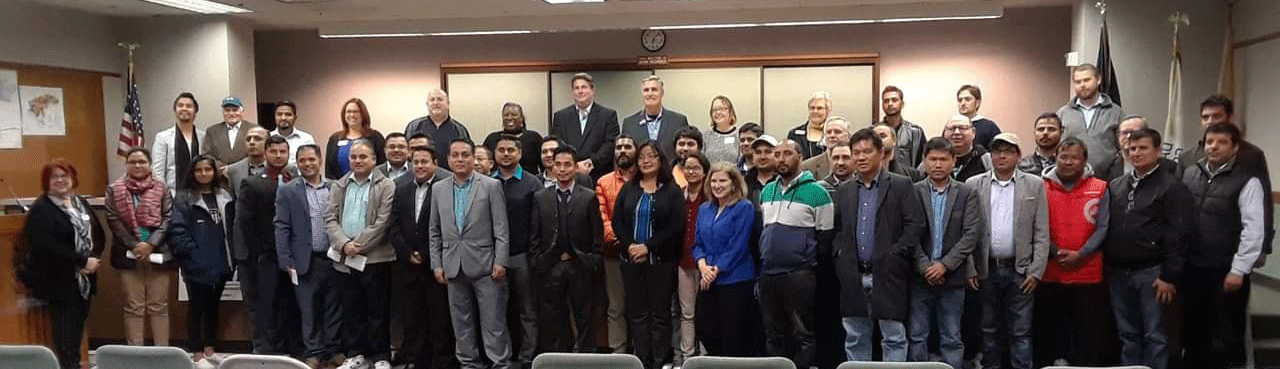
न्यु ह्याम्सर । पेन्सलभेनिया राज्यको ह्यारिशवर्गमा शनिबार (नोभेम्बर ३, २०१८) मा भएको १०९ औं लक्ष्मी जयन्तीका अवसरमा युवा गीतकार बालकृष्ण न्यौपानेको गीति-संग्रह ‘प्रशंसा’ को विमोचन गरिएको छ । कार्यक्रम कृतिको प्रकाशक संस्था त्रिवेणी साहित्य मञ्चले गरेको थियो ।
साहित्य स्रस्टा मञ्जु खड्काको अध्यक्षतामा भएको कार्यक्रमका प्रमुख अतिथि हरि फुँयाल, र विशेष अतिथि गंगा लामिटारे हुनुहुन्थ्यो । गंगा लामिटारे, हरि फुँयाल, अर्जुन रसाइली, आरबी खड्का, आदिले सामूहिक रूपमा कृतिको विमोचन गर्नुभयो भने मञ्चको विकासमा सहायता गर्ने भक्त घिमिरे, डि. बि. सारूलगायत २१ व्यक्तित्वलाई सम्मान गरिएको थियो ।
‘यो मेरो पहिलो पुस्तक हो,’ गीतकार न्यौपानेले भन्नुभयो, ‘आफ्ना शिक्षक लामिटारेकै हातबाट विमोचन गराउन पाएँ ।’ कार्यक्रम करिब एक सय जनाको उपस्थिति थियो ।
कार्यक्रममा महाकवि लक्ष्मीप्रसाद देवकोटाको जीवनीमाथि प्रकाश पारिएको थियो । रचना-वाचन, सांगीतिक प्रस्तुतिहरू भएका थिए । मञ्चका उपाध्यक्ष तथा विमोचन कार्यक्रम संयोजक केशव घिमिरे बैरागी माइलोको ‘सुसेली हाली बोलाउँदा’ को अडियो पनि सार्वजनिक गरिएको थियो ।
विमोचित कृतिमा न्यौपानेले ७२ वटा गीतलाई संग्रह गरेका छन् । नेपालमा मुद्रण गरिएको कृतिको मूल्य ९.९९ डलर राखिएको छ । ‘त्रिवेणी साहित्य मञ्चले निकालेको यो पहिलो कृति हो,’ बैरागी माइलोले भूटान न्युज सर्भिसलाई जानकारी दिनुभयो ।
मातृभाषा र साहित्यको विकासका लागि साहित्य मञ्चको स्थापना स्थानीय स्तरका स्रष्टाहरू समेट्ने गरी सन् २०१७ मा ह्यारिशवर्गमा भएको हो । मञ्चले महिना-महिनामा रचना-वाचन गर्दै आएको छ र तालिमहरू पनि चलाउँदै आएको छ । तेस्रो मुलुक पुनर्वासपछि आफ्नो भाषा–संस्कृति जोगाइ राख्न १३ डिसेम्बर २०१४ मा स्थापित युवाहरूको समूह ‘मातृभाषा संरक्षण समूह’ विश्वभरका स्रष्टा समेट्छ भने मञ्चले स्थानीय स्रष्टा समेट्ने गरेको बैरागी माइलोले बताउनुभयो ।
(कोइराला, अक्षरिका नेपाली न्युजलेटरका सम्पादक पनि हुन् ।)
Bhutanese nationhood needs to be well defined. It should encompass a broader sense of the term which is inclusive of the aspirations of all the peoples in the east, west, north and south alike not just the rulers and it must be in the best interest of the nation.
What is in the best interest of the nation anyway? Given the Bhutan situation, the idea of nationhood must include all those people who are rightfully the tillers of that soil and serving the nation in one way or the other. The concept of nationhood seems like being entrapped in a cocoon which needs to burst open to realize the real world. It is only through the realization that the common man will get empowered to take charge of his rights and duties as a true citizen.
Many of the times the intellectuals with the vested interests or those called statesmen- project such a narrow sense of reality that they put the whole country at stake. It is time all people in the country, in the exile, realize the gravity of the situation, fathom the depth of the issue and realize these as the shadows of the mistaken past which have come down to haunt the minds of the young generation of Bhutan today.
The present politics in Bhutan is no different than the narrow-minded politics of casteism, discrimination and a false notion of nationhood prevalent in some Indian States like West Bengal; in other words- a copied system. West Bengal system of governance does not recognize the value of human dignity and racially discriminate against the minorities who are undoubtedly the bearers of Indian nationhood. It must be remembered that during the southern Bhutanese uprising in the early 1990s, the fourth King Jigme Singye Wangchuk invited the Chief Minister of West Bengal, Jyoti Basu to Bhutan.
What was weird was that King himself walked half a kilometer while receiving Jyoti Basu in the Paro Airport. Does the protocol call for that? He was definitely not receiving the President of India to whom he would be sharing equal status. To drive the point home, he wanted to influence the Chief Minister to crack down upon the Nepali speaking south Bhutanese dissidents in the border.
While on a human rights campaign, in Madarihat, Duars, India in the early 1990s, one highly respected intellectual Gurkha popularly known as MailaBau illustrated to this writer that Bhutan’s one nation one people policy is like unfeathering all the birds and attaching the feathers of the only raven on it. Maila Bau lived in Madarihat, Jalpaiguri District of West Bengal bordering southern Bhutan. He even disclosed how petty Indian leaders, reporters, journalists, and hooligans were invited to Bhutan, given a huge party and paid to speak, create disturbance in the border or write against the movement for human rights and democracy in Bhutan.
Another equally appalling situation is how under the influence of high government officials in Bhutan, the BODO Militants from Assam were invited ostensibly to crush the south Bhutanese movement. I was at the Indo-Bhutan border in Galephu for my personal work, then; could witness supplies being transported to jungles hideouts in trucks. The truckloads of food and other supplies were transported in the government vehicles to the militant hideouts in Bhutan. It boomeranged!! The King himself had to take the lead and inspire people to fight the militants back.
Lessons to Learn:
It is high time Bhutan think- what the copy paste of West Bengal style of governance may result to? The October 28, 2018 issue of the National Herald quotes Prof. SD Muni as saying – “If the Chinese develop diplomatic ties with Bhutan, they would be able to help Bhutan diversify much faster.”
The pseudo vs the real sense of Nationhood deserves rethinking to keep Bhutan secure, prosperous and peaceful.
The author, who is based in Des Moines, IA, is a Human Rights Activist of Bhutan, and one of the contributing authors for Bhutan News Service.
Editor’s Note:The views and opinions expressed in this article are solely those of the author, and do not necessarily reflect the official position of the BNS.
In May of 2013, and April and July of 2016, Bhutan’s National Daily, Kuensel reported that there were separate fatal incidents of mushroom poisoning in Bhutan. The harvesting of wild plants as pabulum is a means of sustainability in rural communities. This culture has been there for a long time in Bhutan and the people who have lived and left the country due to the political crisis in the 1990s have been resettled in different countries in the world, but still, they have been bearing the trend.
There were separate cases of such poisoning incidents among the resettled Bhutanese in the United States. Recently, some Refugee stakeholders in Ohio have been made aware of at least eight resettled Bhutanese people who became severely ill from harvesting and eating wild mushrooms. Among the affected individuals, one was a child while two of the adults needed liver transplant. The Bhutanese Community Association of Akron (BCAA) leaders made a considerable effort to inform the community folks via social media, yet it seemed, few people paid attention to it. The incident also hit the news locally (WCPN), but very few Bhutanese Americans have heard this message through such means. A similar incident took place in Scranton, Pennsylvania in July 2011 affecting a family that led one of the family members to have a liver transplant but no media covered it.
A mushroom known as Death Angel. Source: https://en.wikipedia.org/wiki/Amanita_ocreata
Although, ingestion of wild and potentially toxic mushrooms is frequent in the United States and many other parts of the world [3], searching and eating wild mushroom including other wild green vegetables sometimes occur in major resettlement sites among refugees, primarily Bhutanese and Burmese. They mistakenly pick poisonous North American mushrooms thinking that they are the same ones as the edible mushrooms in their home countries. One of the mushrooms is known by different names in the US such as Death Angel, Destroying Angel, or Angel of Death” and some are “Death Cap.” Certainly, like its name, just seeing the mushroom (figure 1), people who are used to eating them would be lured to reap it and easily get deceived not knowing how risky it is.
Russula subnigricans, Source: Cho et
The consequence of eating the wild mushrooms like Russula subnigricans can be deadly causing Rhabdomyolysis – a breakdown of muscle tissue that releases a damaging protein into the blood including Acute Liver and Kidney Injury, Cardiogenic Shock, and Death [1]. The common symptoms are nausea, abdominal pain, and diarrhea which generally occur five to twelve hours after eating a poisonous mushroom. The symptoms may improve for some time, but it will return and get worse. The person affected is likely to suffer liver and kidney failure leading to death [2]. Even if the person survives, treatment is costly and agonizing especially if liver transplantation is required. For this reason, there are warning signs posted yet Bhutanese people are less aware of it.
Caution:
If you are not sure that a mushroom that you see or pick from the forest is safe to eat, do not take a chance.
Even if you think it is safe, there is no reason to put your health in danger without approval from food experts.
Always opt for the cultivated vegetables that are available in the food stores because they are regulated and approved by the government’s food department like United States Department of Agriculture (USDA) in the US.
Now, it has become the community leaders’ responsibility to educate the communities in various regions working together to make a difference. Perhaps, developing cautionary materials including short videos on the dangers of using wild plants, and even animals to their health would prevent from happing similar accidents in the future.
Reference
Jong Tae Cho and Jin Hyung Han, 2016. A Case of Mushroom Poisoning with Russula subnigricans: Development of Rhabdomyolysis, Acute Kidney Injury, Cardiogenic Shock, and Death. http://dx.doi.org/10.3346/jkms.2016.31.7.1164 • J Korean Med Sci 2016; 31: 1164-1167
KW Ma and, Kenneth SH Chok et al.2017.Liver transplantation: a life-saving procedure following amatoxin mushroom poisoning
William E Brandenburgh and Karlee J Ward. Mushroom poisoning epidemiology in the United States.2018
न्यु ह्याम्सर । पेन्सलभेनिया राज्यको ह्यारिशवर्गस्थित भूटानी समुदायले आगामी निर्वाचनका उम्मेद्वारहरूसँग शनिबार (अक्टोबर २७, २०१८) छलफल गरेको छ । स्थानीय स्वाटारा टाउनशिप म्युनिसिपल बिल्डिङ्गमा भएको छलफलमा अध्यागमन, स्वास्थ्य-सेवा तथा बिमा, समुदायका मानिसले झेलेका कानुनी अप्ठ्यारा आदि विषय उठाइएका थिए । अमेरिकामा मध्यावधि निर्वाचन नोभेम्बर ६, २०१८ मा हुँदैछ ।
करिब दुई घन्टा र आधा चलेको यस किसिमको पहिलो चुनावी छलफलमा १ सय जतिको उपस्थिति थियो । सवाल-जवाफले समय लिएकाले निर्धारित दुई घन्टाको समय लम्बिएको थियो । भूटानी समुदायले अल्पसंख्यकलाई विभिन्न क्षेत्रमा समावेश गर्नेलाई मतदान गर्न सकिनेमा जोड दिएको थियो । छलफल कार्यक्रममा कंग्रेसका उम्मेद्वार जर्ज स्कटसहित स्थानीय तहका ६ उम्मेद्वारको उपस्थिति थियो ।
छलफल कार्यक्रम भूट्निज कम्युनिटी अफ ह्यारिशवर्ग (बिसिएच) ले संयोजन गरेको हो । संयोजक संस्था बिसिएचको स्थापना सन् २०११ मा भएको हो । समुदायका तर्फ बाट पदम रिजाल, डा. खेम अधिकारी, विश्वनाथ क्षेत्री, टीका ढुंगाना, विनय लुइटेल, लक्ष्मण दुलाल, टेक गुरूङ्ग, र जीवन अधिकारी गरि ८ जनाले प्रतिनिधित्व गर्नुभएको थियो ।
”यसपटक डेमोक्रेटिक पार्टीका उम्मेद्वारहरूसँग बस्यौं । रिपब्लिकन पार्टीका उम्मेद्वारहरूसँग बस्ने सोचेका छौं । तर निर्वाचन नजिक आइसकेकाले भ्याइन्न की भन्ने छ,” आयोजक संस्थाका संस्थापक अध्यक्ष टीका ढुंगानाले बताउनुभयो ।
यो निर्वाचनले ४ सय ३५ प्रतिनिधि-सभा (हाउस अफ रिप्रजेन्टेटिभ) सदस्य , ३५ सिनेट, ३९ गभर्नर, र स्थानीय प्रतिनिधि छान्दैछ । ह्यारिशवर्गमा १५ हजारभन्दा बढी नेपाली-भाषीको बसोबास छ भने उमेर पुगेकामध्ये करिब ६० प्रतिशत मतदान दिन योग्य हुनुहुन्छ ।
पेन्सलभेनिया राज्यका हाल दुई सिनेटमध्ये एक-एक जना दुवै दलका हुनुहुन्छ, १८ हाउस अफ रिप्रजेन्टेटिभका सदस्यमध्ये १० रिपब्लिकन, र ६ डेमोक्रेटका हुनुहुन्छ भने २ स्थान खाली छ । पेन्सलभेनिया राज्य आकारमा ३३ औं भए पनि ६ औं घना आवादीको छ ।
A Pardesi in Paradise, by Dr. Govinda Rizal movingly describes the author’s extraordinary journey, the quest for identity, equality, and justice. The pages in this book repeatedly remind readers of a story of injustice, anguish, and worries, struggle for survival, search for acceptance and contradictions. And yet, this book is a cover story of thousands of the expelled Bhutanese who are outside Bhutan. Whether as a representative story or as a memoir of an individual, this book excites curiosity aroused by the smart use of flashbacks, dilemmas, scarcities, fears, and paradoxes.
The narrative structure is simple and easy to understand. The book is authentic at its core and the stories are narrated in a most eloquent manner. It gives readers a heartfelt sense of what it is like to grow up in the dictated environment, and the pains of statelessness and living a refugee’s life full of dire situations. Rizal strives in these pages to ground his ideas on the Royal Government of Bhutan’s two faces. On the one hand, the RGoB is branding Bhutan as a peaceful and the happiest country in the world and on the other the same government has evicted over 110,000 of its own citizens from the country. The royal claim of happiness is at the expense of thousands of innocent citizens who were uprooted from their homes. Bhutan is truly a nation of silent sufferers!
Rizal presents the arguments that, wherever they are, Bhutanese are always guided by optimism and hope, and sincerely look for better ways to combat real problems with limited resources. They survived in refugee camps against the RGoB’s will. The RGoB wanted these people to disappear in India or Nepal after the eviction, instead, they organized in seven refugee camps in Nepal under the aegis of United Nations despite unyielding life and death situations. Now, many of these people, once rejected and abused by the RGoB, are living a dignified and productive life in many developed countries where they are contributing to their communities.
Readers can analyze this book through different lenses: political movements in Bhutan; violent suppression of people by the Bhutanese regime; controlled and guided life of people who are still inside Bhutan; the making of a refugee; invaluable contributions of leaders in organizing refugee camps, pseudo-democracy in Bhutan; life after third-country resettlement; uncertain future of those Bhutanese still in the refugee camps in Nepal; and more.
Rizal has analyzed the Bhutanese refugee issue so thoroughly that after reading A Pardesi in Paradise, one can have a better understanding of the RGoB’s underlying motives in removing its own citizens. The author has offered his firsthand experience of the important milestones of the journey of a refugee through various events and stories. A reader can feel how the RGoB instigates its exceedingly insolent and wild army and militia in southern Bhutan to evict the people and confiscate properties with the single goal of erasing the heritage and footprints of lhotshampa from Bhutan.
People have not yet forgotten the fundamental mission of erasing the identity of some sections of Bhutanese from the country by the RGoB. In 1927, Pashupati Adhikari, the village headman of Lamidara, Chirang was badly beaten up and finally banished from the country simply because he raised voice against the excessive land tax (Strawn, 1993). When J.C.Gurung and S.B. Gurung formed Jai Gorkha Solidarity Front in 1947 for political change in the country, they were kicked out of the country along with their fifteen party cadres (ibid). Mahasur Cheetri of Bhutan State Congress was allegedly packed up alive in a leather bag and thrown into Sunkosh River to die in 1951 when he raised voice for democracy (ibid). Thousands were expelled from Bhutan and hundreds were imprisoned and killed in 1990 democratic movement.
H.H. Dodrupchen Rinpoche of Nyingmapa Sect was put into detention in 1997 simply because his followers sought RGoB’s noninterference in religious practices. In all the political movements in Bhutan, the RGoB always used excessive military force to suppress people’s voice. In 1953, King Jigme Dorji Wangchuck used the first national assembly of Bhutan to convert southern Bhutanese from Hindus to Buddhist but this move was not popular (Dhakal & Strawn, 1994). King Jigme Singye Wangchuk imposed the requirement to wear Drukpa clothing, Gho and Kira, across Bhutan soon after he ascended the throne in 1972 and branding them as national dress of the kingdom.
Much has been said and written on Bhutanese refugee issue but many of these documents and literature contain imbalanced and misleading information on the issue. The RGOB shrewdly portrayed in international communities its innocence in generating refugees while shifting total blame on the refugees. Rizal’s book helps to fill these voids. The author not only described the refugee issue but he has also provided a comprehensive insight into Bhutan’s system of governance and the Bhutanese political crisis.
Rizal referred Nepali-origin people living in southern Bhutan as “Bhutanese” and the population of the northern parts of the country as “Drukpas”. He revealed the discrepancies in the treatment of these people at different times by the RGoB for its own political gain. A Pardesi in Paradise outlines the innumerable struggles of evicted Bhutanese in exile. The author discussed the refugee-making-story of the Bhutanese regime. He described the historical development of the refugee problem and various tactics adopted by the Bhutanese regime at different times in expelling its own citizens from the South and the East.
A Pardesi in Paradise prudently reveals India’s indifference from the beginning in the Bhutanese democratic movement for its own benefit. India’s role in this regard is mysterious. When it was hosting thousands of Tibetan refugees, the largest democracy did not allow a single Bhutanese refugee to take refuge in its country, nor did it allow them a way back home. It always stood negative, aloof and indifferent toward Bhutanese people’s aspirations for inclusive democracy and constitutional monarchy. India apparently views Bhutanese democratic movement as an infiltration of ethnic elements and it does not want to disturb the ethno demographic balance in the region. In other words, India always fears that if there is true change in Bhutan, it would add fuel to the ongoing Gorkhaland movement in the hills and instigate Sikkim.
The writer has precisely illustrated that in the evolution of creating a one-track language and culture, Bhutanese rulers enforced that all people of Bhutan must renounce their own heritage and instead accept the Drukpa culture and traditions. Advancement of the national language, Dzongkha, obviously took center stage at the expense of other languages.
The book takes readers through the chronological illustration of the regime’s disguised intent of depopulating its own citizens from banning Nepali language from school curriculum as early as 1980 (Van Driem,1994), adoption of Greenbelt policy in 1984, forceful imposition of ‘one-nation-one people’ policy in 1989, targeted census in the south in 1989, and various other discriminatory policies (Mathew,1997).
The author mentioned how Bhutanese were classified into seven categories (F1-F7) in the 1988 census and its aftermath. The wound caused by the RGoB’s discriminatory and forceful efforts of eviction planted lasting negative impacts in the lives of these refugees. Rizal highlighted the magnitude of the mental health crisis in this population caused by the forced migration. He mentioned the death of Sita Mothey by suicide in Bhutan as well as many others in the diaspora due to depression, anxiety, alcohol misuse and post-traumatic stress disorder as a result of the government’s atrocities and evictions from their own country where they lived for generations. The author detailed the pang of family separation after the 1951, 1990 and 1997 democratic movements.
This memoir contains a plethora of information on Bhutan and the Bhutanese but the author failed to mention the contribution of ten leaders including Tek Nath Rizal and Bidhyapati Bhandari, two Bhutanese representatives of the Royal Advisory Council of Bhutan who approached the 4th Monarch to nullify the discriminatory policies in 1988. The author extensively discussed various movements launched by the Bhutanese inside and outside the country for establishing human rights and democracy in Bhutan at different times. Yet he failed to lay out the root causes of their failure. There are a few typos and it is expected that these can be improved in the future edition.
There is no doubt that the author has proven to be a transformational leader–one who can bring people together, through his various innovative projects while he was in the refugee camp. However, in these pages, the author did not mention what should be the future course of Bhutanese in the diaspora. The author justified his sagacity in coining the title of the book, A Pardesi in Paradise by highlighting his bitter experiences of statelessness from his own country of birth Bhutan to any country; no matter how developed his adoptive country is, he bravely expressed his sense of receiving treatment as Pardesi, a term adapted from Nepali “an outsider”.
Mr. Khatiwada lives in New Hampshire. He can be reached at [email protected]
References:
Strawn,Christopher (1993). Falling Off the Mountain: A Political History and Analysis of Bhutan, the Bhutanese Refugees and the Movement in Exile (unpublished dissertation submitted to the University of Wisconsin.
Dhakal, D.N.S and Strawn, Christopher (1994). Bhutan: A Movement in Exile, Jaipur, India.
My first impression on the US State Department country report on Bhutan 2017 is that the report largely speaks Bhutan government’s version of the human rights situation. The rights of the silently suffering people from the eastern and southern Bhutan have been continued to be kept in the dark. They have not at all been interviewed or considered despite the glaring fact that Bhutan Government had expelled one-sixth of its population out of their generation of homes in Bhutan. It appears that the officials not at all visited especially southern Bhutan to take note of the ground situation.
Bhutan’s democracy is not democratic in the real sense of the term. The fourth king Jigme Singye Wangchuck selected two individuals from within the circle of the Royal relationships namely- Jigme Y Thinley, a royal in-law, and Sangay Ngedup, maternal uncle of the present king and instructed them to form two political parties in 2007. Jigme Y Thinley was assigned to form Druk Phuensum Tshogpa (DPT) and Sangay Ngedup to form People’s Democratic Party (PDP). And, the subsequently staged general elections sent the two parties to the power from 2008 to 2018.
To hoodwink the outside world- other people were given the option to form political parties under the underlined conditions set forth by the palace. But, those parties other than DPT and PDP were made minority parties in the pretext of primary elections or Election Commission of Bhutan disqualified without letting them seek people’s voice. It took good ten years for the third party to outshine; Druk Nyamrup Tshogpa (DNT) that was trying its luck since 2013 finally won the general election on October 18, 2018.
The ruling class and a coterie of the elites have stage-managed a system under the brand name ‘Democracy Gift from the Throne’ as a showpiece to the world community. The sole power and majority of the representations are arranged by the coterie of the elites-the presence of members from other ethnic groups has always been a distant dream.
Just for an instance-Southern Bhutanese constitute a significant number in Bhutanese population – whereby their proportionate representation has always been a question? Their presence in the constitutional bodies is zero. The majority of Bhutanese do not even know the meaning of the names of the parties. Does that ensure racial equity?
The security forces – Royal Bhutan Army and Royal Bhutan Police are reported cautiously posing fear mainly among the southern Bhutanese with an intent of subjugating them to the whims of the rulers. The State report is silent on how the Bhutan government practices the policy of Drukpaization in the name of Bhutanization.
It is hard for someone to comprehend that all the citizens are required to have painted their houses in the Tibetan style preferred by the ruling class; although other ethnic groups have their own cultural designs to paint. The villages in southern Bhutan which used to have Nepali names from the time those places got their first names have been renamed erasing the age-old inherited history. The human rights situation report does not throw any light on the fact that the language and culture of the southern Bhutanese are banned for no reasons- resulting in the gross violation of fundamental human rights.
An excerpt from Bhutan: 2017 Human Rights report reads, “Nongovernmental organizations (NGOs) claimed that 28 political prisoners remained in Chamgang Central Jail in Thimphu. Regional media reports corroborated these figures. Family members of the prisoners are allowed to meet their relatives and receive a travel allowance paid by the ICRC. Most political prisoners were Nepali-speaking persons associated with protests in the early 1990s. … No international human rights groups seeking access to monitor prisons during the year. The International Committee for the Red Cross (ICRC) has not renewed its memorandum of understanding with the government since 2012 and did not request access to prisons during the year.”
Requesting anonymity many people state that the country is ruled with fear-psychosis that is silently felt notably by the eastern and southern Bhutanese and there does arise a situation where the state acts with impunity. In practice there is no freedom of assembly, expression or association; just, all these terms are meant for writing in the constitution. If it is seen to be there it is definitely with the consent of the government rather a dramatized situation.
One of the main points missed in the state report is that the Bhutan Government forced one-sixth of its population; mainly Nepali speaking from the southern districts and Sharchops mostly from the eastern districts in the 1990s. Their relatives in Bhutan still suffer for no reason.
Bhutan Government enacted the racist 1985 Citizenship Act which was retroactively implemented through a census survey in 1989 turning citizens into illegal immigrants overnight. All these citizens were genuine Bhutanese under the 1958 Law and the 1977 Citizenship Act. This is Bhutan government’s ploy to use the 1985 Citizenship Act as a seedbed of illegal immigrants. Legal experts assert that Bhutan’s Citizenship Law is a prescription for statelessness.
The report also very categorically states that there is freedom to participate in the political process. But who are the voted? They do not represent their community but individuals secretly approved by the government – it is more selection than election. This must be reminded again that the first thing to fix in Bhutan is proportionate representation on the basis of the ethnic population – in the legislative, executive and judiciary. One can easily see that Bhutan is a case of racial discrimination very shrewdly implemented by those in power. Why is an independent human rights organization doesn’t exist in Bhutan? The Human Rights situation report is silent on human rights organization(s) and is incomplete.
The author, who is based in Des Moines, IA, is a Human Rights Activist of Bhutan, and one of the contributing authors for Bhutan News Service.
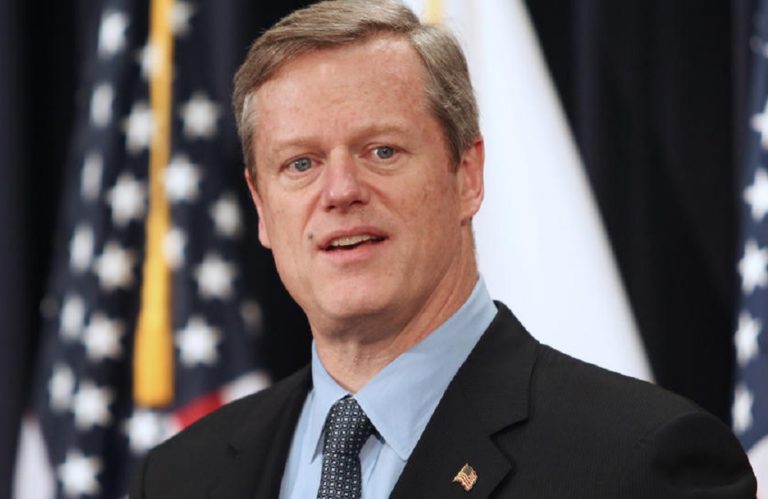
Local Bhutanese organizations in Western Massachusetts jointly submitted a memorandum to the Governor of the Commonwealth of Massachusetts Charles D Baker seeking his attentions towards challenges faced by the resettled Bhutanese in the region.
A two member delegation comprising Narad Adhikari from Hindu Sanatan Sewa Samaj (HSSS) and Bhuwan Gautam of Bhutanese Society of Western Massachusetts (BSWM) submitted the memorandum to governor Baker on October 11.
MA Governor Charlie Baker (Picture: Lifesitenews)
One of the delegates Gautam informed that the memorandum was submitted through the Governor’s Western Massachusetts Office Director, Patrick Carnevale.
The Memorandum included several challenges that the resettled Bhutanese have been facing since they arrived in this country. It highlighted that lack of space for worship and exercising religious, cultural and other social activities, difficulty to obtain learner’s permit due to language barriers for those who wanted to be a new driver as well as for those who were already a driver back in Nepal or Bhutan, limited information on the resources and services provided by the local agencies, and lack of information on civic engagement including voting rights and electoral process as a citizen are some of the challenges.
The duo also asked the governor to provide available resources through the Bhutanese Community organizations to address and overcome the challenges faced by the community members. The resources sought by the Bhutanese organizations included: funding to teach English as a Second Language (ESL) and preparation for U.S. Citizenship, resources to educate community members and the families with chronic mental illness or other health problems to improve their conditions, provide case management, assist members of the community to navigate the appropriate health care system, and resources to organize civic engagement activities.
According to Gautam, director Carnevale gave full attention to the challenges raised by the Bhutanese organizations and assured that he would forward the memorandum to governor Baker soon.
“Director Carnevale also told us that he will discuss our matter with the Springfield City Mayor Domenic Sarno to secure a public space for the Bhutanese Community.”
Hari Khanal from Springfield, MA contributed this report to BNS
न्यु ह्याम्सर । विश्व भूटानी हिन्दू संगठनले आइतबार (अक्टोबर १३, २०१८) एक विज्ञप्ति जारी गर्दै २०७५ सालको विजया दशमी (दशैं) र शुभ दीपावलीको पुनीत अवसरमा विश्व कल्याणका साथै समस्त मानवको सुस्वास्थ्य, दीर्घायु एवम् उत्तरोत्तर प्रगतिको कामना गरेको छ ।
अध्यक्ष कमल धिमाल तथा प्रवक्ता टेकनाथ रिजालको नाम समावेश विज्ञप्तिमा अगाडी भनिएको छ, ”आफ्नो खुशीका निम्ति र चाडपर्व मनाउने बहानामा प्राणीहरूको हत्या गरी सामाजिक सञ्जालमा पोष्ट नगर्न समेत अपिल गर्दछौं । साथै सम्पूर्ण धार्मिक संस्थाहरूमा जनचेतना गराइदिनु हुन समेत अनुरोध गर्दछौं ।”
विश्व भूटानी हिन्दू संगठन (Global Bhutanese Hindu Organization) को स्थापना सन् २०१३ मा भएको हो । यो अमेरिकामा गैरनाफामुलक संस्थाका रूपमा दर्ता छ ।
सन् २०१८ को सेप्टेम्बर अन्तसम्म अमेरिकामा पुनर्स्थापित भूटानीको संख्या ९६ हजार १ सय ४२ पुगेको स्टेट डिपार्टमेन्टको तथ्याङ्कले उल्लेख छ । उक्त डिपार्टमेन्टको अर्को तथ्याङ्कअनुसार पुनर्स्थापित भूटानीमध्ये सबभन्दा धेरै हिन्दू धर्मावलम्बीहरू ५५ हजार १ सय ६९ (५७.४० प्रतिशत) हुनुहुन्छ भने २१ हजार १ सय ९३ बौद्ध धर्मावलम्बी (२२.०५ प्रतिशत), १० हजार ४ सय ६६ इसाई (१०.८९ प्रतिशत), र ९ हजार २ सय ७७ किराँत धर्म (९.६५ प्रतिशत) मान्नेहरू हुनुहुन्छ ।
न्यु ह्याम्सर । गायक विकास शिवाको नयाँ र्याप गीत ‘द रेफ्युजी’ आज (अक्टोबर १३, २०१८) मा युट्युबमा आएको छ । उहाँको यो गीत पेन्सलभेनियाको पिट्सवर्गमा आयोजित एक सांस्कृतिक कार्यक्रममा आज सार्वजनिक गरिएको हो । उहाँको यसअघि गत फेब्रुअरीमा आएको ‘भूटान १९९०ज ट्रयु बेस‘ शिर्षकको र्याप गीत निकै चर्चित भएको थियो ।
देश छाडेपछि शरणार्थी जीवन, परिस्थिति, के कसरी के के भोगियो ? साथीभाइको मोह, रमाइला पल, दुःखका दिन सुनाइएको छ । गीत हेर्नेहरूलाई गीतले एकपटक शिविरमा पुर्याउँछ । उहाँ भन्नुहुन्छ, ” यसमा राजनीतिका कुरा छैनन् । अघिल्लो मेरो गीतमा थियो । यसमा दु:ख, पीडा छ । पुर्खाको देशमा शरणार्थी भएको पाइँदैन । हामी त पुर्खाको देशमा आफू शरणार्थी बन्यौं, त्यही कथा छ ।”
गत मार्चबाट लेख्न थालेर अगस्तमा करिब सकिएको गीत तयार भएर आउन डेढ महिना लागेको उहाँ बताउनुहुन्छ । ”अडियो र भिडियो त करिब साता-दश दिनमा तयार भयो”, २६ वर्षे शिवाले भन्नुहुन्छ, ” भूटान १९९०ज ट्रयु बेस जति नै उचाइको गीत हो । नयाँ पुस्तामा आफ्नो इतिहास जीवित राख्ने यो गीत प्रयास हो ।”
रिद्म क्रियशनको सहयोगमा तयार पारिएको यो र्याप ४ मिनेट ५० सेकेन्डको छ । शिवाले रिद्म क्रियशनका कमल राई, सुवास तामाङ्ग, बुद्ध धिमाल, नानु साम्पाङ्ग राई तथा मुख्य प्रायोजक वर्षा ज्वेलर्सबाट विशेष सहयोग पाउनु भएको छ ।
Bhutan is warming up to go to the polls for the third time. The atmosphere is one of hope, excitement, heat, anxiety, and curiosity. Past experiences indicate the voters love ‘change’. Come October 18th and they will speak that ‘change’ again through the ballot.
Dr Lotay and Dr Pema (Source: Internet)
Of the four political parties competed in the primary round, only two parties – Druk Phuensum Party (DPT) and Druk Nyamrup Party (DNT) get a chance to compete in the general election. In the primary round, DNT won the popular vote but lost on constituencies; whereas the DPT won more constituencies but lost on popular vote. Each party had its strength aligned in different edges. DPT was strong in constituencies, DNT was strong on popularity. This sets up an interesting political reality – that strength and popularity do not necessarily go together, and that popularity may not always translate into electoral success. Though ranked number one and number two by the media, it is hard to say which party is the clear winner. The ruling party – People’s Democratic Party (PDP) was ranked third and Bhutan Kuen –Nyam Party (BKP) ranked fourth.
Political ideology and Party manifesto vs People dynamics: A political ideology is a set of opinions, ethics, ideals, principles, beliefs or doctrines of a collective group or individuals which shape their political and cultural outlook; broadly affecting their voting patterns and policy choices; and consequently, impacting how governance is perceived. For example – capitalism, communism, conservatism, liberalism, socialism, and Marxism are ideologies. If we understand ideology in these ‘isms’ the Bhutanese political parties have none. It seems they believe in some of everything and none of anything, in their manifesto. The Bhutanese political parties, however, believe in one ideology – monarchism or monarchical rule. They derive their existence and their political essence from monarchy; not from democracy. It is what they follow – it is what they embrace.
Of course, Gross National Happiness philosophy, Tsa Wa Sum and the provisions of the Five –Year Plans form the overbearing theme of governance; which every party accepts and wants to enforce. Looked from this perspective, there is no difference or any ideological contestations between or among them. If there is any difference, it may be the case of who formed the party first and who led it. It remains to be seen how these parties will emerge ideologically in the future but for now, a clan divide seems to be starker than an ideological divide.
A brief introduction into the manifestoes of these two competing parties exposes the reader to the core agenda of both parties and helps us understand them better. One Indian media has hinted that Bhutanese political parties may be grouped into two broad categories – one standing left of the center and the other standing right of the center. According to this media, the DNT stands left of the center and the other political parties stand to the right of the center.
DPT’s priority is to strengthen national sovereignty, security, and self –sufficiency. This is also their soft underbelly. No one understands better than DPT how such a political posturing backfired on them in the 2013 general elections.
Both parties also brag about how they would spend tax money to pursue empowerment through development work. In DPT’s approach, empowerment still flows from the top to bottom – a model that Bhutan followed through years in the past. DPT’s manifesto is a GDP driven manifesto in that, it converts Bhutan into an economic factory. They are not talking about real people having real problems. They are only talking about ‘economic problems’ and offering one ‘economic solution’ or ‘development solution’ for every problem they face. The tendency to see ‘people’ as creatures of ‘economic development’ alone is inherently flawed. Peoples problems may go beyond economics and this is where DPT seems to miss the point.
One can also discern a huge dilemma – a duality in its approach, which clearly corroborates a serious flaw in their development orientation. DPT wants to increase Bhutan’s GDP annually but it also wants to implement the GNH philosophy seriously. The fact is that the founding proponents of GNH theory have always understood these two paradigms as opposing each other; thus, suggesting that DPT’s new proposition could be another puzzle in itself.
On the other hand, DNT sees empowerment flowing differently – from the grassroots to the top. It talks about social uplifting, narrowing the gap between the rich and the poor, reforming the tax system, extended leave for lactating mothers. DNT proposes opportunities for continuing college education, appropriate salary increases, improving health infrastructure in the remote and rural areas, programs for single mothers, small-scale cooperatives for women and youth employment. These programs sit well with the needs and expectations of people in rural areas as they have been designed to directly benefit them.
Dr. Lotay minced no words when he said, “the people in Thimphu have the privilege of receiving the best medical treatment from the best doctors, working in the best hospital of the country, without walking a single step; whereas an average villager living in a remote village has to walk long distances on feet before they reach a road. Then they embark on a journey, which may take two or three days just to reach Thimphu. The lines in the hospital, the expenses in hotels and transportation make a different story. The poor villager goes through a lot of trouble before he can receive the same treatment that an ordinary city dweller receives every day”.
His observations resonate well among the public, especially in far-flung areas. One of the voters this scribe talked to said, ‘I go to Thimphu up to three times a year for my treatment. Now, that this party has pledged to bring the facilities and doctors to my gewog, probably my days of suffering is partly over. I will vote for them’. It seems that the unassuming rural folk, the downtrodden, the mute and the silent lot have finally found their inner voice.
Talking about party manifestoes – overall, they are good but too long to read and too hard to understand. Whether or not these manifestoes are making any sense to an average voter is an open question; especially for those who do not read or write.
Party History, People and Leadership: Political parties are organic entities, formed by people who execute activities in its name. Sangay Nidup founded PDP and Jigme Y Thinley founded the DPT. Both Sangay Nidup and Jigme Thinley (JYT) were born with silver spoons and they belong to the elite society of Bhutan by birth. They were far removed from the struggle and vicissitudes of the life of a commoner. They were not ‘mi ser gi bu’ or ‘janta ko chhora’. In the social psyche of ordinary people, both DPT and PDP are extended protrusion of the palace. In other words, many Bhutanese still do not perceive these parties as ‘peoples’ parties and this is where their basic problem comes from. In other words, public acceptability and legitimacy are still in question.
Living in southern Bhutan in an age of JYT was stressful and always full of anxiety. A deep-seated group cognition, especially in southern Bhutan, views JYT as an instrument of suppression. In him, they see an oppressor with a mace and a club always ready to strike. It invokes a sense of fear and risk even today. Who can forget his insults when he called them illegal immigrants, anti-nationals, laborers, criminals, and terrorists?
Sangay Nidup and Jigme Thinley worked in the government throughout their life. But the manner in which they abdicated responsibility soon after they lost elections indicate that they were just interested in serving themselves, not the public. Had it been in the old system they would continue to live in the government until their last days like Tamji Jagar, Dawa Tshering or Dago Tshering to name some. It is a blessing that the Bhutanese people can now use elections to filter and choose who they want in government or who they want to retire. Thanks to democracy!
Photo Courtesy: DPT
Long after these founding leaders are gone, the ghost of their legacy – good or bad still lives on and continues to hunt its forebearers. Without a doubt, Dr. Pema and Tshering Tobgay, who are leading DPT and PDP respectively are leaders of high intellectual caliber and they have all the good intentions. Regardless of what they are, in the eyes of the public, the founding leaders always outshine the current leadership; regardless of how much they do, they are still seen as serving the legacy of their founding leaders. It would have been a blessing if the legacy was good, but when it is questionable, it becomes a liability than a resource.
Dr. Lotay, who founded DNT has nothing to boast of any nobility nor does he have to live a legacy given by anyone. He is one among the people – ‘mi ser gi bu’. His message is the messages of hope. The average Bhutanese – the poor and left out are feeling cared for and loved for the first time. This is the feeling several people across the board are sharing and talking. The situation is one of rousing support and solidarity. In a condition where the crowd is the judge, and numbers pick the winner, the size of public outpourings in his meetings clearly mean something.
Photo Courtesy: DNT
If there is anything that has factored into this, it is Dr. Lotay’s election speech in Tendu. In this speech, he departed from usual tradition and spoke in Nepali language for almost ninety-nine percent of the time. Language is a sensitive issue for anybody. But for the southern Bhutanese, who have lost their language for quite a long time, it meant hope – hope that they will get their language back. It also meant something more – up to now, only the southern Bhutanese needed the Nepali language. But now even Dr. Lotay needs it – he needs the Nepali language to win. In fact, his need is greater than our need. It is his trump card, at least in this election. By using the Nepali language, a southern Bhutanese cannot practically do anything but Dr. Lotay can become the Prime Minister of Bhutan, if he wins this election. The success he is getting in southern Bhutan did not come only because of his manifesto; in part, it also came from the connections he made with his audience by talking in their mother tongue. Thus, ‘the audience’ became ‘his audience’ and they became his friends and supporters. And the rustic charm with which he delivered his speech helped him navigate and execute his messages directly into the peoples’ conscience.
The speech was heard not only in Tendu; it was watched as far as in the US, Canada, Australia and Europe where the former detractors of the Bhutanese government heard him eagerly and tried to make sense out of it. Lotay hinted that creating Sanskrit Pathsalas and Hindu mandhirs would enhance Bhutan’s heritage as a country which practiced both Buddhism and Hinduism. He also said that he would work on a holiday calendar differently so that practitioners of different religions can have enough days to celebrate. He talked about upgrading the Nepali language and making it a language of Bhutanese television just like Dzongkha and English. And his messages clicked.
He is not only an intellectual, but he is also basically an intelligent man. He uses ‘common sense’ to approach people’s problems. His efforts have paid off. A connection was made, and a bonding is established. A spirit of enthusiasm and confidence prevails among his supporters in villages and in towns. And armed with ‘people power’ and a will to win Dr. Lotay may likely conquer this election.
Party and Performance Track: In the absence of a proper ideology, the Bhutanese political parties compare and contrast themselves on the merit of their economic resume and their self –declared political report cards. DPT claims that it has fulfilled almost all its pledges when it was in government; taking credit for initiating new hydropower projects, expansion of roads, the extension of the electric grid and mobile phone connectivity. It is running on a track record of ‘seasoned candidates who are qualified and experienced both in government and in opposition’. DPT’s party slogan is ‘ growth with equity and justice’. Led by party president Pema Gyamtsho, DPT hopes to achieve its objectives by ‘pursuing the noble vision of the kings’.
DNT, however, has no track record to mention as they are a new party. That does not mean that new parties or new leaders cannot form a government. Tshering Tobgay is an example. DNT’s track record will be questioned in 2023 if they win this election.
The Southern Card: Bhutan’s election processes, practices, and campaigns are not designed to help southern Bhutanese to vote as true stakeholders. Voter education and campaign materials are printed only in Dzongkha and English. Similarly, interviews are conducted only in Dzongkha and English. Political debates are conducted only in Dzongkha. It does not make any sense when a Nepali speaking southern Bhutanese candidate has to give an election speech in Dzongkha his own village where Dzongkha is not locally spoken; to an audience that only speaks and understands the Nepali language. This is a huge disregard and disrespect to the language of the voter especially those, who belong to a minority. In addition – it not only makes communication ineffective, but it also inhibits the ability of a voter to understand the voting process or to make an informed election choice.
However, democracy has returned power in the domain of the electorate. And it seems that the Bhutanese electorate is using the power to make a difference. The mace with the help of which the rulers wheeled power in the past now belongs to the public and they are using it efficiently. The voting preferences of southern Bhutanese have influenced election outcomes in the past and will continue to do so. They swing, shuffle and determine who comes in and who goes out from the deck of cards that is southern Bhutan. They helped DPT win a landslide in 2008. In 2013, they helped PDP surge to power pretty much out of nowhere; though from the southern Bhutanese perspective – the surge was more of a vote against DPT than a vote for PDP.
They are the reason DPT lost in 2013 and they are the reason PDP lost the primaries in 2018. The PDP took the biggest blow on its face when it was swept clean in southern Bhutan in the primaries of 2018. It is bad that a ruling party could not retain a single constituency but that’s them. PDP’s ouster from southern Bhutan in this primary underscores the fact that electoral dynamics in Bhutan is very strong and effective.
The failure of DPT and PDP in southern Bhutan one after another is a result of politics conceived in arrogance. Neither the PDP nor DPT truly believed in the people after the vote. Time did show that for the southern Bhutanese, PDP was no different than DPT. Tshering Tobgay was no different from JYT. Five years of PDP rule was no different from the DPT’s five years. The difference could be in degree, but the quality was the same. Tobgay used his influence to marginalize the southern Bhutanese and JYT used his victory to abuse and insult, blame and shame the southern Bhutanese for five years. Ignored and unheard by these politicians and parties – it appears that the southerners have decided to give another shot at ‘change’ in this election.
Diaspora Connection: The existence of a nearly hundred thousand strong Bhutanese diaspora is a natural turf which provides a natural ground for social interaction among the Bhutanese community far and wide. They are talking and discussing elections with their friends and relatives in Bhutan. The soft power that transpires in these interactions, though not strategically planned, can exert significant influence, which can swerve voter choices in an election season. The power of social dynamics probably cannot be measured or surveyed but they cannot be dismissed either. Political counsel received from good folks living in the diaspora can penetrate the ballot box in Bhutan, and the impact can be really large. A southern Bhutanese living in the diaspora believes that the democracy which is introduced in Bhutan is born of the struggle and sacrifices he has made. The ‘ownership’ of an enterprise called ‘Bhutanese democracy’ is important to him, and he sees it happening when he participates in these elections, though indirectly and emotionally. Therefore, the need for him to establish a relationship with the politics of the motherland becomes a social need. It is only through such connections and participation that he can speak to his past identity and history.
Conclusion: It is the trade of political pundits, soothsayers and speculators to inject their own idea of who will win or who will lose. Data indicates that DPT is doing very well in parts of eastern Bhutan and very poorly in the south. DNT is very strong in the south but trailing behind in the east. PDP and BKP together carried a little over 108 thousand votes in the primaries. The distribution of these spilled votes and the share each party will gain on Election Day will ultimately determine the party that will form the next government. It will be interesting to watch how the numbers will add up after these swing voters are factored in.
An electoral understanding and partnership between DNT and PDP cannot be ruled out. In 2013, the DNT – then a new party asked its members to support PDP in the general election; a return to that favor is probably anticipated. The second but truly the best reason is that no alliance could be seen emerging between DPT and PDP. That leaves the PDP and its supporters naturally swinging towards DNT. DPT and PDP have opposed each other in the parliament and outside for ten years and their differences go as far back in time up to the party’s foundation. It means DPT’s leverage in this election is really limited. That leaves the DPT pulling its last string and throwing its leverage on BKP to pick up some extra votes. Such an arrangement even if it works can generate a combined total of a little over 118 thousand votes. This won’t be enough to offset the gain DNT will make through a similar alliance with PDP, which will generate approximately 172 thousand votes. A generic projection of ground realities suggests that the DNT is in a position of clear advantage. But as in every other trade, only the best can win in this election.
The author, who is based in Charlottesville, VA, is a political analyst of Bhutanese politics, and one of the columnists for Bhutan News Service.


 ‘यो मेरो पहिलो पुस्तक हो,’ गीतकार न्यौपानेले भन्नुभयो, ‘आफ्ना शिक्षक लामिटारेकै हातबाट विमोचन गराउन पाएँ ।’ कार्यक्रम करिब एक सय जनाको उपस्थिति थियो ।