Why I am running for Public Office: Bhuwan Pyakurel

26,644

Having fled persecution from the Bhutanese government in 1990, my family and I, like thousands of other Bhutanese people, lived as refugees in Eastern Nepal. Beginning with my primary education in the refugee camp I completed my undergrad degree in Science in Sikkim, India. Despite the economic hardships of the camp life, it was my parents’ strong desire to have their children educated well that made my higher education possible. After several failed attempts of repatriation to Bhutan, which was our first choice anyway to go back to our roots, we had no other choice but to accept a resettlement in a third-country option and start a new life all over again. Most of us were not even given a choice of which country to go and start a new life! Only in rare situations refugees were allowed to make a choice of country they would like to go. Thus, I arrived in Colorado State of USA in 2009 after a tortuous process of vetting that took more than a year to clear for my family.

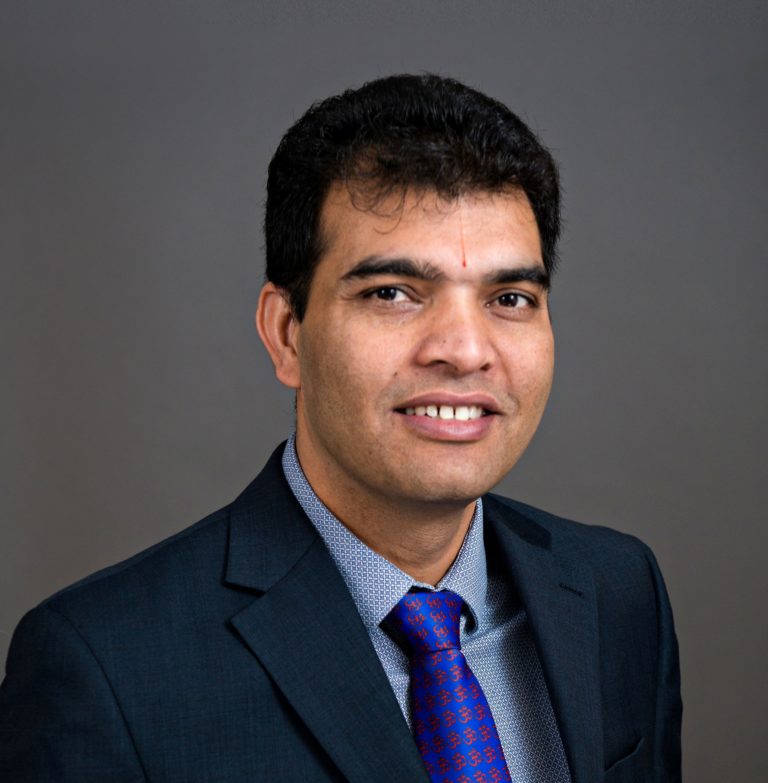
Photo: Bhuwan Pyakurel

As with many other refugees, I began my life in USA (well, for us USA meant You Start Again!) working in an entry level job in a grocery store. All throughout, I invested my best in whatever I attempted and sometimes worked two odd jobs to catch-up with the rest! Since my young age, my father taught me that ‘well-being of a family is the cornerstone for the well-being of a society’. With that mindset I began working hard to raise my family to a higher bar, often doing more than one job to meet that goal. Volunteering being a part of our life in the refugee camp, I also felt a strong desire to do something more. While taking care of my family’s needs, I also began volunteering in my Bhutanese community in Colorado to help them navigate their new life and help them in their local integration efforts. So, I began busying myself outside my survival job to organize the community with the help of the local partners and other stakeholders. We finally formed a working group of strong like-minded individuals and buddies and with the support of the local friends and partners, we rolled out various programs at the community level with the vision of creating a vibrant community. As a result of that the new Bhutanese community in Colorado began to show some progress and vibrancy. Sadly, my family decided to move out of Colorado to settle down in Columbus, Ohio. However, the choice of moving to Ohio turned out to be blessings for me! The state of Ohio is now home to the largest Bhutanese community.

A new life in Columbus, Ohio, started again with odd jobs but I continued to invest some time outside my jobs to rebuild the community here with my new Bhutanese friends, some of whom were already   my seniors as well as friends from my refugee camp.  Beginning with my volunteer service, I went on to become the President of the Bhutanese Community of Central Ohio (BCCO). The organization made significant contributions towards resettlement process and integration of the new community by addressing various needs and challenges of the different segments of the community.   We were able to secure local grants and even federal grants to support refugees falling out of mainstream state programs. Working closely with the partners of local agencies, both private and government, I gained valuable insights and experience to mobilize resources and help organize the community towards a better future. The need of the community to integrate well with the local community, while preserving our culture and traditions, has been the primary focus of our community work.

After becoming a proud US citizen in 2016. I came to realize that time has come for me to play a more proactive and meaningful role in the larger community. As the Bhutanese community continues to thrive and integrate in the local community, there is a need to understand each other, build trust and work together towards common well-being. In spite of the cultural and linguistic differences, the Bhutanese people are very dynamic and hard working. Our religious culture and traditions have given us insights and mode of behavior towards peaceful co-existence. So, it has become imperative for the community leaders to come forward and work together as Americans rather than as temporary guests! It’s more urgent for our community to go out and build relationships than vice-versa. Of course, a healthy and harmonious neighborhood depends on a two-way traffic but I personally stress on my community folks to initiate building that two-way traffic. I also see a need for the old-time residents to help us understand the local culture, norms and values of a democratic civic life so that we get an opportunity to build that trust. Working as a community organizer for about a decade now, I firmly believe that communities are the backbone of nation-building and the best way to contribute towards the country is to strengthen the local communities. I have also discovered that mainstream American society is so accommodating and welcoming towards the new populations.

In the light of all the above developments and challenges, I have realized that it is time for me to seek a larger role in the community through an elected office. With careful thoughts and consultations with my community friends, colleagues and local leadership, I have made a decision to run for the City Council from Ward 3 in the City of Reynoldsburg.  The Democratic Party has put its trust on me and nominated me as its candidates for this ward and I have begun undertaking outreach activities in the local communities. While there is no dearth of enthusiasm and energy on my part, I do not have the luxury of benefiting from experience or resources of my predecessors from my Ward.  I happen to be new to Politics and a novice at running for public office.

Needless to say, I therefore, need help from my own community, Ward communities, friends and well-wishers. I need your encouragement, inputs, guidance and last but not the least, financial support to fund my campaign. Upon election to the said office, I commit to put in my best and do everything in my capacity and authority to help the whole community I represent in my Ward.  My election to the said office, which I believe, largely depends on the timely role my own community members would undertake toward ensuring my success. My success will also pave the way for the future generation of our community members to run for political offices, thereby ensuring a process of continuity that was started since the foundation of this great nation-towards unity, harmony and prosperity of all Americans, old and new.

Thank you so much for your support and encouragement. God Bless America.

Any interested individual wishing to support me may contact at [email protected] for the further information.

 The Author is a candidate for City Council Ward #3, Reynoldsburg, Ohio.

Editor’s Note: The views and opinions expressed in this article are solely those of the author, and do not necessarily reflect the official position of the BNS. BNS doesn’t endorse any political candidates and it always adheres to nonpartisan position.


Narad Sudama launches Music Video

26,644

Gazalist Narad Sudama’s gazal-song (with music video) ‘Bichhodiyeko Mon’ [THE SEPARATED MIND] has been launched through YouTube on March 8,2019 coinciding with the International women’s day.

Photo: Narad Sudama

Narad Sudama, is a writer amidst the Bhutanese diaspora. Recently he has published a book ‘Bichhodiyeko Mon’. The video-song, is derived from the same book.

The video includes Pratap Das, one of the final contestants of the first franchise show ‘Nepal Idol’, for his magical vocal inputs, composed by Sunil Rai, a noted Nepali musician and Binod Bhujel has worked as an arranger.

The music video, envisaged by Sudama also has included new Nepali Models Sita Dhamala, Nilam Sanam, renowned senior comedian Survir Pundit (Dari Baa) and the Child Artist Ayush Joshi. Janak Singh has directed the music video. Pradeep Dahal and Muskesh Humagai have contributed towards editing and vediography.

To watch the ‘Bichhodiyeko Mon’- Click here

Devi Charan Poudel –Collage of Success and Suffering I

1.0 A life of traditions

Devi Charan Poudel was the sixth child born to father Nar Bahadur and mother Rup Meena on auspicious day of Shreepanchami of 1983 BS (1926 AD). He was born in Lalidhapper hamlet, one of the remotest of Dagapela but comparatively with productive geophysical conditions.

During that era of wealth deficiency and rural mode of production, lending of money wasn’t a business, rather a need. Villagers were inclined to burrow money or materials- and that created the informal lending system.

Nar Bahadur the father of Devi was also a family priest of the Poudel clan during Kulapuja. Along with other minor offerings within the clan, Diwali (worship of ancestral demi-gods) ritual was the most significant celebration. There was a belief that the supreme power would be able to terminate all the evils, obstacles and illness by making ancestral god happy mostly by making offering.

No signs of formal schooling, there wasn’t even any informal setting of knowledge sharing in Dagapela during Devi Charan’s childhood. Some Brahmins family used to send their sons to ‘Gurukula’ system of learning to get familiarize with Sanskrit language. And the sons belonging to other lower castes were deprived from learning Sanskrit for the students had to stay in private residence of the priest who served as the teacher. Caste was strictly practiced and to keep non-Brahmin in the house used to be looked quite lowly in the community. But Devi’s parents taught him some fundamental arithmetic and some basic scripts. The math they learned and practiced was like that of Mayan vigesimal number system based on base 20. Significant of all, he learned the ethics and moral values from the parents. The parents taught him to work hard and they always made him to realize that ‘a person won’t die of work but do so by the lack of food’. Because of his hard work and honesty, his parents preferred living with him over other seven brothers.

A human tendency of class or cohort competition come to play even in the remote village. Such competition occurred on any daily chores such as who could wake up early in the morning and finish the milking of cows and churning the curd before the dawn, who could climb the largest tree and fetch the heavy load of fodder for cattle, whose bull would dominate other bulls, or who could till more land in a day. Devi Charan never came second on such untested competition. With hard work mantras in the back of the head, everything turned to his side. Though his sources of income was livestock and farm products, he prospered and saved his extra income. Later, in 1970s they began planting cardamom plants (popularly called money plant) and began harvesting quite a quantity of cardamom on their five acres orchard.

Devi Charan’s conjugal life did not go as smooth. His first wife Goma Devi died at the age of 19 after giving birth to a daughter. In the traditional belief the death of wife was often measured against husband’s fate. Obviously, the death of the soul partner had multiple impacts on Devi’s daily life. He married Tila Rupa Poudel who gave birth to eleven children. To ease Tila Rupa from the drudgery of domestic chores, he also married Urbasi Poudel, from whom they had two sons- Sovit and Birkha. Sovitman, the older one joined Royal Bhutan Police in 1986. Youngest one, Birkha, worked as labourer in Gomtu. They do not have permanent settlement yet, since their family left Bhutan.

Devicharan was a firm believer of traditional Hinduism. He was a village rescuer: gave alms to poor people, gave away market goods that he stored to people in need, helped at the time of death or other rituals. He had visited all the holy places, the Chardham. He hosted eleven Puranas in Lalidhappar village. He also completed his own death rituals while being alive. This is a rare practice in Hinduism.

Lalidhapper was a very peaceful place until1990. The place was an unprotected granary of wealth as there was no any vulnerability and other risk factors of earned wealth. More risks of wild encounters than human crimes. Only strangers to be seen those days were the pot-sellers (भाँडावाला) and traveling ballad singers (गाइने). To be honest, the illiteracy rate of the people over 20 years of age was more than 95% before 1990. So there was nothing that would support the government claim that people of Lalidhapper acquired the enlightened idea of democracy to overthrow the monarchy.

2.0 Physical assault

A battalion wing of Royal Bhutan Army (RBA) was initially stationed at Goshi Jr. High School complex after the September uprising. The school was turned to army barrack and a detention center. Apparently, the RBA was commissioned to implement the royal plan to uproot the southerners rather than restoring the law and order in the region. And the military might was fully endorsed.

On early December of 1990, RBA got a secret information that anti-nationals (government version) had stationed their base camp and training their cadre in the dense forest between Chukha and Dorona.

On their wild search for the so called anti-nationals in the forest, army search operation wing entered Lalidhappar village at about 2 pm. They saw a boy named Kewal Ram herding his cattle in the fields, who instead began running away from the army because of the fear that they could arrest him.

Devi Charan was weaving a woolen mat at his front courtyard focused on the pattern. A man in seventies his vision was quite low. So it was obvious that he was too concentrated on weaving the mat.

The first soldier shouted, ‘Did you see a boy running?’ He even didn’t look at the man who asked the question.

Devi raised his head and answered, ‘No’. By nature he was man of sharp voice.

Second soldier kicked him on the back of Devi Charan without further questioning.

The third man punched on his face and he began bleeding profusely from nose and mouth. Those men were ranting in a language that he was unfamiliar. The first man who asked the question took out his rifle and hit with the bayonet on Devi Charan’s head. Still he didn’t fall down. Other two men grabbed him by his arm, while the third began punching heavily on his chest. After 4 or 5 blows, he collapsed to the ground and began bleeding heavily, totally unconscious. They thought he died; they dragged him on the courtyard and threw him on the vines nearby. All that happened very quickly.

The uniformed men beat not only Devi Charan, but all the people who they encounter on the way. About 30 people including children and women were taken to Chandra Bahadur Bhattarai’s house where a former army personal and native of the village, was having his show of anger, frequently gritting on his teeth and attempting to hit. And there, the Major Chachu Dukpa ordered the villagers to hand over the running boy to the army sheltering at Powgang Primary School. That fateful day was over.

Devi’s family sought local herbal treatments for healing the wounds of torture. He might have cracks and multiple fractures on his ribs. There was no health post for the treatment and everything was closed. It took nearly three months to heal.

Who was to be blamed? What was his mistake?

Editor’s note: This story is published posthumously with due respect to Devicharan Poudel who died in Lyell McEwin hospital,Australia at the age of 93. Today ( March 8th ) is his 13th death ritual. This story will be published in two parts.

Padam Rizal missing, Police on the look (Update)

26,644

[UPDATE] A briefing session was held yesterday around 11 am in Harrisbug to release the latest update on the search mission by Susquehanna Township police department. Community leaders of BCH interacted with police, fire, local elected officials and commissioners Patty Kim and Tom Lee.

According to the briefing, the police is investigating the missing of Padam on both lines of being endangered and criminal investigation procedures.

However, the police department also mentioned of not having any clue in the search area, and that could divert the investigation to other possible areas. They admitted the low temperature of the area have hindered in some way to complete the search operation.

Padam’s daughter, Krishna,  was said to be present at the briefing.

A detail of the briefing session can be found in the BNS facebook page, both in Nepali and English.

——————————————————————————————————————

[UPDATE] According to a latest post in the Bhutanese Community of Harrisburg (BCH) facebook page, search operation for Padam Rizal is taking place in full force. The facebook post also mentions that Susquehanna Police department has announced the case to be on number one priority.

The representatives of BCH are in close coordination with the law enforcement officer and called Governor’s advisory commission today, states the post.

Also, it mentions the direct involvement of State Representative Patty Kim and Dauphin County commissioner Hartwick for local law enforcement.

BNS shall coordinate with local community organization in Harrisburg for any newer updates and post accordingly.


Padam Rizal, originally from Dagapela Bhutan and resettled in Susquehanna, PA, has gone missing since February 21. According to the police report of Susquehanna Police Department, his vehicle is found at around 1:30 am today on I-83 overpass south bridge of Susquehanna River.

He was expected by relatives to meet him at 7 pm yesterday evening. It is learned that the family filed a police report after he did not return home late at night.

The police department is seeking all kinds of information on Padam Rizal’ s current status. The department can be contacted at 717-558-6900


Looking for a Home

26,644

Following the termination statement of the 26-year-old food support programme by the World Health Organization (WHO), the issue of the Bhutanese refugees has become a heated political issue. While the larger chunk—more than 110,000—had already made their way to the United States and other countries under the UN’s third country resettlement program, 6,600 refugees are still languishing in camps in Nepal desperately looking for some ways to return to their own homeland, Bhutan.

More than 1,641 refugees presently living in camps on a prima facie basis are demanding refugee identity. However, regardless of their registration, the Government of Nepal still has to bear the responsibility of managing food and other essential supplies to the remaining refugees until the issue is resolved for good.

While being mindful of one of the biggest foreign policy failures on resolving Bhutanese refugee crisis despite seventeen rounds of bilateral talks between the two Himalayan nations, Prime Minister KP Sharma Oli, once again, appears to be rolling his sleeves up to bring an end to the longstanding refugee crisis. The Nepali Premier seems highly optimistic about resolving this issue after meeting with the chief advisor of the then Interim Government of Bhutan Lynpo Tshering Wanchuk during the 4th BIMSTEC Summit in Kathmandu on August 2018.

Prime Minister Oli is vigorously engaged in meeting with the diplomats and local politicians to seek strategies for an enduring solution to the remaining refugees in the camp.

In the meantime, the United Nation High Commission for Refugees (UNHCR) too has started collecting the data of those refugees who want to return to their homeland. In the same page, the humanitarian agency had also come up with an idea of collecting data of the people opting voluntary repatriation. Voluntary repatriation, for a refugee, is usually the return of a displaced person who is unable or unwilling to remain in the host country for long and volunteers to return to their country of origin. However, in a returnee situation, this could necessitate a guaranty and provision of national security along with providing for sustainable livelihoods on the part of the country of origin until the long-lost returnees are capable of fending for themselves.

There are also some substantial cases of mixed marriage (Bhutanese man married to Nepali citizen and vice versa) who wanted to integrate locally in Nepal. As such, the Government of Nepal should also look into this situation and start local assimilation by initiating  Article 3(1) of the ‘Nepal Citizenship Act 2063 (2006)’, that came into force on 26 November 2006. Children born to a refugee mother and a Nepali father should receive the necessary administrative assistance to complete all the formalities for acquiring citizenship and a needful compensation.

As per a recent survey, around 3,000 refugees living in two refugee camps have expressed their interest to return to Bhutan. Given this, the idea of the local assimilation will narrow down the numbers of dwellers if Bhutan agrees to take the remaining population. Above all, the UNHCR is likely to facilitate the voluntary repatriation process by ensuring peace and reconciliation activities, promoting housing and property restitution, and providing return and legal aid to returnees. Besides these, ensuring that the refugees return to their homelands also demands enduring support of the international community throughout the crucial post-conflict phase so that those who have made the brave decision will be able to rebuild their lives in a stable environment.

Making this possible is the responsibility of both Nepal and Bhutan.  PM Oli when he was serving as the Home Ministry was among the major dealmakers during the 17 rounds of bilateral talks between Nepal and Bhutan. Now when he is the executive of the country, one can only hope the same zeal to bring an end to this longstanding refugee imbroglio.

Gross  Happiness Index is a unique philosophy that guided Bhutan. But if it is to remain true to it, it has to look after its long-evicted citizens. After all, taking its own people in could also mean a rise in Bhutan’s Happiness index.

What’s more, most of all the refugee intellectuals, frontrunners, and potential leaders have already been resettled in the western world probably for good. Bhutan  also does not see any visible threat from any of the remaining refugees in the camp. Although, few of them were left behind for various reasons, many innocent families barely see the prospects of other options other than returning home. Therefore, it appears quite imperative on the part of Bhutanese government to see their patriotic sentiments and open the gate for them.

Four, one of the mutually agreed elements of the bilateral talks—the formation of Joint Verification Team (JVT) comprising of Bhutanese and Nepali officials who were entrusted to determine and verify Bhutanese living in the seven camps started their project on March 26 ,2001. Sadly, it couldn’t sustain even a year after some misunderstanding over the procedure took an ugly turn. In an ensuing dispute, the ‘gho bearers’ abruptly abandoned the project and went home. The JVT couldn’t resume thereafter. Yet, one can easily surmise that Bhutan has at least realised the plight and the long-overdue task needed to be completed under a congenial atmosphere; sooner or later.

Above all, the total solution for Bhutanese refugee crisis lies at a phenomenal behest of burden sharing among the nations involved and Bhutan is a part of it.

Niroula, a former refugee from Bhutan is now a US citizen currently serving on the Youth Services Advisory Board to Mayor’s Office in New Hampshire.

He can be reached at [email protected].

Courtesy: This article was originally published at The Kathmandu Post on February 10,2019. It is being reproduced with due permission.

जन्तरेको नेपाली वर्णमालाको पोस्टर सार्वजनिक

26,644

सिन्सिन्याटी (ओहायो) । नेपाली वर्णमालाको पोस्टर सरस्वती पूजाका दिन (९ फेब्रुअरी २०१९) ओहायोको सिन्सिन्याटी सार्वजनिक गरिएको छ । यहाँ सञ्चालित नेपाली कक्षामा वितरण गर्दै सार्वजनिक गरिएको हो ।

उक्त पोस्टर खगेन्द्र भण्डारी जन्तरेले तयार पार्नुभएको र जन्तरे प्रकाशनले बजारमा ल्याएको हो । यसमा नेपाली, अंग्रेजी, र सांकेतिक भाषासमेत राखिएको छ । उक्त प्रकाशनको यो पहिलो प्रस्तुति हो ।

अहिले यो पोस्टर सिन्सिन्याटीको नमस्ते ग्रोसरी (500 Kolb Dr ste 5a, Fairfield, OH 45014, Phone: 513.860.0359) मा उपलब्ध छ । विभिन्न राज्य र शहरहरूमा चाँडै नै उपलब्ध हुने प्रकाशनले जनाएको छ । २० प्रतिसम्मको अर्डर आएमा हुलाकबाट पठाइने पनि प्रकाशनले बताएको छ ।

सरस्वती पूजा वा श्रीपञ्चमी पर्व विद्याकी अधिष्ठात्री देवी सरस्वतीको पूजा–आराधना गरी मनाइन्छ । चन्द्रमाजस्तो गोरो वर्ण भएकी तथा हातमा वीणा र पुस्तक लिएकी विद्याकी देवी सरस्वतीलाई भक्तजनले भारती, शारदा, हंसवाहिनी, जगन्माता, वागीश्वरी, कौमारी, वरदायिनी, बुद्धिधात्री, ब्रह्मचारिणी, चन्द्रघण्टा र भुवनेश्वरीजस्ता नामले पुकार्छन् ।

विद्या र सिर्जनाकी देवी भएकाले विशेषगरी साहित्यकार, कलाकार, पत्रकार, शिक्षक र विद्यार्थी आआफ्ना कला–साधनाका वस्तु कलम, कापी, कुची र वाद्ययन्त्र आदिलाई सरस्वतीका रूपमा पूजा–आराधना गर्छन् भने तान्त्रिकहरू तन्त्रसिद्धिका लागि तारादेवीका रूपमा आराधना गर्छन् ।

सूर्य उत्तरतिर लागी दिन लामो हुने र वसन्त ऋतु प्रारम्भ हुने विश्वासका साथ आजका दिनलाई ‘वसन्त पञ्चमी’ पनि भन्ने गरिन्छ ।

Parents critically injured, daughter killed

26,644

A tragic accident that occurred last Sunday Feb 2, 2019 in Everdale, Cincinnati killed Puja Rizal, only daughter of Tikaram  and Bhima Rizal.

The wreck happened at the intersection of Cooper  and Reading road.

The accident occurred around 2 pm according to local news source Local 12.

Tika was driving to local Asian grocery store to buy ethnic food items when he accidentally hit the roadside utility pole in an attempt to avoid an approaching car on his lane.

According to family sources, Tika is still being treated under ICU at Cincinnati University hospital. His wife Bhima is discharged after five days of treatment, with right hand rested on sling.

On Bhutanese Community of Cincinnati (BCC) issued a community wide notice to attend the funeral of Puja held on February 8 at 4389 Spring Grove Ave. According to the notice Puja was preparing final hours to become RN, remembered as a quiet and dedicated volunteer for the community.


BASO elects new officials

26,644

Bhutanese American Student Organization (BASO) elected Mr. Tika Acharya as new president who is preceded by Mr. Hari Adhikari on Jan. 13th 2019

Similarly, Mr. Yadhap Adhikari has been elected as treasurer while Ms. Manisha Khatiwada and Mr. Khagen Kadariya remain as vice-president and secretary respectively.

Newly elected president, Mr. Acharya, thanked all the members and express his commitment to serve the community in educational sector.

According to the former public relation coordinator Mr. Lal Thapa, the committee also elected Ms. Tika Rizal as new public relation coordinator and Mr. Bidesh Dhakal and Mr. Udhav Kharel were elected as media coordinator. The members also elected Mr. Jagha Acharya and Ms. Ranjana Thapa as assistance of secretary and treasurer respectively.

BASO was established as a student organization at The Ohio State University in April of 2016 with a mission to create a conducive environment for higher education in the Bhutanese-American communities in the greater Columbus area, and as well as to facilitate intellectual growth and development among the Bhutanese-American students at the Ohio State.

Unhappiest people work at GNH center in Bhutan: Rieki Crins

26,644

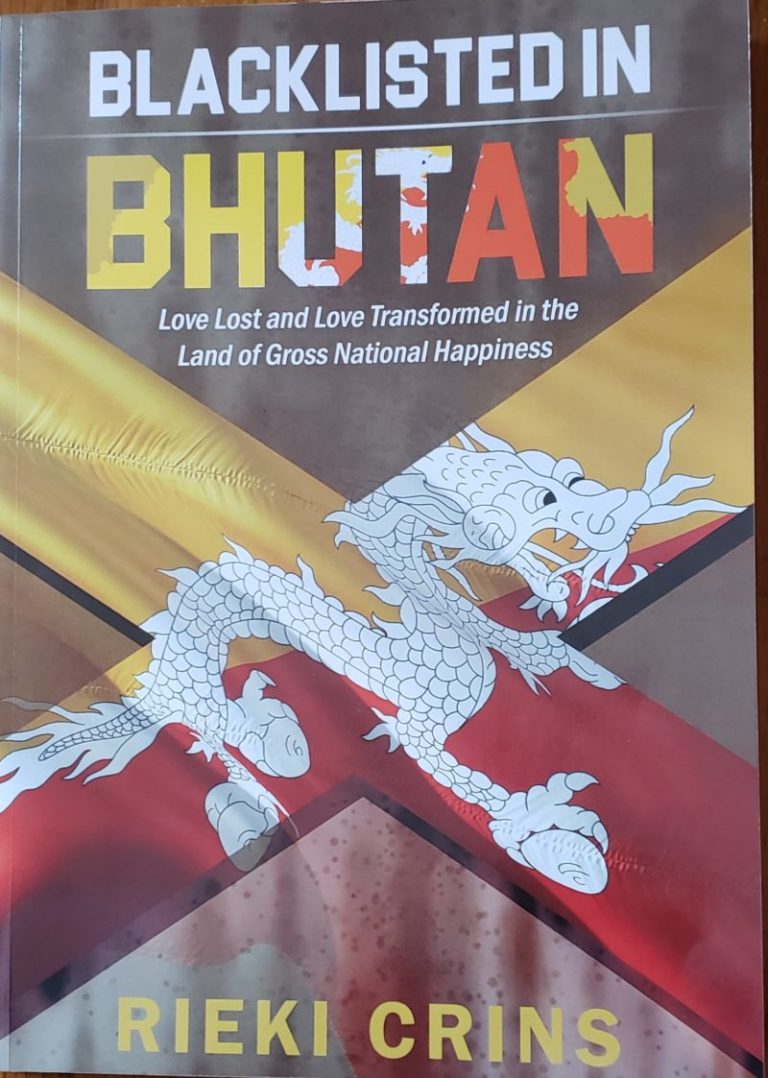
 Rieki Crins, an anthropologist, from the Netherlands who prefers to call the Himalayan Kingdom of Bhutan her home was known little by many outside Bhutan until recently. She introduced herself in the form of a book ‘BLACKLISTED IN BHUTANLove Lost and Love Transformed in the Land of Gross National Happiness’. She reached Bhutan at her young age in 1990 and lived in a remote village of Tsachaphu in Paro district. She did her Ph.D on Bhutan in 2006. She established a not-for-profit Hotel School in Paro for unemployed youth and produced a pool of manpower for the hospitality market in Bhutan. Her book is being widely sold on Amazon. Readers are posting their views on social media. Bhutan News Service (BNS) came in touch with Rieki when she was on her tour to Hong Kong. Interview excerpts:


BNS: Why did you choose ‘Blacklisted’ as the title of this book?

Rieki Crins: Because in 2016 when I was on my way to visit Bhutan, during my transit in Bangkok I heard from my Bhutanese counterpart that my visa for Bhutan was refused. The Immigration officer told my counterpart that I was blacklisted in Bhutan, a persona non grata.

BNS: Who are the target readers for this book?

Rieki Crins: Anyone who is interested in memoirs, Bhutan, South Asia, social enterprise, setting up a non-profit project in a frontier market.

BNS: What made you call Bhutan your home?

Rieki Crins: In 1990 I was living for 6 months in a remote village; 12 hours walk from the road. The first month it was very tough being there, I had a culture shock and felt very alien. But after the first few weeks, slowly I started to feel “at home” in the village. People gave me a Bhutanese name and one family adopted me as their daughter. I got used to the food, even started to like the food with many chilies and like the butter tea. The sounds and smells of the village was soothing and the calm faces of the people so pleasant. If I went to Punakha for a few days or to Thimphu, when I came back to Tsachaphu, the village felt like my home, I knew all the people so well, the sounds smells…

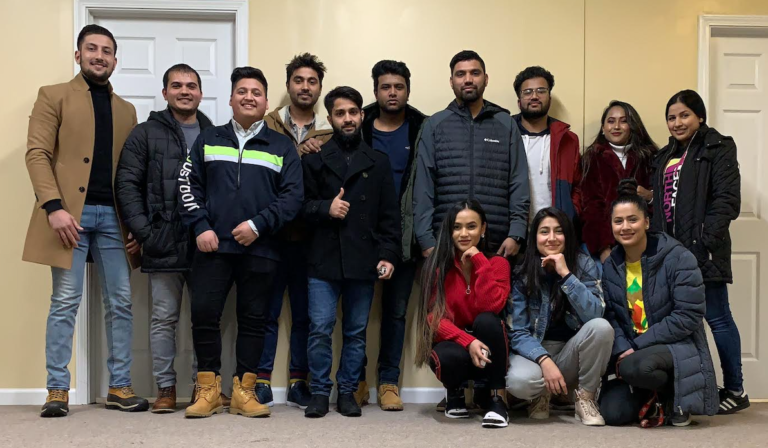
Rieki with her students and colleagues at the Hotel School in Bhutan.
Photo Courtesy : Rieki

BNS: What inspired you to author this book after your divorce with Bhutan?

Rieki Crins: The biggest inspiration was the fact that I was so shocked by my blacklisting. A huge injustice was done to me by Bhutan. I dedicated so many years towards the study of Bhutan starting in 1990, and my Ph.D. research in 2006. Next to this I had guided one to two trips per year to Bhutan. Initiated and paid for a documentary about women in Bhutan. Organized and paid for a conference for women about the Internet in 2000.

In 2009 I set up the Learning Exchange foundation. My foundation organized and financed for a 5 days personal leadership training for 50 unemployed youth in Bumthang, to help youth to find their purpose in life and guide them to a good job or study. The foundation also set up and financed a very good quality hotel and hotel school for marginalized youth to help them to find a good job in the hospitality sector since Bhutan had little knowledge in this field. There were so many family-run hotels that needed help to improve their services. Tourism was a growth market and one of the very few sectors that could offer good jobs to the youth. The school is a vocational school in 5-star hotel training. We opened our doors in 2015 and since then about 200 youth have been trained and found good jobs. I worked for years to set up this school and did the fundraising. It was very difficult and I did not receive a payment for it. All the money that I raised went into the school.

I took in Bhutanese girls into my house and arranged internship places for them in The Netherlands. Even some Bhutanese students in New York could live with my mother in law. What I want to say is that I helped so many Bhutanese and then to hear that I was blacklisted, without any reason. Why this was or who had done this, was a huge shock and I needed to tell the world about this.

It is very cruel to do this; to exclude a person and not have the decency to tell the person why this was, what I had done wrong. I needed to tell the world my story, as a therapy for myself but also to show the world what kind of country Bhutan is. A country that does not have any respect for human rights and its own people. They did not even inform my Bhutanese counterpart about this. He was kept in limbo too.

BNS: How do you see multi-ethnicity and the nation’s respect for diverse culture in Bhutan?

Rieki Crins: In 1990 I learned that there was massive discrimination towards Southern Bhutanese. The people in the South are often from Nepalese descent and the Bhutanese government denied them their culture and way of life. Also, there was discrimination towards the people in the East of the country and the Tibetan refugees. It was clear that only the Ngalong culture had to be the dominant culture and way of life in Bhutan. I understood that the Ngalongs felt overwhelmed by the 2 big ethnic groups in the country because of what happened in Sikkim and Tibet. But having more than 100,000 people fleeing your country and not dealing with this is a big disgrace. In the end, the UN and western nations had to solve the problem, Bhutan just ignored the problem. They just acted as if it was not there.

Years later, I thought that Bhutan had dealt with the problem and that Southern Bhutanese were now a full citizen, but I learned from many of the students that we took into our hotel school, that many had no ID cards and they were not Bhutanese according to the Bhutanese laws. These kids could not go to any of the government-funded schools or even get a mobile phone without an ID card. Every year they went to the king to plea for their case and rights, it was ignored. I could not believe this. Then I learned that anybody who criticizes King, Country, and Government could go to jail, life long, before this was the death penalty. This is very harsh and in reality, it means that Bhutan is a dictatorship.

BNS: What is the basis of your claim- people who work at the Centre of Bhutan Studies, responsible for implementing the GNH principle-are the unhappiest people in Bhutan?

Rieki Crins: I met the people from the center of Bhutan studies several times, they even stayed for a week in the hotel school, working from there and having meetings. They did not look happy at all. Acted very arrogant towards the students and lacked social skills. They ignored greets from the people in the morning when we all having breakfast in the restaurant. They felt obvious better than other people. In my eyes, if you work on a project to implement GNH you are a role model. Happiness is just like love; it’s a feeling, a quality that you cannot grasp. If you are an advocate for happiness, the least what you can do is trying to make people happy by respecting them and be an example of a happy person. Being arrogant and behave that you are better than others is not the way. The result was that the students in the hotel school called them the unhappy hypocrites or the gross national hypocrites. Next, to this, a truly happy country needs first of all respect the human rights for its entire citizen; there must be freedom of speech for all. This is not the case. So GNH is only there for the happy few: Dasho Jigme Thinley was the person who was the first advocate for telling the world about Gross National Happiness. He wrote a small book about it. Later the center of GNH was set up and Karma Ura was the president. The Center for Bhutan studies was in charge to develop and implement GNH within the Bhutanese society, all the policies had to be aligned with the 9 domains of happiness and 4 pillars of GNH. The four pillars of GNH are sustainable and equitable socio-economic development; environmental conservation; preservation and promotion of culture; and good governance. The nine domains of GNH are psychological well-being, health, time use, education, cultural diversity and resilience, good governance, community vitality, ecological diversity and resilience, and living standards. There is also a spiritual center for Gross National Happiness, they are financially supported by people from outside the country, by wealthy people.

BNS: You have invested your time and money to develop a pool of skilled manpower. Do you remember your contributions being recognized?

Rieki Crins: The students were very grateful for what we have done for them. Many moving stories that we helped them so much. But our work was never been recognized the way it should from the end of the government.

I must give due credit to the ministry of labor, though. Before we started school, we had meetings with the ministry of labor and they were very supportive of our initiative. They even supported partly some students with scholarships. This extra source of financial support helps us a lot to make the school work. It’s expensive to run a school with 70 boarding students.

BNS:  Ironically in the book you mentioned, “I realize it was blessing in disguise to be Blacklisted in Bhutan.” Could you elaborate more on that?

Rieki Crins: My dream was to set up the hotel school and I would have liked to run it for a period of time. To teach cooking classes etc. This was not possible because we could not obtain visas for us. It was hard enough to get 2 visas for the expats who trained the Bhutanese staff. Next to this I had to do the fundraising to find the money to sustain the school. I really dislike fundraising. So, I ended up in a situation that was not nice at all: I had to work for no payment because all the money that I raised paid the staff in Bhutan and the school. Our aim was to hand over the school to the Bhutanese in 3 years. When I heard I was blacklisted after a while it felt like liberation; now I could hand over the school to the Bhutanese, although a bit early, but I was not responsible for it anymore.

BNS: You have only briefly disclosed the cause of being blacklisted in the book. Could you please elaborate more on this?

Rieki Crins: I do not know what the cause is of being blacklisted until today nobody has told me, nor who has done it. Only rumors and gossip are spread. This is what makes me so angry. Whoever has blacklisted me is a coward that is hiding, why not looking me in the eye and tell me what I have done wrong. This is typical how Bhutan deals with its problems, just as with the Southern Bhutanese problem. Kicking thousands and thousands of your own people out of the country and hide them from any dialogue or not taking any responsibility for it is very cowardly. The world should have condemned Bhutan much more about this abuse of human rights. Sanctions should have been issued just as with Burma. Bhutan is arrogant and thinks it can get away with it, and until today it could. Telling the world about GNH and brainwashing its people, spy on its people and the outside world thinks Bhutan is a Shangri La. It’s time the truth comes out.

BNS: Are you planning to appeal to the government of Bhutan and know the cause of your blacklisting? If you have already done; what is the response?

Rieki Crins: I have tried to contact the ambassadors in Bangkok and Brussels. They told me they could not help me and that my counterpart in Bhutan has to solve the problem. My counterpart in Bhutan went for weeks every day to the ministry of immigration but was sent away and the immigration officer said I was a danger to Bhutanese security (hahaha) true! I went to the honorary consul in the Netherlands, he told me there is no blacklist in Bhutan and that I should not publish my book. I told him he must be joking. I have written a letter to the king, of course, no reply. I would have liked to sue the country but I do not have the money to do so. So, the only thing I can do is telling the world about it.

BNS: What is one thing that you like the most in Bhutan and you would like the outside world to know?

Rieki Crins: What I liked the most in Bhutan are the village people, they are themselves. They have the inner calmness of people living close to nature. They are not pretenders, they are the real “happy” people in Bhutan. I have set up the school to help these young kids from the villages and the world can learn a lot from these people. How they live and respect nature. Bhutan is a beautiful country and the traditional lifestyle is still very much intact.

Editor’s Note: The views and opinions expressed in this article are solely those of the author, and do not necessarily reflect the official position of the BNS.


शरणार्थी शिविरमा पुन: आगलागी, ८ छाप्रा नष्ट

दमक (नेपाल) । झापाको बेलडाँगीस्थित भूटानी शरणार्थी शिविरमा पुन: आगलागी भएको छ । आगलागी शिविरमा आइतबार (२७ जनवरी २०१९) बेलडाँगी-२ मा दिउँसो सवा चार बजे भएको हो ।

आगलागीबाट आठ छाप्रा जलेर नष्ट भएका छन् । अन्य छाप्रामा आगो सल्किन नदिन नजिकैका केही छाप्रा भत्काइएको छ । आगलागीमा मासिम सुब्बाको बी ४ – ६९, आइतीमाया सुब्बाको बी ४ – ९५, चन्द्रलाल सुब्बाको बी ४- १०२/१०३, पर्शुराम राईको बी ४ – १११/१०७, पदमबहादुर पोख्रेलको – बी ४- ९१ र सुकमति सुब्बाको- बी ३ – १३० छाप्रा जलेर नष्ट भएका हुन् ।

आगलागीमा मानवीय क्षति भएको छैन । अन्य क्षतिको यकिन विवरण भने थाहा हुन बाँकि छ । उक्त आगलागीका पिडित परिवारलाई शिविर व्यवस्थापन समितिले तत्कालका लागि बेलडाँगी शिविरस्थित आम्दा अफिसमा बस्ने व्यवस्था गरेको शिविर सचिव टिकाराम रसाईलीले जानकारी दिनुभयो ।

आगो दमकल, शरणार्थी र शसस्त्र प्रहरी बलको संयुक्त प्रयासमा नियन्त्रणमा लिइएको थियो । आगलागीको कारण भने अझै खुल्न सकेको छैन ।