
Home Blog Page 12

26,644

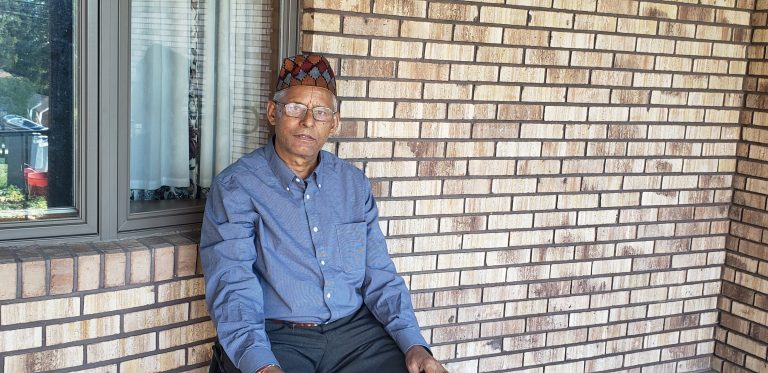
“म डेढ वर्षको हुँदै बाबा बेपत्ता हुनुभएकोले एक्ली आमाले हुर्काएको कान्छो छोरो म । आज ६५ वर्ष पुग्दा पनि बाबाको कतै दिसोपत्तो लागेन-सम्झिँदा खल्लो लाग्छ । अनि बिहेको कुरा गर्दा आफैंलाई तन्देरी जस्तो पनि लाग्छ ! मेरो विवाह, म अंग्रेजीको साल जान्दिनँ, नेपालीकै संवत पनि थाहा छैन ! तर, म अठाह्र वर्षको थिएँ । त्यो बेलाको समय; अठाह्र वर्षसम्म बिहे नहुनु भनेको फल नदिने ठिमाहा अन्न फुलेर सुक्नु जस्तै थियो । हाम्रो गाउँभन्दा पारी म्योना ब्लक, पुङ्था भन्ने गाउँमा कुवीरलाल रेग्मी निकै नाम चलेका ‘महाजन’ हुनुहुन्थ्यो ! आफ्ना बाबा नभएकाले गाउँकै आफन्तहरुले मागी दिएर उहाँकी छोरी अन्तरी मैले बिहे गरेको हुँ । आजसम्म हामी सुख र आनन्दले साथमा जिएका छौं । हाम्रा चारजना सन्तान छन्, दुइ छोरी र दुइ छोरा । सबैभन्दा जेठो सन्तानको रूपमा छोरी थिइन् पूर्णमाता । उनको असली नाउँ पुण्यमाता तर, ड्रूक्पा कर्मचारीहरुले नाम बिगारेर पूर्णमाता बनाइदिए । पछि सुधार्न सकिएन, त्यतिकै चलेर आयो । उनले दोरोखा प्राइमेरी स्कूलमा तीन कलाससम्म पढेपछि अरु पढ्न पाइनन् । त्यसपछिको जेठो सुपुत्र दुर्गालाल, अनि कान्छी छोरी बेनुमाया ! दुर्गालाल दुइ कलास पढ्दै थियो भने बेनुमायालाई स्कूल भर्नामात्र गरिएको  थियो । देश छोड्नु परिगो । सबै छोडियो ।  बेनुमाया पछिको कान्छो नेत्रप्रसाद सानो काखे बालक लिएर नेपाल आइयो । म अठाह्रको हुँदा मभन्दा चारवर्ष सानी मनमाया बिहे गरेको मैले । १४ वर्षकी मनमाया, उता ससुरालीमा महाजन थिए, खान-लाउन प्रशस्त थियो । उसलाई माइतमा स्वर्ग थियो । तर, म गरीब, आर्थिक हिसाबले एक्दमै तल्लो तहको मान्छे थिएँ । एकली आमाको बलबुतामा हाम्रो के जेथो थियो होला र ? मेरा घरमा आएपछि भनेका बेला खान पुगेन, भनेजस्तो लाउन पुगेन ! उनलाई कति असहज भयो होला ! त्यो कुरा मैले महसूस गरें ।  म आफूभित्र यिनलाई सुख र वैभव दिन सकिनँ भन्ने पश्चाताप सधैं भइरहन्थ्यो तर, उनले कहिल्यै पनि गुनासो गरिनन् ! मनमायाका मनमै गुनासो नभएको हो अथवा भएर पनि मलाई नसुनाएकी हुन्, त्यो उनै जानून् तर, मैले उनको दुखेसो र गुनासो सुन्नु परेको छैन । मनमायाको मन साँच्चै फराकिलो छ; आजसम्म त्यतिकै समुद्र छिन् । मेरी आमा २८ वर्षकी हुँदा म जन्मिएको रे । बाबा बेपत्ता भएपछि  मभन्दा ७ वर्ष ठूलो मेरो एकजना मात्र दाजु र मलाई छात्तीमा चेपेर एक्ली आमाले बनीबुतो गरी हुर्काएकी हुन् । विगत खोतलेर सम्झिँदा सही नसक्नु हुन्छ । मुटुमा गाँठो परेर आउँछ । तर, हाम्रा छोराछोरीका लागि मैले भोगेजति दुःख भोगाउँदिन भन्ने लागेको थियो; जीवनको पछिल्लो चरणमा हामी दुवै मिलेर त्यो कुरा पुऱ्याएका छौं जस्तो लाग्छ ! शरणार्थीजस्तो अभावग्रस्त जीवनको संघर्षशील घडी पनि हामीले समझदारीमै उतारेका हौं । अबको जमाना छोरा-छोरीको हो; जसो गर्छन् उनीहरुकै जिम्मा !”

__
Chintamani Acharya, 65, is originally from Maney Gaon, Dorokha-Samchi, Bhutan and based in Pittsburgh, Pennsylvania at the time when this story was Compiled.

Story compilation by Bhakta Ghimire for BNS.
26,644

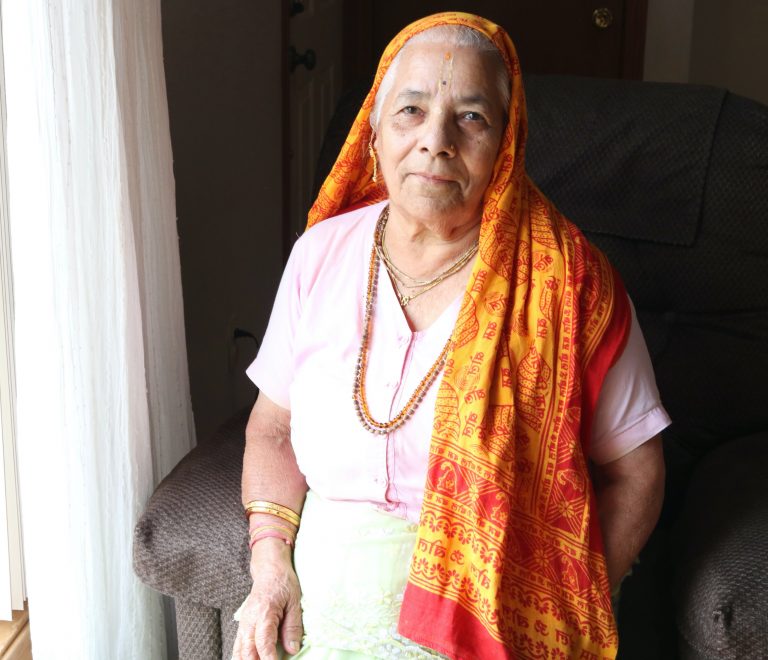
“I was 13 years old when I got married. How do I tell you the story? Well…of course they came to ask for my hand. That was the tradition. No one eloped back then. It was the month of Magh (Nepali calendar). My husband and his elder brother came from Lamitar [Samtse district, Bhutan] with the marriage proposal. I used to live in Kalimgpong, which is now in India. It was an 18-mile walk from Lamitar to Bakhrakot in India. From there, a two-hour ride took you to Kalimpong. It was another 2-3 hour uphill hike to our house from the bus stop. I was the third eldest daughter. My second eldest sister, Tika, was married to a Dahal in the same village. That’s how my husband’s family heard about me. I had never seen the groom before. How could I? In that time period, Bhutan was so far away from Kalimpong. I guess one interesting fact is that one of my brothers, Nanda Lal, and I got married on the same day. His wedding was fixed before mine. Coincidentally, the saahit (auspicious day & time) fell on the same day for both of our weddings. Back then, the groom’s procession used to come to the girl’s house at night. So, my brother’s procession left our house in the morning to reach his bride’s home by nightfall. My groom’s procession arrived at our house on the same night. Next morning, my brother’s procession returned while mine left with me. The journey from Bhutan to Kalimpong was long and exhausting. So, the groom’s traveling party arrived a few days before the wedding. They stayed at a Chettri’s house nearby. For the sake of wedding customs, it was considered the house of the groom. To complete the rituals, I was taken to that house after the wedding ceremony finished at my house. My parents and my in-laws decided I was too young to make the difficult journey to Bhutan then. They decided to take me to Bhutan after a year. Before leaving, my in-laws told me to learn household chores properly. What could I say? I nodded and that was that. I cannot remember any further details about that day. I am almost 90 years old. It has all faded away with time.”

__
Ganga Devi Dulal, 87, is originally from Samchi, Bhutan and based in Springfield, Massachusetts at the time when this story was compiled.

Story and Photo compilation by Biraj Adhikari for BNS.

Nepanglish Way

Baba, Haami fishing ma jaane ho today? (translates to ‘dad, are we going for fishing today’), said my nearly five-year-old daughter recently. She often mixes two different languages in a humorous way, probably without knowing what she is doing.

This time, I laughed out-loud internally! Yes, I just mentioned ‘out-loud and internally’ in the same sentence because my heart and lungs heard it out-loud. I am certain about that. Additionally, I’ve more freedom in the blogging world – and this should just vindicate it, right?  

Sorry, grammarians!  

I also immediately corrected my smart cookie to reiterate that she was mixing-up two different languages in an anomalous style. She nodded her head as if to indicate she was right. For me, this is a perfect example of her early sign that she might be good at Nepanglish (a commonly-used slang for a blend of Nepali and English when spoken together).

But I’ve bigger dreams for her than that. I want her to grow up as a perfect bi-lingual, far better than her daddy. I know that my wife might make me do dishes for an entire week for my failure to not use ‘we’ instead of ‘I’ here. We’ll see if she reads this post to make that comment to me privately, so I can go from ‘I’ to ‘we’ in my future posts where we both agree reciprocally.    

When my daughter was even not in the making, I had a slightly different opinion. I used to think that kids should be given freedom to learn language on their own. My entire perception changed when she landed safely on this earth because by then I had a full realization that being multilingual has a lot of strengths attached to it.

Becoming a multilingual is also such a great asset right at home, may be even more than at the workforce. I’ve an elderly parent who not only provided childcare support, but also helped her learn Nepali—the only language spoken in my family members for generations. Covid-19 restrictions can’t take that away. 

It would be a disgrace for me to interpret for my parents when my smart cookie talks to them all-in-English. I can’t let most of my uneducated family members, including parents down. I am sure I am not the only one facing this problem.

As a millennial parent, I’ve a stout conviction that I’ll do whatever I can to make my daughter a bi-lingual, if not multilingual, without letting ‘Nepanglish’ rule her potentialities. It’s tough, challenging, yet I seem to think that this journey is filled with fun if we parents perform our duties sincerely. I know that it will be my failure as a parent not to inspire and teach her our mother language, Nepali, as perfectly as possible.

Until next post, please feel free to listen to this Nepali song she recently sang to get a better of my blog.    


26,644

“My first wife was from a place called Fulbari in Assam, India. We were of the same caste:Jogi. I was 18-19 years at that time. It was an arranged marriage. I had four kids, two girls and two boys from her. At the time I used to work as an assistant at a pesticide distributor. One day I had to go to the capital Thimphu. I took my then wife and three kids along with me. One of the girls, Gita, was staying with her grandma. I can’t exactly remember much about it but on the way, I lost my cognitive ability. I have no memory of that ordeal. After that somebody found me and brought me home but without my wife and family. Somebody had already taken my wife and  kids. People say a bad guy did some black magic on me on that journey that made me lose my mental ability. Till date I have no contact with them. After I came home, I used to work in the field tending crops and paddies.  I also stayed and worked as a cook at Lamakhore’s house. He was our Dzongkha Yargey Tshogpa (DYT — District Development Committee) member at that time. This (my current wife) is also from Fulbari, Assam. She is Magar by caste. At that time, she was a widow. So, some village ladies sweet-talked her about me. After that we developed mutual interests and got married later. Life is good with her. Sometimes we might differ in opinions, but we settle it.”

_
Jainarayan Jogi, 68, is originally from Daifam, Bhutan and is based in Grand forks, North Dakota at the time this story was compiled.

Story and photo compilation by Pabi Rai for BNS.

Interpretation Dilemma

“Do you feel safe at home, Dharma?” 

This was the question that a Nurse Practitioner asked my dad recently. We were at his medical appointment and I was the interpreter by default. I just didn’t know how to ask my dad, in front of the nurse, if he felt safe with us at home, and interpret what he said back to the nurse. 


As an immigrant, a person of color, and a first generation college graduate, wearing many different hats is not new to me. This morning’s experience, however, still felt strange and bizzare. Here I was, in a medical setting, asking my own dad if he felt safe living with us. I think such an experience is uniquely relevant only to immigrants and their children.

Interpreting in a medical setting is always an experience – you never know what you’re going to get and how you’re going to deal with it. Sometimes the experience is cringy and nauseating, like when you have to ask your own parents if they’re sexually active. Other times you really feel like you made a difference in someone’s lives, like this one time I happened to be the interpreter for a six year old boy who was dying of cancer. His mom was the only one present and to have all of her questions answered in a culturally competent manner and in a language she fully understood felt like the only embers of hope in an otherwise a dark and cruel world.

And sometimes, it changes YOUR life. I still remember this one time in Seattle when I was interpreting for this eldery woman who was seeing an optometrist to get her vision assessed. As the doctor conducted a series of tests to determine how well she could see, the woman seemed to see the letters and numbers of all shapes and sizes just fine. It was ME who struggled to see those letters and numbers from afar. Turns out MY vision was bad and I was the one who needed prescription glasses. If it wasn’t for that experience, I still probably wouldn’t have figured out that my vision has been poor for quite some time. 

In between experiences of hope and empathy, awkwardness and revelations, today, I was subjected to a moment of self-doubt: does my dad feel safe at home with us? 

“No we fight a lot”, I wanted to quip. However, I knew better than handing out a free invitation to a social welfare agent to knock on my door and preach about how to talk care of our parents when they’re the ones sending theirs to nursing homes. 

I’ll end this entry with another layer of complexity that immigrants face in Western medicine. We were at the same hospital that my dad is used to visiting but at a different clinic. As a result, we had to provide the clinic with my dad’s family medical history. The nurse handed me a copy of their medical history form that I was supposed to fill out for my dad’s parents. My grandpa died two weeks before I was even born, in rural Bhutan, without EVER seeing a hospital. The old man worked on his farm all day and came home late in the evening and passed away without any fanfare. Even his own daughter learned about his death months later. To date, nobody knows the underlying medical conditions that led to his abrupt death. 

What boxes of medical diseases do I check off for him? I am sure even my grandpa wouldn’t be able to answer this if he was alive.

BNS Should Be Saved

An epilogue, particularly of a sad note is emotionally painful to write; much worse, if you hold the subject dear to heart. In this particular case, I am not sure whether to write an epilogue or an obituary, it could be both or neither; which makes my job even more challenging.

The late afternoon news of January 12 about the dissolution of Bhutan News Service (BNS) may have surprised many, but to me it was pure shock. The BNS which existed since 2006 has ended its journey or at best postponed its activities eternally. The decision was arrived due to human constraints and lack of financial resources, according to the BNS editorial. The news spurred many questions and curiosity among its well wishers in general, and its collaborators in particular.

BNS was a Bhutanese media organization formed in Kathmandu, Nepal on May 2006. Founded and funded so long by young and passionate media volunteers and enthusiasts of Bhutan, BNS was the first online news portal that was conceived and operated by any Bhutanese. Its launching had been a panacea during the dry days when we had to travel distances to deliver press releases to newspaper agents. The emergence of BNS enhanced the ability of Bhutanese organizations in exile to express and disseminate news at a different level. The Bhutanese culture in general is devoid of any culture for reading and writing. The arrival of BNS filled that void to some extent. For the first time, it provided a vital platform for intellectual engagement, socialization, honing skills, community values and belief systems, cognition and acquisition of aesthetic knowledge which could be simultaneously acquired and sustained into embodied learning; and for casting or contesting ideas and opinions in the public domain. As one of the core dimensions – a vital agent of our struggle, it was the interface and a vehicle for legitimizing our concerns and expression. Its existence ensured timely reportage which kept the community informed and engaged. Behind the purview of the public, the BNS was the primary media outlet of our movement and it continued to give voice to the suppressed, muted and the neglected. 

BNS was more of a package of challenges in the name of inheritance than opportunities. The journey was a crusade from scratch – a journey that began with cycles and slippers, scrap paper notes and broken pencils. It is to their credit that within a very short time, the BNS could chart its own course and become larger than the news portal that it was. It was the most widely visited Bhutanese web portal, even surpassing the range of readership gained by Kuensel, the weekly national newspaper of Bhutan.

Engaging in media from outside presents more subtleties than what it seems on surface. Beyond reportage, BNS’s role must also be appreciated against the backdrop of the landscape on which it was operating. It catered to a demographic specificity whose spread and setting extended over distant places; and often such a landscape is intersected by resources constraints, location, community of practice and essentialized diasporic sensitivities which always echoes a longing, simultaneously, in search of a new identity. As emerging members of a freshly planted, persecuted immigrant community, who have been uprooted from conflict ridden situations at home and living outside among unfamiliar surroundings and circumstances, they invoke unfriendly reactions against the perpetrators that be. In the long course, naturally, such tendencies tend to shape media orientation, philosophy, coverage and activism. The peculiarity of context exposes media workers to intruding vulnerabilities, and serious role conflicts, but from which it is hard to remain impervious or to disengage from or not be emotionally involved. Their activism comes at the expense of legitimate ideologies of media professionalism or job neutrality. It also does not make any sense either in the dynamics of operation of media production and distribution enterprise. Thus, the internal dynamics of exile journalism exposes media workers to the dilemma of dual consciousness as they try to find a balance between professionalism and actual practice; which could turn out to be burdensome or even self exploitative, at times.

This is the challenge and struggle our media workers have secretly endured while making sure that we, the audience have news ready on our plate; a struggle psychologically much larger than the mere act of collecting and reporting news. In this light, it is not too uncanny to call the work of BNS illuminating because even through the midst of their struggle they continued to serve by setting an agenda for community construction far away from home.

Fifteen years later, the journey has come far enough to rest, which is unfortunate and very upsetting. It casts a dark shadow ahead and portrays disturbing contradictions and inconsistencies in the way we do things. The maintenance of BNS in Nepal, where nothing was affordable and its discontinuance now from the US, where everything seems doable, offers a sharp contradiction and a stranger paradox. No one probably wished that this day was coming but as we speak the fact here, we are letting an organ of our movement, scuttle away from our own hands. Community engagement and leadership determine success in any enterprise. The Bhutanese should take pride in the achievements accomplished by our media workers. They have done their part to the extent humanly possible. A proportionate attention and recognition of their prolonged engagement and contribution is long overdue. Even as they were inscribing their own identity as media workers coming from a unique community, they were steadfast in the mission and; and in doing so, in many instances, they paved the social pathways and led by example. Unfortunately, BNS is now an entity whose wings have fractured under the weight of economics of operationalizing the media, and they are consciously reaching out to the community for direcion. Even though past experience shows that media-public collaboration in our context is not too spontaneous, it is hoped that such a partnership could develop in order to save this important entity which definitely is one of the core agents of our cause. If we have a reigning aspiration that our cause should stay dominant over trivial occupations; if collectively, we can rise to make this imaginable, it should also be collectively attainable.

Editor’s note: The author is not affiliated with BNS, and views expressed here are his own.

We Cannot Afford To Lose BNS

 Bhutan Media Society (BMS)’s decision to discontinue its news publication at www.bhutannewsservice.org, one of the most reliable and trusted news portals in the Bhutanese diaspora is deeply concerning. I was not only its regular consumer but had also become a contributing author.

I can only hope that this piece does not become the last one to be published here, and this news portal continues to capture our side of the stories for many years to come. At the time when Bhutanese diaspora is becoming economically stronger and self-sufficient, I’d imagine a mere $12,500 annual budget is not hard to raise as outweigh this site’s long-term significance and impacts. 

This site has successfully captured the long history of the Bhutanese identity by advocating press freedom and other social justice issues we don’t find anywhere. And while we are dispersed all around the world, the conversations around our identity, intergenerational socio-cultural dynamism need further exploration and dialogue. I do not doubt in my mind, based on my experience while working with the BNS that this dynamic team of dedicated volunteers could be trusted to do that, given their background and experience in the related field. 

This news portal, according to their recent editorial, started-off primarily to keep the Bhutanese refugee community informed with news related to them. Over time, I witnessed that this news portal went above and beyond its goals to capture stories relating other-side of Gross National Happiness. 

“We’ve data to support that our sites were widely been visited inside Bhutan — meaning — we were, at times, their primary source of news because the media in Bhutan is still tight and controlled” reads their recent editorial. I am sure they will lose access to the information that they were getting for free, even though there are similar sites. 

The editorial indicates that there is no way they can produce news without support from donors and volunteers. BMS made the right decision to inform the audience about its funding constraints that led the organization to take this course. 

Now it is the responsibility of its consumers and well-wishers to work together to protect, preserve and promote this uniquely positioned organization in the community. 

Additionally, BNS has shared many success stories of the resettled Bhutanese community that has educated the mainstream community about unique life experiences, challenges and resilience and more. BNS is an all-volunteer run org who worked thousands of hours tirelessly for the benefit of the Bhutanese community at large. 

They pulled the cart for 15 years without being fatigued, but are seemingly burnt out. It is completely understandable. Aside from its media activism, BNS has raised hundreds of thousands of dollars in the past to help victims of the fire in the Bhutanese refugee camp. Now it is our turn to help BNS to restore its activities. 

Let’s say that the resettled Bhutanese raise 12,500 dollars for FY 2020, the organization may need another 12.5k to for the upcoming year. Therefore, this will be a good time for the organization to incorporate some of the fundraising strategies that include but not limited to: Developing a strategic plan, hosting annual fundraising campaigns, recruiting board members who are business savvy, finding volunteer grant writers, applying for small scale funding from community banks, foundations, develop partnerships and collaborations with universities and research institutions, hiring a volunteer programs development officer who can you solicit public charity funds, etc. 

BNS is not a direct service provider where they get reimbursement for their services but have a long term impact. If the community does not care about it, it is unfortunate to the Bhutanese communities. The ultimate blame should not go to the social media but to the Bhutanese community if we fail to keep Bhutan News Service live, folks!

By the way, if the site shuts down anyway due to our failure to rescue it, hopefully, that’s not the case though, I take this opportunity to thank all volunteers at this organization for their sacrifice to the community. Working for close to two decades on a volunteer basis is beyond imagination. This team of volunteers and their commitment certainly leaves behind a lasting legacy. 

It would be too disappointing, at least for me, to see this historical news portal rolling down the hill, yet I look forward to seeing their new digital archive project. 

Bhuwan Gautam has MPA in non-profit management.

Editor’s note: The author is not affiliated with BNS, and views expressed here are his own.

BNS Shifts Course

26,644

Bhutan News Service (BNS – www.bhutannewsservice.org) that existed since the mid-2000s primarily to disseminate related news to Bhutanese refugees and those interested in their issue will transition into part of an “online archive” beginning January 15, 2020. Sadly, we will discontinue to generate and publish news content temporarily. With the passage of time, changes in physical situations and dislocation of communities into different countries, BNS struggled hard to maintain its substantial presence by highlighting stories of Bhutanese refugees and of the people still inside Bhutan whose issues are different from that of the refugees outside Bhutan.

We’ll also admit that we also lack both human and financial resources to generate news content on a volunteer basis. Based on 15-plus-year of experience in this field, we know firsthand that producing quality news contents take a specific set of skills, patience and time. If/when adequate resources are fully secured in the future, we are still committed to give new life to BNS for the purpose of disseminating news content. In case you’re wondering how much it would cost to resume news dissemination process, an estimated annual budget of $12,500 will get us going. 

BNS was a news platform founded in a congested two-room apartment in Kathmandu, Nepal’s capital city in May 2006. For the passion and necessity of having refugee-run journalism, a handful of media enthusiasts were trained in the field on a shoestring budget. While some publications owned by exile-based human rights and political groups came and withered with time, BNS stemmed up as the Association of Press Freedom Activists (APFA) and continued its publication both at www.apfanews.com and www.bhutannewsservice.org.

Back in the formative years of this media outlet coupled with the weekly radio program, Saranarthi Sarokar, it was a beaten path in those tumultuous years of political instability and insurgency in Nepal. Yet, we survived and served the Bhutanese community both inside and outside the country, along with their stakeholders through the monthly publication of The Bhutan Reporter, and subsequently www.apfanews.com and www.bhutannewsservice.org. We’ve data to support that our sites were widely visited inside Bhutan — meaning — we were, at times, their primary source of news because the media in Bhutan is still tight and controlled. 

We are an all-volunteer run organization; its founding members not only made financial contributions to keep the endeavor going but equally contributed thousands of hours over the years. 

We also want to be clear in our position being open to the idea of handing over these responsibilities of producing related news contents fitting the organization’s mission and goals to a newer group of volunteers with required skills in this field. The organization will provide adequate guidance and training to those consolidated volunteers. If you’re interested in taking on those responsibilities, you’re encouraged to reach out to Bhutan Media Society that owns this news portal at: [email protected] with your idea and proposal.

We know that you’re wondering about our next steps now that this news portal no longer produces news content. Our passions and commitment to serve the community hasn’t waned.  Our focus will be gradually shifted in digitally archiving our 15-plus-year worth of work (indeed, tens of thousands of contents) that shall become part of our ‘oral history documentation’ project. We’ll digitalize our contents at: www.bhutanmediasociety.org, and we’re hoping the site will be online in a month from now. As much regretful as we are in discontinuing news content at www.bhutannewsservice.org temporarily, we are more excited about our new project, and we’ll continue to count on your support.

We offer our most sincere gratitude and appreciation to our long-time readers. We thank countless numbers of volunteers who at times risked their own lives back in refugee camps in Nepal for their work to keep the Bhutanese community informed. They’ve contributed thousands of hours in this work. We thank all the financial donors who at times made their unconditional contributions to keep BNS and its activities alive in the past. We also thank all authors who readily contributed their piece of work for BNS on a pro bono basis.

Too many to name here, we’re thinking about all of you who believed in us and always stood by our side. Please know that we’ll continue to expect similar support in our future activities. 

Lastly, we wanted to state that we did the best we could despite lack of resources for over 15 years to disseminate balanced news related to Bhutan and Bhutanese refugees. Now the full authority is bestowed upon you (the consumers of BNS) to judge our efforts in this area.

We wish you all a productive year 2020 and please don’t forget to visit us at www.bhutanmediasociety.org in a month to see our new projects. 

Please feel free to make a charitable contribution by clicking here to support our activities.

_________
Our past activities in brief retrospections


Hardship to continue publishing The Bhutan Reporter
The Bhutan Reporter continued its journey
Digital sample copies of The Bhutan Reporter
Some of our achievements
Our online radio (the site is temp. under construction)

Saranarthi Sarokar, radio episode
Some glimpses of our past activities
Involving in other social responsibilities

Threats against our activities
Sample of annual review of our work


लेखनाथ जयन्ती सम्पन्न

ह्यारिस्बर्गः २९ दिसम्बरः

आइतवारका दिन यहाँको स्थानीय साहित्यिक संस्था त्रिवेणी साहित्य मञ्चले नेपाली परिष्कारवादी कवि शिरोमणि लेखनाथ पौडेलको स्मृतिमा १३५ औं लेखनाथ जयन्ती सम्पन्न गरेको छ ।

मातृभाषा संरक्षण समूहका संस्थापक अध्यक्ष धर्मेन्द्र तिम्सिनाको प्रमुख आतिथ्यमा सम्पन्न सो जयन्ती समारोहमा प्रिस्टाइन डे-केयरका टीका सुवेदी, त्रि.सा.म.का अध्यक्ष नवीन भट्टराई, कवि गण्डकी पुत्र, देविका बराल भण्डारीलगायतले विशेष अथितिको आसन लिएका थिए ।

गीतकार तथा गजलकार शेखर कोइरालाको संयोजनमा उद्घाटित सो कार्यक्रमले वैरागी माइलोद्वारा कवि लेखनाथको जीवनी पढेर सुनाइएपछि औपचारिकता लिएको थियो ।

कार्यक्रममा स्थानीय सामुदायिक संस्था बीसीएचको तर्फबाट पनि प्रतिनिधि सहभागिता जनाइएको थियो । बीसीएच प्रतिनिधि विनय लुइँटेलले समाजमा आपसी सहकार्य, भाषाको संरक्षण र साहित्यको उन्नतितर्फ विचार पुऱ्याउने मानिसहरुको संख्या कम भएकाले यसबारे चिन्तन गर्नुपर्ने बताए । यसरी नै अर्की बीसीएच प्रतिनिधि तिर्थ बाँस्तोलाले कवि पौडेलको ‘काल महिमा’ शीर्षकीय कविता पढेर सुनाएकी थिइन् ।

कवि पौडेलको सो स्मृति तथा जन्मजयन्ती समारोहमा प्रेम खनाल, देवी दाहाल ‘दागाने’, वैरागी माइलो, शेखर कोइराला, पातलो अन्तरे, पर्मा अधिकारी ‘कान्छा’, देविका बराल भण्डारी, डीबी सारु, एन्थन नेपाल, बालकृष्ण नेउपाने, खगेन्द्र रिजाललगायतले विभिन्न कविता, गजल तथा सांगीतिक प्रस्तुति दिएका थिए ।  यसरी नै कार्यक्रममा सबैभन्दा कम उमेरकी प्रस्तोता प्रशंसा आचार्यले पनि महाकवि लक्ष्मीप्रसाद दोवकोटाको ‘किसानको रहर’ कविता पढेर सुनाइन् !

“ राजा, रंक सबै समान उसमा वैसम्य गर्दैन त्यो…” को उद्घोष गर्दै कविता लेख्ने कविको जन्मजयन्ती न्यून सहभागिता भए पनि गजब प्रकृतिको थियो । स्रष्टा प्रेम खनालद्वारा प्रस्तुत ‘आफ्नै नेपाल प्यारो छ’ शीर्षकीय कविता र धर्मेन्द्र तिम्सिनाको ‘शरणार्थी’ कविता दुइ अलग चिन्तनधाराका थिए । विचारमा साँच्चै नै वैसम्य थियो र नै कार्यक्रमले नजाँनिदो ढंगमा ‘विभिन्नतामा एकताको नमूना’ पनि पेश गरिरहेको थियो । सर्जक नारद सुदामाद्वारा सञ्चालित सो कार्यक्रममा कवि गण्डकी पुत्रले साहित्यिक सहकार्य र सहिष्णुताको अभ्यासबारे चर्चा पनि उठाउनुभएको थियो । “अब भूटानी र नेपाली भनेर होइन, सिंगो अमेरिकन नेपाली समाज बनेर हामीले अब संयुक्तरूपमा साहित्यको खेती गर्नथालौं”, उहाँको भनाइ थियो !  

श्रीरामचरितमानस- नेपाली भाषामा पनि


सोह्रौ शताव्दीमा गोस्वामी तुलसीदासद्वरा रचित ‘श्रीरामचरितमानस ’ ग्रंथ विश्व प्रसिद्ध मधुरतम ग्रंथ हो।वर्तमान  समयमा हिन्दू जगतमा सर्वाधिक  लोकप्रिय रामचरितमानसले भक्तियोगको अद्भतु स्वरुपलाई सुमधुर शैलीमा उजागर गरेको छ। जसमा डुबेर करोडौं भक्तजनहरु आनन्दविभोर भएका छन्। सबै दर्शन र सबै शास्त्रको निचोड़ हो श्री रामचररतमानस । यो ग्रन्थ अबधि भाषामा तुलसीदासले रचना गर्नु भएको थियो । तर त्यो नेपालीहरुलाई बुझ्न अलि  कठिन भएको हुँदा आचार्य तुलसीराम शर्माले जस्ताको तस्तै सम शैली र सम छन्दमा नेपाली भाषामा  छाया अनुवाद गर्नु भएको छ। भखरै जन्मिएको नेपाली  श्री रामचरितमानसलाई धेरै नेपाली  गायकहरुले विभिन्न देशहरुबाट समु धुर आवाज़ले सजाइ सक्नु भएको छ।

नेपालको पूर्वांचल झापाको शताक्षी धाममा  सम्पन्न उदाहरणीय ऐतिहासिक कोटि होम महायज्ञमा अन्तर्राष्ट्रीय वैदिक विद्वद् समाजका अध्यक्ष  प्रवक्ता श्री घनश्याम खनालज्यूको विशेष पहलमा व्यासपीठबाट भागवत निकुन्ज ट्रष्ट वृन्दावनका सँस्थापक अनन्त श्री विभूषित सुप्रसिद्ध स्वामी भागवत शरण महाराजजीका श्रीमुखबाट कोकिलकण्ठीय सुमधुर आवाज़मा  भएको संगीतमय पाठले नेपाली रामचरितमानसलाई गौरवान्वित तुल्याएको छ।अवधी भाषामा रचित विश्वकै सुन्दरतम महाकाव्य श्रीरामचरितमानस नेपाली भाषामा प्रकाशन भएको छ ।

आचार्य तुलसीराम शर्माद्वारा नेपालीमा समछन्द र समशैलीमा अनूदित नेपाली रामचरितमानसलाई हरिहर सन्न्यास आश्रम देवघाटले प्रकाशन गरी हरिहर मन्दिर धापासीमा एक समारोहबीच उपप्रधानमन्त्री तथा रक्षामन्त्री ईश्वर पोखरेलको प्रमुख आतिथ्यमा लोकार्पण गरेको छ ।  मन्दिरका अध्यक्ष दिवाकर दाहालको सभापतित्वमा सम्पन्न सो कार्यक्रममा लोकार्पित काव्यमाथि प्रकाश पार्दै उपप्रधानमन्त्री तथा रक्षामन्त्री पोखरेलले हरिहर आश्रमको यस प्रकाशनले नेपाली समाजलाई ठूलो गुन लगाएको बताउँदै ग्रन्थले जनजनमा पुगेर आदर्श नेपाली समाज निर्माण गर्न सकोस् भनी शुभकामनासमेत दिनुभयो ।  

कार्यक्रमका विशिष्ट अतिथि नेपाल प्रज्ञा प्रतिष्ठानका उपकुलपति डा. जजमान गुरुङले नेपालीमा रामचरितमानसको इतिहासलाई केलाउँदै प्रस्तुत ग्रन्थले नेपाली साहित्यको श्रीवृद्धिमा ठूलो योगदान पुर्याएको बताउनुभयो । यसैगरी, भारतीय राजदूतावासको प्रतिनिधित्व गर्दै प्रा. केदारनाथ शर्माले भारतीय राजदूतावास, भारतीय राजदूत र भारतीय जनताको तर्फबाट शुभकामना दिँदै भारतमा तुलसीदासद्वारा रचित यो ग्रन्थ नेपालमा तुलसीरामद्वारा अनुवाद हुनु अनौठो संयोग परेको उल्लेख गर्नुभयो । ‘जसरी भारतमा रामचरितमानसको लोकप्रियता र अनुष्ठेयता छ त्यसैगरी नेपालमा पनि नेपाली रामचरितमानसले लोकप्रियता प्राप्त गरोस् र घर–घरमा यसलाई गाइयोस्,’ शर्माले भन्नुभयो ।

  यसैगरी, टोखा नगरपालिका धापासीका नगरप्रमुखले नेपाली भक्ति साहित्यमा यस ग्रन्थले वर्तमान युगको प्रतिनिधित्व गरेको बताउनुभयो । कार्यक्रममा कालिका संस्कृत विद्यापीठका प्राचार्य सह–प्रा. रामचन्द्र कँडेलले कार्यक्रममा स्वागत मन्तव्यका साथै परमानन्दीय परम्परा र अनुवादकको परिचय प्रस्तुत गर्नुभएको थियो ।  नेपाली रामचरितमानसका अनुवादक आचार्य तुलसीराम शर्माले सबै नेपालीभाषीलाई बुझ्न सजिलो होस् भनेर यो विश्वप्रसिद्ध सुमधुर काव्य नेपाली भाषामा जस्ताको तस्तै छन्दमा छायानुवाद गरिएको बताउनुभयो । यसैगरी, ग्रन्थका प्रधानसम्पादक सह–प्रा.डा वासुदेव खनालले यस महान् ग्रन्थको आफूलाई प्रधानसम्पादक बन्ने सौभाग्य प्राप्त भएकोमा खुुसी व्यक्त गर्दै सीता, जनक र जनकपुरधाम वर्णनद्वारा यस ग्रन्थले नेपाली मन–मुटुलाई छोएको बताउनुभयो ।

  कार्यक्रमको शुभारम्भ परमानन्द संस्कृत गुरुकुलम्का वटुकहरूबाट स्वस्ति वाचनसहित प्रमुख अतिथिद्वारा पानसमा बत्ती बालेर गरिएको थियो भने लगत्तै पौराणिक मंगलाचरणको रूपमा प्रस्तुत ग्रन्थबाटै सुप्रसिद्ध साध्वीद्वय आचार्या सरस्वती चौलागाईं र आचार्या गार्गी चौलागाईंले सुमधुर रागमा दोहा चौपाई गाएर सबैलाई मन्त्रमुग्ध पारेका थिए । नेपाल टेलिभिजनका सदस्य–सचिव टंक पन्तद्वारा सञ्चालित सो कार्यक्रममा सिद्धाश्रम शक्ति केन्द्रका संयोजक रामजी अर्याललगायत धार्मिक साहित्यिक सामाजिक र राजनीतिक विशिष्ट व्यक्तिहरूको उपस्थिति थियो ।

श्रीरामचरितमानसका नेपाली अनुवादक शर्माको जन्म बाग्लुङमा भएको हो भने हाल अमेरिकाको डालसमा बस्दै आउनुभएको छ । यो पुस्तक अब छिटै नै अमाजोनबाट विश्वभरि नै प्राप्त गर्न सकिने अनुवादक शर्माले बताउनुभयो ।अहिले यस ग्रन्थको चर्चा नेपाल, भारत, भूटान र अमेरिका आदि देशका नेपाली भाषीहरुका बीचमा तीव्र रुपमा बढी रहेको छ।