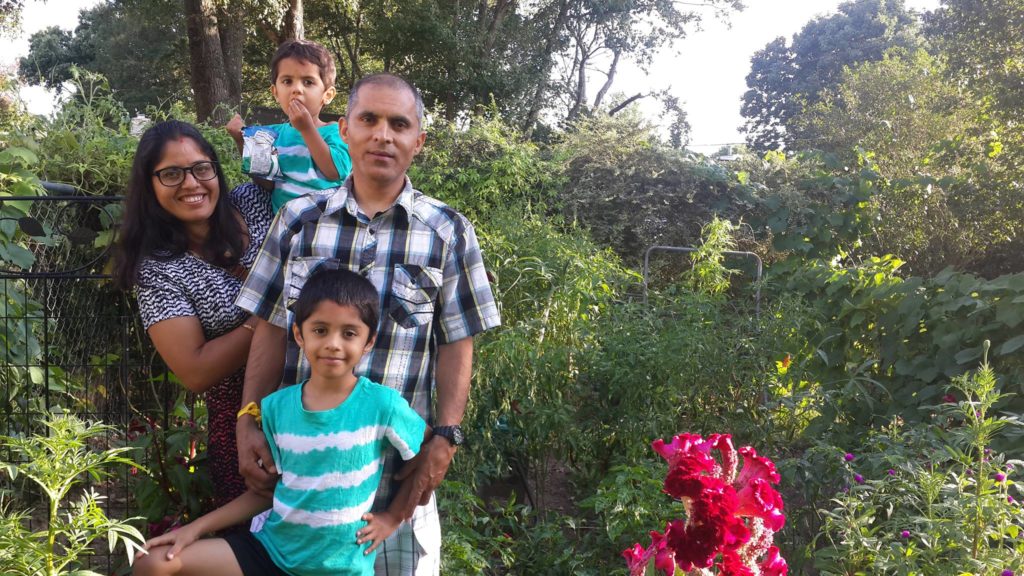
Urban Gardening- success of refugee integration

26,644

By Buddha M Dhakal, Bhagat Rizal and C M Niroula

November 8, 2016, Louisville

A passion for gardening

When a small group of Nepali speaking refugees from Bhutan came to Louisville in 2008, the resettlement agencies knew all about their work history was that they were farmers in Bhutan or Nepal.

At the time when job seeking for many of these unskilled and uneducated elders was a herculean task, Catholic Charities of Louisville brought a program to engage such unemployed elders in gardening. That involved simple tools and techniques of farming in small spaces provided by some churches and community centers. A group of such middle-aged men and women from Myanmar, Burundi, Congo and Somalia also participated in the program in the first phase.

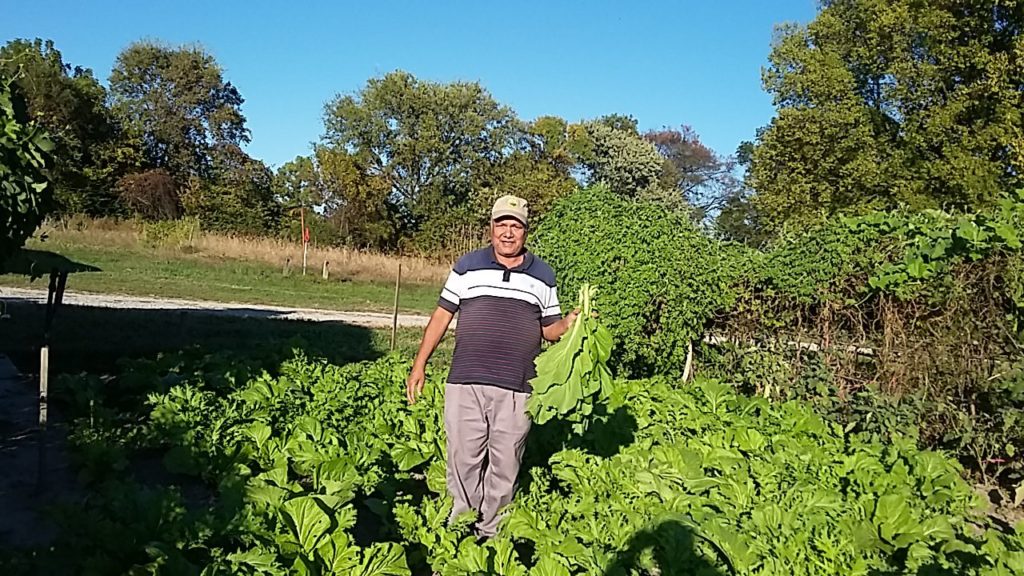
Tanka Adhikari with his Asian Spinach green/Photo: BNS

This program (Refugee Agriculture Participatory Program) of urban farming later received funding from ORR to expand the program to include more people and get more vacant lands to cultivate.

Participant gardeners Gajadhar Dhakal, Teknath Dhakal, Chuda Adhikari and Tanka Adhikari were hired temporarily and soon laid off from the seasonal jobs in 2009. So gardening became their favorite pastime; they worked each day of the growing season to produce best of the vegetables. Bishnu Bhakta Dahal, on the other hand, was a full time employee at a packaging company, but dared to take the gardening for his hard work in Bhutan/Nepal had given him enough stamina for the physical work both ways.

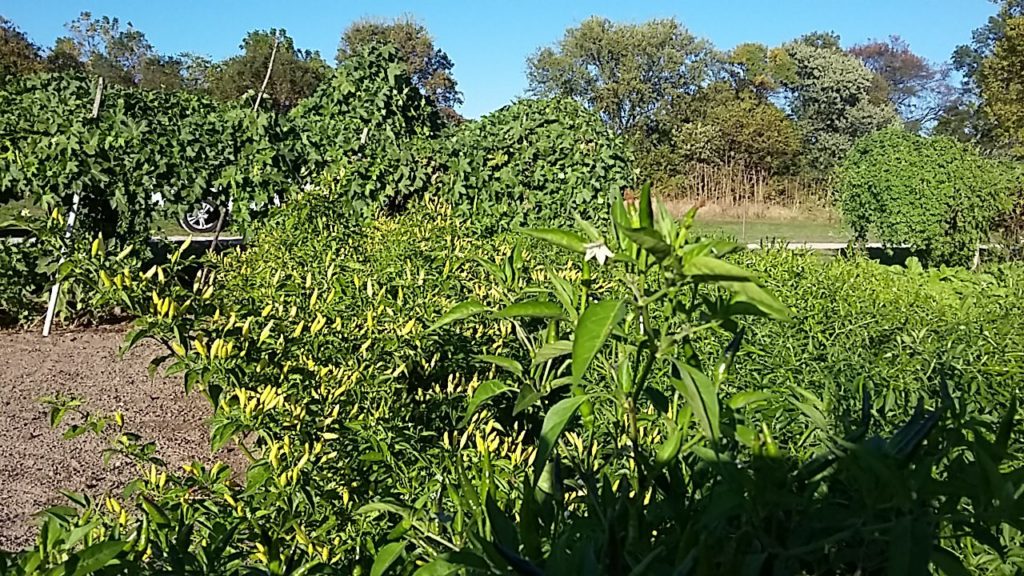
Hot Peppers still in fruit in Tanka's" garden/ Photo: BNS
Hot Peppers still in fruit in Tanka’s” garden Photo: BNS

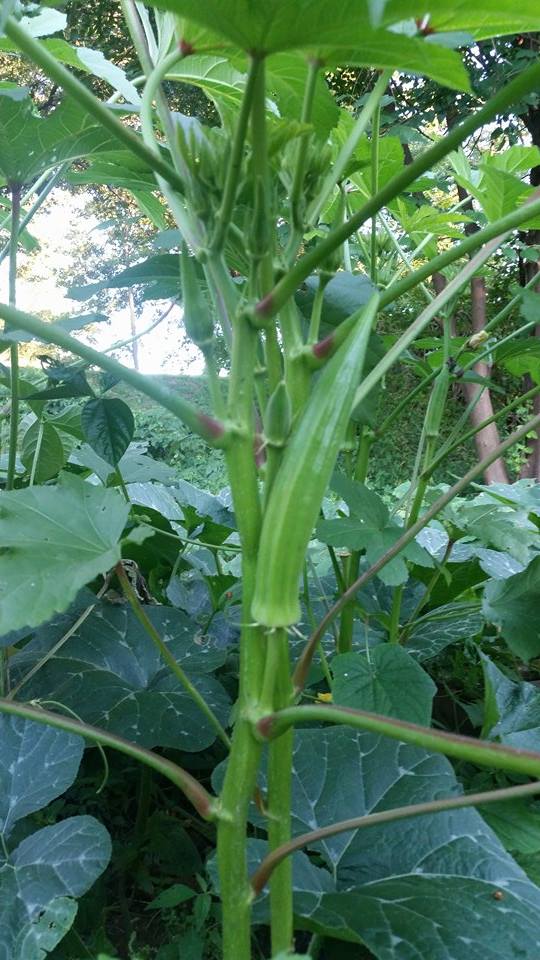
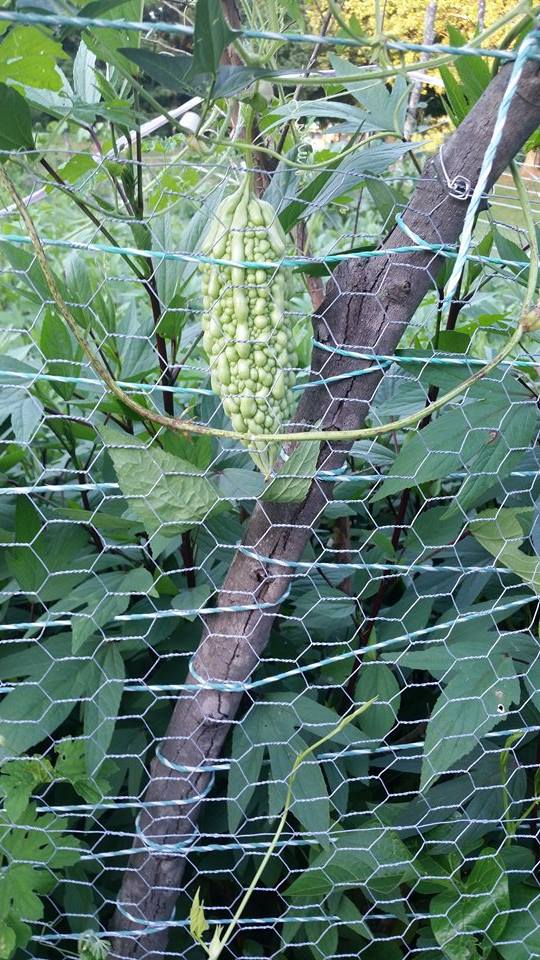
Tanka Adhikari is still a gardening hero in his seventh street garden site. Each day he walks 20 mins to his garden, work all day with the soil and plants he loves, and returns to his one bedroom apartment in the evening. Most of his produce- Asian vegetables- are the ethnic food of Burmese, Chinese, Vietnamese, Nepali and Indian. Okra, string beans, chayote, mustard green, Asian spinach, bitter melons, gourds, snake gourds and pumpkins are what he grows and sells every growing season from May to October.

The refugee agriculture program trained gardeners like Tanka for the initial start-up of seedlings, gave seeds, took for onsite training and workshop tours to other states too.

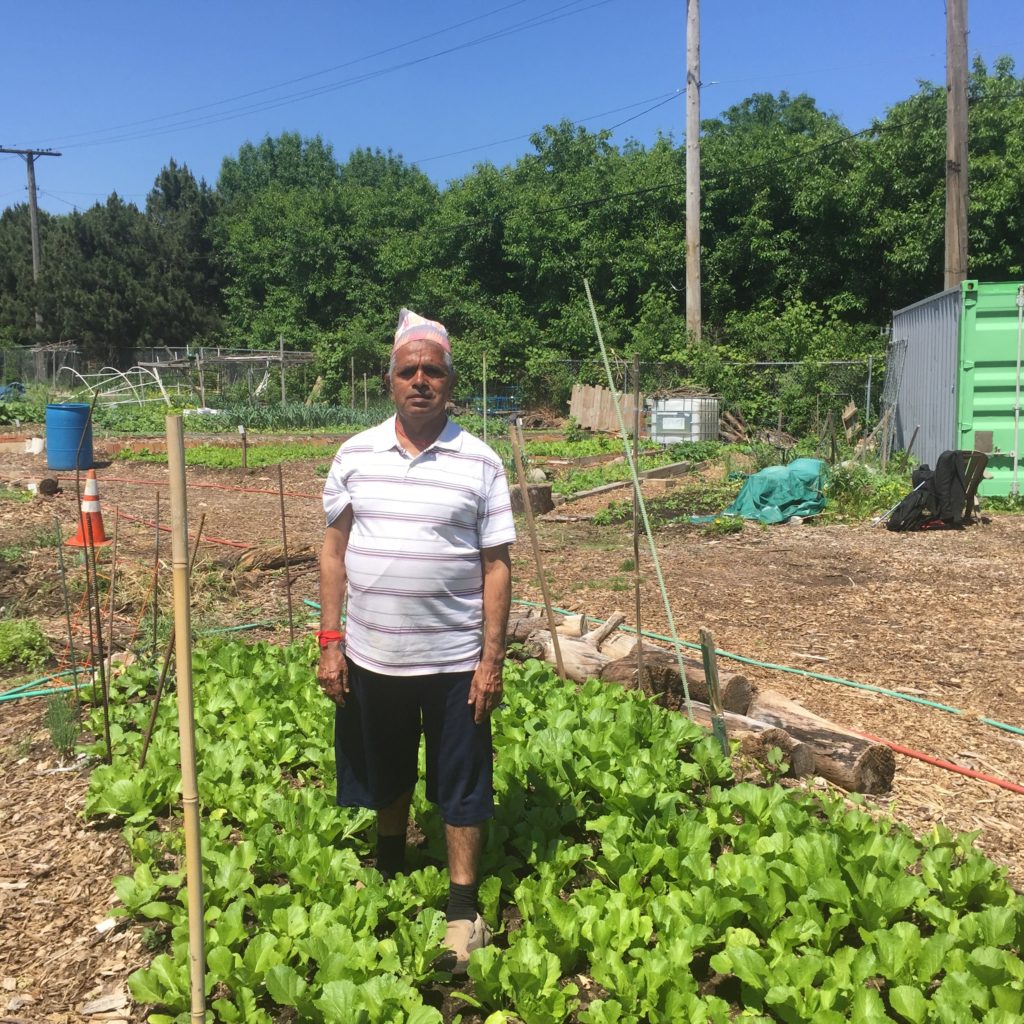
In Chicago’s Global Garden Refugee Training farm, veteran gardener Ram Chandra Khatiwoda, commutes every day in public transportation to reach the garden. There he grows organic potatoes, mustard, peppers, cilantro, and beans.

Khatiwoda at his garden/ Photo: Bhagat Rizal

 Khatiwoda, 57, feels that coming to the garden gives him exercise his body needs. “I am willing to put extra work if I get another garden because of its health benefits to body and mind”, says Khatiwoda as he finishes watering his plants.

 Along with Khatiwoda, Tulasha Darnal, another Bhutanese gardener comes to the garden regularly.

“Although we eat food from the garden everyday, and share to the neighbors, we still make some cash,” says Darnal, who prepares her family food from the fresh harvested product.

About seventy Bhutanese families participate in gardening with GGRTF, a Community Supported Agriculture [CSA] garden where community members pay $350 member fee and pick up food on a weekly basis. In addition to distributing food to the community members, these gardeners occasionally sell food in farmer’s market of Humble park.

Biodiversity of vegetables:

Hasta Bhattarai, a social activist, works with these gardeners in Global garden to help meet their needs- interpretation, securing plots, garden preparation and communicating with the management.

According to him, the diversity of vegetables grown is amazing- bitter melon, eggplant, bitter eggplant, peppers, inkberries, mustardgarlic, garlic,  onion, beans, swiss chard, amaranth, sorrel, purslane, daikon, carrot, basil, cilantro, cucumber, bottlegourd. Some of the products are stored frozen, while some preserved after certain processing. Asian greens are mostly turned to gundruk– abiotically fermented and preserved. Similarly, the daikons (radish) in excess is turned to sinki– fermented and dried sour radish.

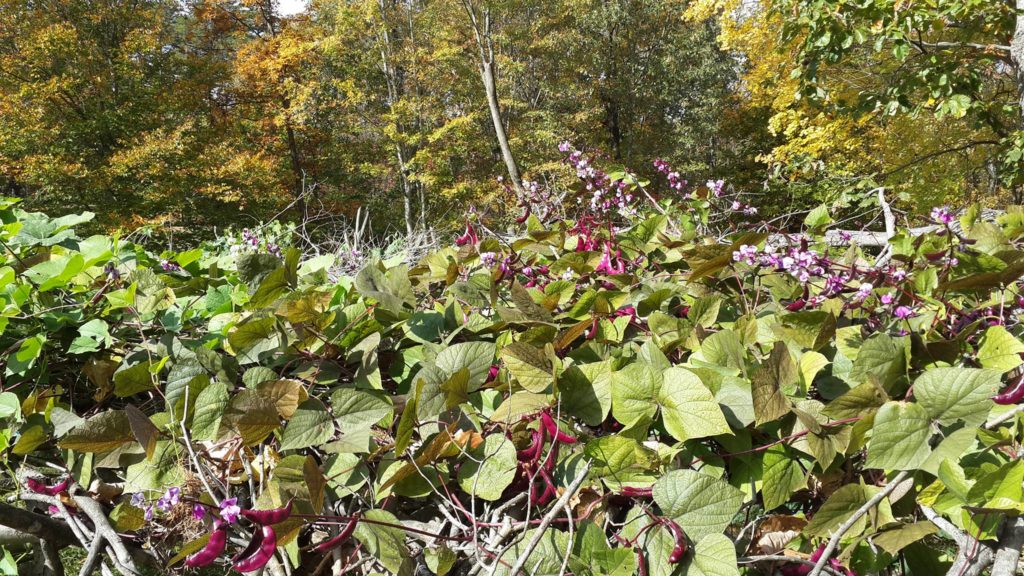
Blooming vines of purple bean/Photo courtesy: Hasta Bhattarai

In New Hampshire, Common Earth Farm in Bedford is a private land donated by Gail Prince, a retired colonel. Here, Kharananda Niroula is the most active. The growing season is pretty short there, but a variety of ethnic vegetables are grown. A typical Nepali pod in vine-Tookruke or Barela (balsam apple) is nowhere in the region, but this farm. “We got second place last year in garden fair due to this new vegetable”, exclaims Kharananda.

“I feel like I’m in Bhutan.  I remember my life in Bhutan – farm and my cattle- when I’ve started working in this farm.  This piece of land give me sense of satisfaction,” Dilli Basnet of Bedford farm spoke with smiling face.

Teknath Dhakal grew long purple beans, potato and mid-size tomatoes in his backyard. Bottle gourd is still fruiting in his and Hari Dahal’s backyard.

Selling the excess: Most products are sold to individual families or in Manchester farmer market.  The largest of all sales is of dalla khursani – the Himalayan hot-ball pepper. “It is sold as much as $40 per pound. People demand from states all over,” said Niroula.

New home owners in Georgia have cleared their backyard to grow such hot-ball peppers, Asian spinach, and pumpkins.  Last year, a Regmi family sold around $2500 worth of these Himalayan peppers.

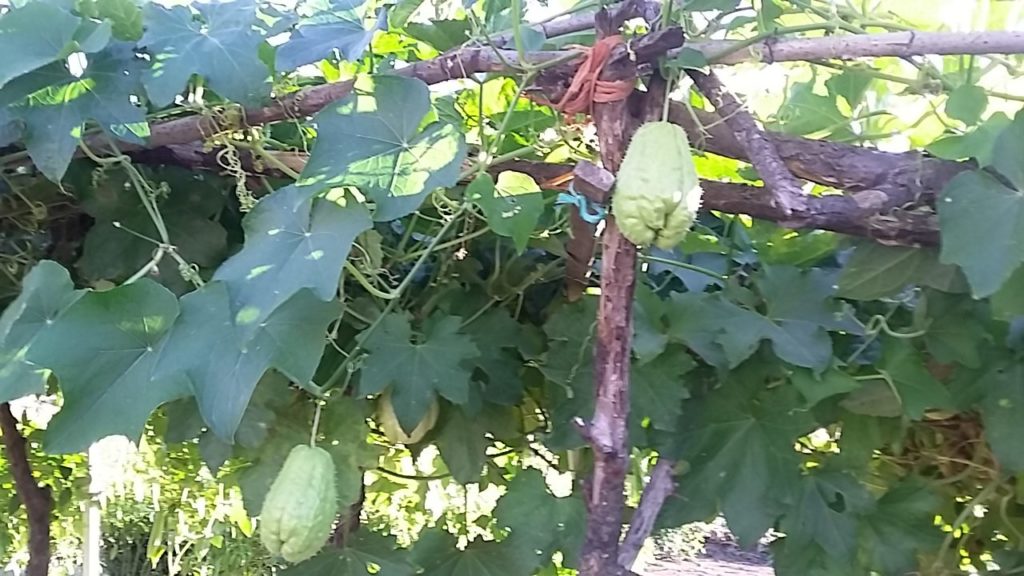
In Louisville, Tanka Adhikari has four 30X30 ft plots. He pays $20 for each plot to the RAPP program. In return, he earns $300-$350 from a single plot of vegetables in a season. It is now end of growing season, but still he has green trailing vines of fruiting Chayote (Iskoos), sponge gourds (luffa) and some greens. Fresh cabbages are taking shapes. “Cabbage continue to grow through snowy winter months too,” Tanka explains.

Hasta and family at their garden/Photo courtesy: Hasta

Bishnu Bhakta Dahal sold packets of green and red chili worth about $500 in the workplace to fellow Bhutanese-Nepali who now form major workforce of packaging company in west Louisville.

Namaste Grocery off the thoroughfares of Bardstown road sells a lot of ethnic vegetables. Pumpkin tips and Chayote tips are best sold ever.

In Southside garden, tall withering bushes of round eggplants and edible hibiscus (Hibiscus sabdariffa) with flower buds are only major vegetables in gardens owned by ethnic Karens from Myanmar.

The common earth farm in Bedford is already cleared. There, growing season is over. In Chicago too, the garden is cleared now as the recommended growing season is 120 days- May to October.

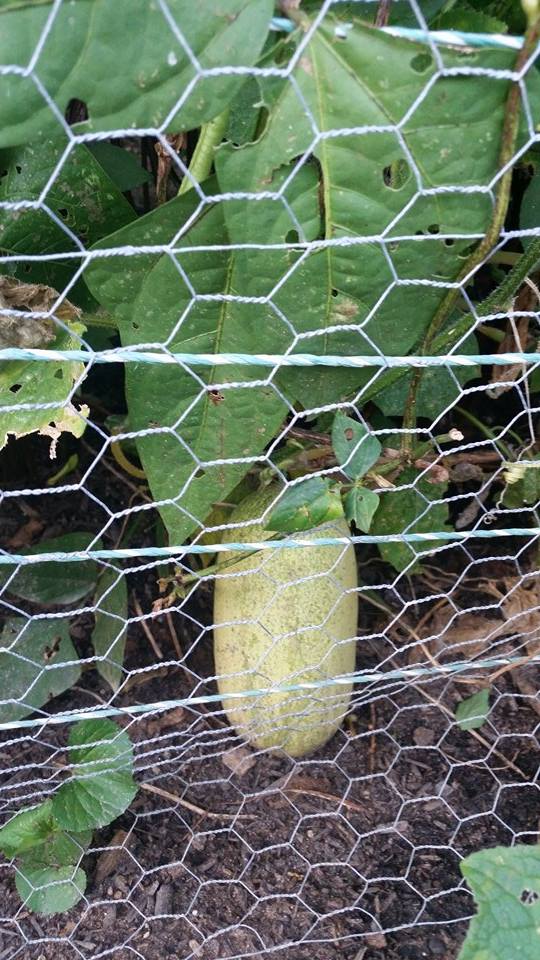
Chayote(Iskoos) at Tanka Adhikari's garden in seventh street/Photo; BNS
Chayote(Iskoos) at Tanka Adhikari’s garden in seventh street/Photo; BNS

Purchasing and exchanging seeds: Some farmers buy seeds online from Nepal’s online market sites, but majority of gardeners look into the shelves of ethnic stores- Indian, Nepali, Vietnamese and Burmese.  Tanka Adhikari bought some seeds of radish and mustard green from a Burmese grocery store. “And that gave good yield,” he says. He also got seeds from his mother in-law in Lancaster, PA.

Kharananda Niroula of Common Earth Farm in Bedford, NH, shops online for seeds. But they also exchange seeds- carry from one state to another during family visits.  Niroula sent hot pepper to Texas and Colorado via mail.

Very often, the seeds harvested in different climate zone do not grow well or not produce any fruit. But Bhutanese gardeners have tried to get first generation seeds from those imported seeds and get the second generation plants to yield.

Rewati Dhakal got seeds of good yielding and tasty pumpkin from a relative in Georgia last year. They yielded well in her backyard in Louisville.

Gardeners buy seedlings at local stores. The Global Garden farm management provides some seeds that are requested by the gardeners. Same is the case with RAPP program in Louisville.

Chitra Niroula, a community farmer cleaning the farm/Fie Photo BNS

More than consumption

Gardening has obviously helped resettled people keep in a social relationship, keep connected and even way to share gifts. Vegetables , seeds and live plants are exchanged. Instead of fancy store gifts, Bhutanese people go to cultural gatherings carrying fresh produce.

Hasta says, “it is keeping our traditional relationships intact.”

In a way gardening contributes to self-sufficiency.
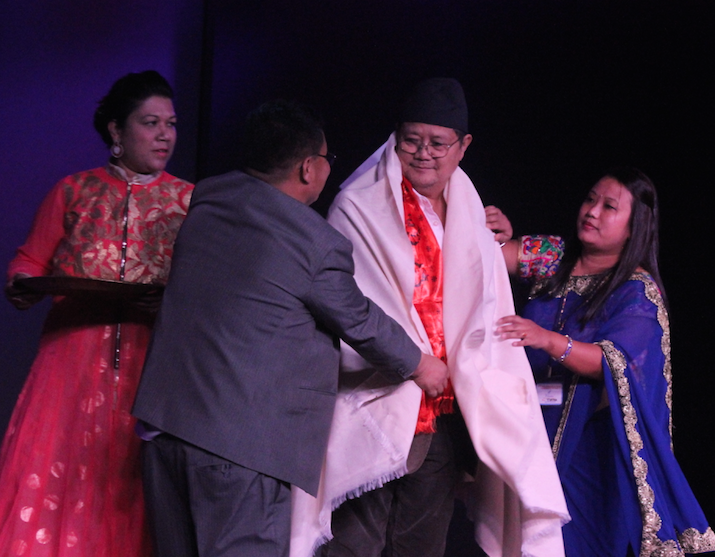
 

Veteran singer Subba performs in Charlotte

26,644

Veteran singer Pratap Subba, who was here in Charlotte Sunday, joined various Bhutanese, Nepalese and Indian artists, and presented some of his legendary songs in a musical event organized by Who Cares International.

During the event, the first Bhutanese singer performed at least three songs including ‘Jasari Fulchha Sunakhari’ which according to Subba was first recorded in early 1980s in Kathmandu-based Radio Nepal studio.

Karma Sherpa, a Nepali-speaking singer from Darjeeling also entertained audience with popular items like ‘Birtako Chino’ and ‘Mann ta mere Nepali ho’ among others.

Audience during the musical event

Artist Sherpa became top fourteen contestant of ‘Zee TV Saregamapa Singing Superstar 2010’ and was also a winner of Swar Sri 2006.

The event, which was chaired by Nepalese journalist Gopal Gadtaula, also saw local Bhutanese singers, dancers and Nepali artist Arjun Sapkota, according to Manoj Rai of the Who Cares International.

Meanwhile, a new music album titled Saaraa Jivan by Ken Mainali, an emerging singer from Charlotte was also jointly released by various artists, guests and his family members. The album priced at US $10 contains six modern songs.

Saaraa Jivan by Ken Mainali being released

According to the organizer, the musical event was mainly focussed on raising awareness on mushrooming cases self-killing in the Bhutanese community.

“The program was also organized with a theme — show respects to seniors and parents,” Rai informed BNS.

Each person was ticked $15, and around 100 Bhutanese and Nepali attended the event sponsored by local grocery stores, community real estate brokers and a restaurant.

Census and Citizenship issue: a life in limbo

By Buddha Mani Dhakal, Louisville, KY

Sarki Dhan Rai never got chance to attend school in his village in Lokchina.

His father, Hasta Bahadur Rai, died when he was five years old. His mother, Tham Moti Rai,  who raised three kids, two sons and a daughter  died in 1985. The three orphans had no one to take care of thereafter.

Sarki Dhan, Birkha Maya and Birkha Dhan did not see any purpose to remain in the village after they became orphans in such tender age.

A copy of official letter he received from Home Ministry. Photo Courtesy: Sarki Dhan
Copy of letter from Registration Dept. of Home Ministry to Chhuka Dzongda. 
Photo Courtesy: Sarki Dhan

The three siblings did all kinds of odd jobs to fend for themselves. Going from one place to another in Bhutan became their Hobson’s choice , but never left the country to find other greener pastures.

 Now, comically, Rai and his family of five are ‘stateless’ in their own county of birth.

They were dropped out of census record in 1993, because they could not attend that census enumeration of Lokchina Gewog in person. They even did not realize that it was mandatory to be in the village at the time of census, as they had left it long ago to find a living. Per him, he then was working in Paro as a laborer.

Rai is a taxi driver, married to Nir Maya Tamang from Lamizingkha (Kalikhola) and has three kids. Although his wife is still in F1 census, the kids are listed under his dropped census record.

The Rai family is struggling to get their Bhutanese nationality reinstated, and the process of appealing and re-appealing has taken ever. They have been commuting from one office to another, oscillating back and forth from King’s secretariat to the Gup office in Lokchina Gewog or to the Dungpa office in Phuentsholing.

A letter with little hope he received 13 years ago. Picture Courtesy: Sarki Dhan
A letter with little hope he received 13 years ago.
Picture Courtesy: Sarki Dhan

According to Rai, his original citizenship (ID number 0303574) card was taken by immigration officer at Wangchhu check post on the ground that he had not renewed his census status. He has obtained the citizenship ID in the village from census team.

Sarki Dhan  is now weary of all futile petitioning and gathering evidences of his Bhutanese nationality.

He said to BNS from an undisclosed location in Bhutan, “I have done everything possible and required to straighten the census record and get back my citizenship card. I have appealed four times to the HM Kings- once to the fourth King and thrice to the fifth King. I even got a brief audience while HM was in Lokchina last year for the Dashain Teeka ceremony. Everything seems to fail.”

The pernicious effect of Sarki Dhan’s foiled census record traversed to his sister’s family. His elder sister married to a man from Trongsa, (now divorced), is a bona fide Bhutanese (F1 category). She has been put in the same limbo of citizenship. The three children born to them are now regarded illegally registered in the census record of Home Ministry.

The problems created by census dropout are in manifolds. Sarki  is not able to renew his driver’s license, and he is provided with a permit to travel, that too requires renewal. He is worried about the education and job of his children in future.

The Rai family did not own land and lived as sharecroppers since their father’s time. He did not know whether his father was registered under landless (sukumbasi) list. The original Thram number and house number assigned to their landholding went to elder brother of his father, depriving them of all fixed property.

“People like us do not get justice in Bhutan. There are so many others who have similar cases of foiled census like me, but no one likes to talk about that because of the deep fear that looms everywhere,” he said in a telephone conversation.

According to the Nationality Law of Bhutan 1958, any person shall be considered Bhutanese citizen, if he/her father is a Bhutanese national and resident of the Kingdom of Bhutan.

Alternatively, a person shall be Bhutanese national if he/she is born within or outside Bhutan provided his/her father is Bhutanese national at the time of his/her birth.

But, according to the Citizenship Act 1985, a person whose both parents are citizens of Bhutan, shall be deemed to be a citizen of Bhutan by birth.

Also, citizenship by registration defines a Bhutanese citizenship on the basis of census record maintained by Home Ministry, for any person who have lived in Bhutan on or before 31st December 1958. Though this date is arbitrarily set, several people like Sarki Dhan have been denied full citizenship status even when they proved of their domicile in Bhutan from early 1930s.

Sarki Dhan has documents to prove himself a Bhutanese in all of the above clauses, except that he was dropped out of census in 1993.

Images of the required land Tax receipts. Picture Courtesy: Sarki Dhan
Images of the required land Tax receipts.
Picture Courtesy: Sarki Dhan

To support Sarki Dhan’s case of census, status of 1958 land tax receipts and ancestral domicile in Bhutan, Lyonpo Om Pradhan, advocates in his book ‘Bhutan: Roar of the Thunder Dragon– “These receipts were never meant to be retained as proof of citizenship or indicate a person’s date of arrival in Bhutan. If proper identity cards were issued at that time, things would have been far easier…”(page:159).

Rai’s family have never been out of the country. Neither they had involved in any anti-national activities or engaged in illegal business. This is mentioned in the affidavit provided by Tshogpas –elected local officers- Makulal Rai, Dal Sur Rai and Som Raj Rai in April 2003.

When he did not return to his village in Lokchina for census in 1993, the officials would have thought Sarki Dhan absconded. But he was uninformed and unaware of the ongoing census. Per him, he was working in Paro as laborer then. He was not given chance to correct it later.

Copy of the affidavit he received from the Tshogpas. Picture Courtesy: Sarki Dhan
Copy of the affidavit he received from the Tshogpas.
Picture Courtesy: Sarki Dhan

Providing citizenship to general people is a royal prerogative in Bhutan.

Article (6) of the constitution of Kingdom of Bhutan mentions-

6.4: The grant of citizenship by naturalization shall take effect by a Royal Kasho of the Druk Gyalpo.

6.5: If any citizen of Bhutan acquires the citizenship of a foreign State, his or her citizenship of Bhutan shall be terminated.

6.6: Subject to the provisions of this Article and the Citizenship Acts, Parliament shall, by law, regulate all other matters relating to citizenship.

The copy of an appeal made to the His Majesty the King. Photo Courtesy: Sarki Dhan
The copy of an appeal made to the His Majesty the King.
Photo Courtesy: Sarki Dhan

Rai appealed to the king for kidu on citizenship as per this provision in the constitution. Kidu means “wellbeing” of the people that is fundamental responsibility of the Bhutanese monarch, having been a traditional “royal prerogative”. It is now enshrined in the Constitution of Bhutan, is stated in the Royal Forums. The fourth and fifth kings had ordered the lower officers to consider the case. But there is deaf ear on his appeal to the highest court of appeal too.  However, he is not acquiring citizenship by naturalization, neither he has citizenship of another country.

Despite ample evidences of his father and grandfather’s domicile in Chhukha district, taxes paid to the government predecessor to the fourth and fifth kings, and the local government officials verifying their Bhutanese origin, Rai is not yet served justice. The officials at census department and Home Ministry seem adamant to correct his record.

 He sees, at least, a dim light at the end of the tunnel. He is tirelessly praying  for a benevolent  breakthrough from His Majesty the King.


अस्ट्रेलियामा ‘कंगारूको देशबाट’ विमोचित

पदम काफ्ले
सिड्नी, अस्ट्रेलिया

अस्ट्रेलियाको मेलबोर्न सहरमा गत अस्टोबर १५ का दिन एक भव्य सांस्कृतिक कार्यक्रमका बिच ‘कंगारूको देशबाट’ नामक गजल सङ्ग्रह विमोचन गरिएको छ । अस्ट्रेलियाबासी भूटानी समाजका युवा गजलकारहरुको संयुक्त प्रयासमा उक्त गजल सङ्ग्रह प्रकाशनमा आएको हो । कृतिमा २५ जना गजलकारहरुको २०३ गजलहरु समावेश गरिएको छ ।

भूटानी सामाजको आग्रहलाई स्वीकार गर्दै नेपालबाट कार्यक्रममा आएका युवा साहित्यकार तथा चलचित्र निर्देशक प्रकाश आङ्देम्बेलाई अन्य अतिथिहरुले कृति विमोचनमा साथ दिएका थिए । नेपालमा रहँदा भूटानी समाजसँग निकट रहेर साहित्यिक उत्प्रेरकको भूमिका खेलेका आङ्देम्बेले कृतिबारे चर्चा गर्दै भने, “यस कृतिको महत्त्व समयले बताउँदै जानेछ । नेपाली साहित्यको सेवामा अनवरत लागेका नेपालीभाषी भूटानीहरुको योगदान उच्चस्तरको छ।”

प्रमुख अतिथिको आसनबाट बोल्दै आङ्देम्बेले भूटानीहरुको भाषा-साहित्याप्रतिको लगावको उच्च मूल्याङ्कन गर्दै प्रश्न गरे,“वास्तविक नेपाली हुन के चाहिन्छ ? नेपाली जातिप्रति, संस्कृतिप्रति, भाषाप्रति, साहित्यप्रतिको योगदान या नागरिक हुँ भन्ने फगत भ्रम दिने नागरिकता नाम को कागजको खोस्टो ?”

कृति क्रिएटिभ सर्कल अस्टेलियाले प्रकाशनमा ल्याएको हो र कृतिको सम्पादन दुर्गा रिमालले गरेका छन् ।

Dashain Tihar program in The Netherlands

October 20, 2016 The Netherlands

BCN artists performing
BCN artists performing/Photo: BCN

Bhutanese Community in The Netherlands (BCN) organized its planned  Dasain and Tihar (2016) program on  October 16 2016 at a community hall in Beusichem, a small Dutch town at eastern part of The Netherlands.

Elder member Mrs Pavitra Khadga offering Teeka
Elder member Mrs Pavitra Khadga offering Teeka/Photo: BCN

BCN coordinator, Mr. Gopal Gurung led the moment of silence observed in the name of those community members who left for heaven during various stages of our refugee lives and could not be by our side during this festival celebration.

 Opening the program, BCN General Secretary  Ram Karki welcomed everybody present on the occasion and expressed good wishes for the successful end of the program. He further highlighted in brief about the importance of celebrating Dasain and Tihar and wished everybody a very happy Tihar. Bhutanese people actively participated in receiving Dasain Tika, Jamara and blessings from the community’s eldest member present Mrs. Pavitra Khadga. The Deusi and Bhailo  was also played in traditional manner by the men and women respectively. BCN’s long tradition of promoting its own community artists and skills has been further implemented by giving sufficient space to the community artists in every spheres of cultural events like live music, songs, dances . Popular community artists, Tufan Ghale, Yadu Rai, Jitu Rai, Mitra Rai, Saroj Rai, Ronald Gurung, Prakash Gurung, Avisekh Gurung, Chandra Chhetri, Raju Chhetri and their company performed in their best possible manner in various Nepali songs. Little sisters Karina and Kanchan Khadga and Guest artist Mrs. Ankita Acharya entertained the audience with their dances in popular Nepali songs. The band led by Mr. Yadu Rai and Mr. Mitra Rai rocked the opening session with their performance of Kanchi Hai Kanchi song that prompted  spontaneous dances by the audience.

Guest of the program speaking
Guest of the program speaking/Photo: BCN

Chief Guest of the event Mr. Marco, a Dutch Police Officer expressed his happiness and gratitude for inviting him as chief guest for the occasion. “ I am blessed to receive Tika, Jamara and Blessings from BCN elder Mrs. Pavitra Khadga” and further stressed his appreciations for organizing such a splendid cultural program in their newly resettled country. He thanked the community for making him and his wife Ariette special guest and hoped to participate in future programs if invited.
Speaking on the occasion Mr. Henk van Velden, a Dutch guest shared his experiences during his numerous tour of Bhutan and Nepal. He appreciated the community for organizing such a nice program in their new country of settlement and spoke the importance of promoting and preservering ones cultures and tradition wherever they go. He expressed his appreciations for inviting him and his wife Marian in the program and he hoped to attend in such programs in future too. Traditional Bhutanese and Nepalese dishes that were prepared jointly by Mr. Bhakta Khadga (CC member) and family, Chandra Khadga and family, D.B Budhathoki and family, Mr. Gopal Gurung (CC member) and Mrs. Jamuna Karki were served.

Ram Karki chaired the program while Prahlad Chhetri played host of the program. Gopal Gurung the coordinator of BCN, thanked everybody for their presence and  expressed his gratitude to the dutch guests for accepting the BCN invitation. Mr. Gurung mentioned special thanks to all BCN CC members including Deo Kumar Rai,  Bhakta Khadga,  Pralad Chhetri, Jitu Rai, Khem Bhandari and Mamta Basnet for their active roles to make the program grand success. Mr. Gurung also thanked BCN President Mr. D.P. Mainali, for working hard to make program possible by arranging the hall and coordinating with community members. Mr. Mainali is away at USA for his private visit. He further thanked all the artists and volunteers for their excellent performances.
The program concluded with a DJ entertainment.

Note: Ram Karki from Hague contributed to this news article.

Dashain Teeka offered at Lingkana Palace

26,644

Their Majesties the King and Queen of Bhutan granted ‘Teeka‘ and blessing to the Hindu Community of Thimphu yesterday at Lingkana Palace, the official residence of the King of Bhutan.

Officials of Hindu Dharma Samudaya, a religious organization of Hindu community of Bhutan were present along with the priests who performed Durga Pooja at Lingkana Palace. The teeka ceremony took place under the leadership of Minister of Information and Communication Lyonpo D N Dhungel.

HM with Hindu community during Teeka
HM with Hindu community during Teeka/Photo credit : Kuensel

His Majesty King Jigme Khesar and Her Majesty Queen The Gyaltsuen offered prayers at the pooja stall along with the new prince Gyalsey.

His Majesty also granted traditional Dashain lunch to the representatives of Hindu community who made to the teeka ceremony.

The tradition of receiving teeka from the King of Bhutan is a unique way to exemplify the religious harmony between Hindu and Buddhist communities in the country.

The day of Dasami ( Vijaya Dashami) is declared national holiday in Bhutan.

A teacher from Denchukha did not go home for teeka, for he could not afford to lose classes for his kids now studying in Wangdue.

Meanwhile, this year Dashain coincided with Thimphu Tsechhu. So, with extended holidays thanks to tsechhu,  lhotshampas living and working in Thimphu could travel up to their villages and enjoy the festival with more relaxation.

One day interstate volleyball in VT

26,644

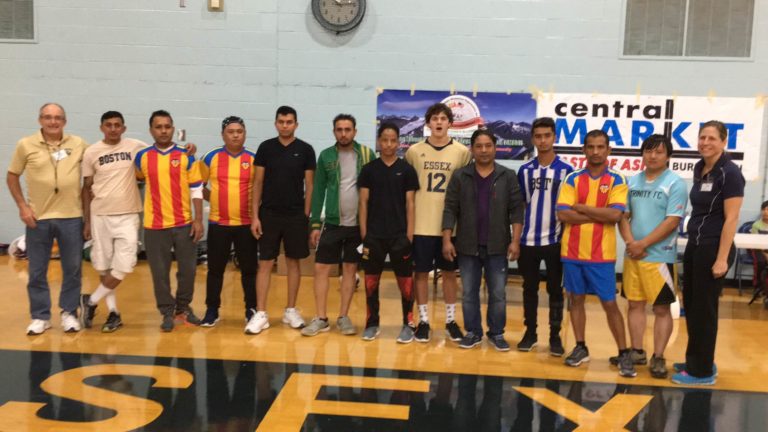
One day volleyball tournament concluded in Vermont  played October 8, on occasion of great Hindu festival, Dashain.

“We want to stand together to showcase our festivals to the  community here in Vermont”, informed Raghu Acharya president of Green Mountain Bhutanese Organization (GMBO)

Nine teams played the game from 9:30 am to 7 pm at 2 Educational Drive, Essex Junction.

Players and judges
Players and judges

“Intended to bring youth, adults and Children together through games and sports that can help them to grow mentally and  physically.  GMBO shall play a role of bridge for any interested youth, adult and children if they are interested to continue practices volleyball and other similar games and sports. We will try helping them, but they should come up with interest, enthusiasm, and sportsmanship, informed the president, Raghu Acharya.

“We have not only included our Bhutanese community in state teams, also included are Essex high school students to know of our custom, culture and traditions”, Acharya told to BNS.

Players and officials of the game

Girls from MA and VT played exhibition match, which went in favor of Massachusetts.

Noah Eaton of Essex High was declared man of the match.

Tulshi Bhandari, Karen Chesser-phil, Kabir, Sonam Tamnag and Om Basnet judged the games.

According to Acharya, the  financial supported came from individuals, local community owned business(s) and a manufacturing company Twin Craft, Winooski,
Jefferson Goodrich, Athletic Director of Essex High School provided the facility.

Bhutan Imprisoned My Wife

26,644

Ganga Ram Nepal, 87, originally from Samdrup Jongkhar district in southern Bhutan currently lives in Pittsburgh Pennsylvania, chronicled the journey of his life along with the cause of his forceful expulsion from Bhutan. Rup Pokharel of Bhutan News Service wrote this essay based on his actual narratives.

For most countries in the world, Ganga Ram Nepal’s age for him would be an honorary moment for all his contribution made to build his country. He would have been granted social security, medical care, and most importantly, the honor of course but his country of birth simply expelled him out of the country instead. Fortune must have favored him; he eventually landed in the country, the United States of America where he has most that he deserves.

Ganga Ram Nepal, narrator of the story. Photo Courtesy: His Family
Ganga Ram Nepal, narrator of the story.
Photo Courtesy: His Family

Ganga Ram Nepal tells his story:

I was born in 1929 as a third child to my parents at Goshi, Dagana district in southern Bhutan. My early childhood began befriending with the hills and hillocks, cattle and farm. I didn’t know and I did not try asking my father either, why he decided to move to Surey in Sarbhang district (now they call Sarpang). I was just 15. There was no road and we had to walk or ride a horse. It sounds to me like an ancient tale recollecting the journey I made in my life. I have traveled a lot.

I got a basic literacy skill in Nepali from my father at home along with learning farming and making domestic animals as my friends. I started working for Royal Government of Bhutan (RGOB) since I was 18 as a Chaprassi (check post guard) for the local government. After around 23 years of stay in Surey, we decided to move to Daifam in Samdrupzongkhar. At the request of Mandals Dip Bahadur Nirola and Tulshi Pradhan, we changed our mind in 1966 and moved to Neoly, Bhutan.

Although there were some schools run through some of the monasteries in few districts like Ha, Bumthang, and few others, there was no any school in and around Dalim block in Neoly. It was since mid-1960s formal schooling for the children enlisted in the national plan. In Dalim, first, I started meeting families in the village and encouraged them to educate. After then, we started teaching alphabets in one small house to children around. Some of those kids later became doctors, teachers, and high officers in different fields.

In Neoly, I worked as a tax collector, Baidaar, at irrigation project and at Public Work Department (PWD). In 1978 I was elected as Mandal (block in-charge; many villages make one block) of Dalim Block ( Pemathang-current name). This position is now called as gup.

In 1984, Surya Man Khadka, mandal of Daifam block and I were the two mandals given audience by the fourth king, Jigme Singye Wangchuck during the Hindu festival, “Dasain” in Thimphu. That was not my first meeting with the king, though. While I was in Surey in Gelephu, many times I had assisted the third king Jigme Dorji Wangchuck, prince, and other royal family members during their hunting tours. We had to go around the forest to maneuver wild animals towards the open place where their majesties could shoot from the safe place.

I was mandal till 1987. Because of my age, I was asked to handover the job to another person. Yet, unofficially I continued helping people and the government. Unfortunately, the 1988 categorization census for Dalim residents was conducted from my house. I found the census officials categorizing people into different F- Groups as they like.

The genuine documents of many people were taken in the pretext of verification and then were damaged. Many people started seeking my help to ask the officials about their documents. The officials made different stories every day and then finally refused to give back saying that the documents were found fake and destroyed.

A cash crop orchard Ganga Ram recalls planted in his land. Photo Courtesy: His Family
A cash crop orchard Ganga Ram recalls planted in his land.
Photo Courtesy: His Family

I was the first person to report about the mishandling of documents of the people to the councilors, (chief advisors to the king in Bhutanese context) and National Assembly members representing southern districts in Thimphu. Officials taking the census were randomly placing people into different categories.

It was the same cause that Sita Mothay died by suicide in Tshokana, Chirang (Tsirang-current name). Mothay died for she was a foreigner married to a Bhutanese citizen because that placed the family members to different categories: Her husband was F-1, a genuine Bhutanese Citizen whereas she was categorized in F4, a non-national woman married to a Bhutanese man. Their children had uncertain future as they were born to a foreign national. Mothay’s case became one of the representative cases of the Lhotshampa (southern Bhutanese) issue of the 1990s.

The people’s appeal – underlining indiscriminately making genuine citizens into non-national by the Dzongdas (district administrators) and census officials was submitted to the king by their representatives based in Thimphu. King Jigme Singye Wangchuck decided to visit the southern districts to listen to people’s concern in person. The message from His Majesty’s visit was sent to the district administrator in advance for making an arrangement of a public gathering to hearing the people’s grievances.

However, there were some ploys orchestrated by the district officials before the king’s arrival. All the officials were mobilized in the district by the administration to warn people for anyone in case happened to speak to the king filing complaints, then the complainer would be sent beyond Sarbang (the boarder) with their beddings. This means that the complainer would be expelled from the country. The officials informed the people about the king’s purpose to visit the district was not to hear any complaints but wished to hear people saying – ‘we are happy and everything is running well’.

There was no place to hide the fear. People had to speak what they were told. And, they did.

It was then, the king ordered Tek Nath Rizal’s immediate arrest after reaching Thimphu. It was the result of misinformation. I doubt if the king knows the reality even today. If anyone says – the laws of Bhutan are practiced in the true spirit that will be a miracle. Still today I don’t believe. Those officials they themselves did not know what the law interprets- if it existed. Officials in the field make the laws and enact in Bhutan depending upon the type of people they serve. And, moreover, it is like a culture.

Take for example, my own case. The locally made laws made me non -national. I am one of the living witnesses of the entire cause in Bhutan. The local government officials targeted me for no reason that I know of. While, there were some good officials in the district as well as in Thimphu, who used to caution me, give updates on what was being planned.

Since late 1990 I started feeling insecure. A social worker in the locality and Mandal, Bhakta Bahadur Pokhrel was arrested and murdered in the prison. Few of the witnesses who saw him breathing his last must be still alive somewhere. I spent sleepless nights for months after his death with the flashback.

Nepal recites holy book at his residence. Photo: His family
Nepal recites holy book at his residence.
Photo: His family

My mother was 103 years old and one of my sons was disable. More than me, I started seeing them vulnerable and insecure. I decided to take them to a safer place until the situation gets better. I took them to India and left under the care of a friend of mine.

It was my luck and my wife’s bad luck; a group of army raided my house one day. I was in India then. They inquired about me and searched every important document in my house. They arrested my wife, Lila Maya, the reason, let Bhutan government knows. She was imprisoned for 17 days and released.

She was kept in the cell next to where -Kali Bahadur Budathoki and Dilliram Katwal were imprisoned. They were the witnesses. She reached home with marks of army boots and canes on her body. She was on the same clothes that she was wearing when she was taken from home but all torn. I couldn’t imagine the sense of humanity in the settings of Bhutanese officials. She was not in the position to tell me what all had happened to her. She died of leukemia, later, in 2001 without letting me know what they all did to her in the prison.

I was asked to fill out Voluntary Migration Form (VMF) after my wife was released.  I was asked to fill the form and receive money from the government for the land. I asked those officers, how a non-national can own land in the country. Poor they, they had no answer. “This is the order from the higher authority”, were the words they were with. I denied filling out the form. They warned me to think in next few days and left. For me, the ancestral 38 acres of land, the herd of cattle, and crops in the field became of no value before the lives of my family members.

I decided to leave before they force me to fill the form and make me sign. I don’t know exactly what was the content in the VMF- the people who could read Dzongkha later interpreted me some parts of it saying, ‘I am leaving the country on my own will. I have no any bad feelings towards the government. I am in sound mind handing all my properties to the government after receiving the total cost it worth’.

Finally, I ended up in the refugee camp in Nepal with my family members. I lost my mother, wife, two sons and a granddaughter in Nepal. I am not emptied with the loss though; I have still five sons and four daughters and many grand children.

I had left the country with a hope to return one day and die in the land I was born.

The circumstances landed me in this country that I had never dreamt of. Meanwhile, those memories keep haunting me. My inner soul still is walking towards the dream I had, the dream of dying in the land where I have spent eighty percent of my life. I know, I cannot make it in my remaining days; yet, hope is still walking through days and nights. Nevertheless, I have everything; I am well cared, and am getting proper medical treatments, my sons are working and making their good living and my grand children are getting their education. I am happy for these good things at least.

BSK to organize voter registration and soccer game

26,644

 Louisville, Kentucky 

September 30,2016

Long line of voters/Photo source
Long line of voters/Photo source:thinkstacksphoto.com

Bhutanese Society of Kentucky has announced two days for new citizens to register for voting and  soccer tournament. In a media release sent to BNS, October 1 and 2 shall be used to reach out to as many naturalized citizens to register them for voting.

The media release also mentions of the BSK program to honor the elderly Bhutanese  for having naturalized to US citizens. It shall be an opportunity for these new citizens to exercise their right to vote in democracy, says the release.

The opening of soccer shall be at 9:30 am and the first game scheduled to be played at 10 am. The game and the voter registration shall take place at a soccer ground located at Buechel Bank Rd.

After the final game is over on Sunday, the senior citizens shall be honored at 4 pm.


Support JRS Global Education Initiative

26,644

Support JRS Global Education Initiative

The resettled Bhutanese Refugees in the US and elsewhere in the world would be struggling harder to integrate into the mainstream society had there not been a high-quality education offered in the Bhutanese refugee camps in Nepal. When asked to the beneficiaries of the education, they can easily blurt out the provider’s name, “CARITAS – Nepal.” However, less of them would have known who were working with CARITAS – Nepal behind the scene. The opportunity to learn and give back to one of the philanthropic organizations has now come.

Students during the morning assembly prayer in the refugee camp school in Eastern Nepal Photo Courtesy: Matthieu Alexandre
Students during the morning assembly prayer in the refugee camp school in Eastern Nepal
Photo Courtesy: Matthieu Alexandre

Bhutanese Refugee Education Program (BREP) is praised to be one of its kind ever offered in refugee camps anywhere in the world. The key to being the best one was with the support extended from UNHCR, and handful of NGOs like Agency for Personnel Services Overseas (APSO) and Jesuit Refugee Service (JRS). When the first schools were established in the camps in 1992 and 1993 by UNHCR and CARITAS- Nepal, international volunteers with specialized skills, from JRS, were the second to CARITAS from the start.  Former BREP Director, Rev. Father Amal Raj and Rev. Father Verky of JRS in Damak, Nepal were the pioneers of the refugee education program whose tireless contributions to education will never be forgotten.

Today, many of the refugee children are continuing higher education in prestigious Universities in the US in addition to their success in many businesses and in professional field.

It is only for those fortunate ones that the time would urge to give back and support such services. For Bhutanese, it is high time to remember the services received and act now to support JRS fundraising initiative that are scheduled in the month of October 2016 in 11 cities in the United States for World Education Initiative.

Many America’s popular musical acts are coming together for a multi-stop concert tour to raise awareness of the unprecedented worldwide refugee crisis. Concerts for Refugees will feature Grammy Award-winning artists Emmylou Harris, Steve Earle, Patty Griffin, Buddy Miller, and The Milk Carton Kids. The concerts will be intimate evenings of acoustic performances benefiting JRS’s Global Education Initiative.  The musical tour helps displaced people heal, learn, and thrive by providing educational opportunities for refugees living in camps and urban settings in 45 countries.

To learn about VIP events around the concerts, and to find out ways you can contribute to the Global Education Initiative.  Please click here

You can also donate by clicking the following link
How BREP was operated? Visit here

BNS urges the readers to be a part of the JRS Global Education Initiative and support refugees around the world as we were supported!