This is why I am voting

By Khadga Bahadur Khatri
, North Carolina 

I am 84 now, and for the first time I will soon have a chance to learn what it means to participate in a real democracy. I cannot wait to cast my ballot as a US citizen, especially given my past.  Years ago, I was forced out of Bhutan by an absolute regime that denied democracy to its citizens. There, I had worked closely with the third King, whom I served in the royal palace as a bodyguard.

Biding time and waiting for repatriation in refugee camps in Nepal, we were all pro-democracy. We desperately wanted to return home. That did not happen. We wanted to see Bhutan transformed into a real democracy. Our demands were never met. Rather we suffered miserably in the camps for over two decades. There are still people waiting there.

These days, Bhutan calls itself a democratic country. The prime minister of Bhutan recently wrote a letter to a U.S. Senator claiming that we never belonged to that land, and that we should not be called ‘Bhutanese’. He insists we are ‘terrorists’. Does that mean the royal palace back then had hired a terrorist (me, in this case) to protect the precious monarch and his family?

This only evidently speaks of the fact that the democracy—something the regime champions all the time—in Bhutan is spurious to rely on. By now we should understand that Bhutan is really good at deceiving the international communities. I’ve got evidences to support I was a genuine Bhutanese citizen, not a terrorist.

Khatri in action narrating his story to the scribe of this post. Photo: TP Mishra
Khatri in action narrating his thoughts on U.S. elections. Photo/TP Mishra

In 2007, the United States was very generous to offer us with the option of resettlement. Our resettlement in this great country not only gave us a new hope and a home, it also makes us experience what it feels to live in a real democracy. I’ve never had the opportunity to attend schools in my life. I don’t know how democracy is defined academically. All I know, based in my experience, is democracy comes with many duties and responsibilities. Freedom is not free from duties either.

The United States took one extra step and granted us citizenship. I became a naturalized citizen last year. Now that I am a citizen of this country, I strongly feel it’s my duty to take part in the democracy. Voting in the election is one way to fulfill that duty.  I’ve been waiting long for this dream to come true. In my recent visit to Atlanta, Georgia, I interacted with many fellow Bhutanese. Some questioned me that one vote doesn’t make a lot of differences. I’ve a different opinion—one vote matters a lot when it comes to election. That’s why I can’t wait to vote this November.

If we all think that one vote doesn’t matter than there exists no real democracy. There will be no elections. Although a citizenship certificate is just a piece of paper, it comes with a lot of duties and responsibilities. People say the Republican nominee, so-called business mogul ‘Trump,’ is talking about banning refugees/immigrants from entering this country. The United States is a country of immigrants. It will take more than a year for Trump to figure out how politics works. I think Hillary gets it quicker than him. It will be so imprudent to elect a President who is so un-American. I cannot stay home, not cast my vote, and complain later if he unfortunately gets elected. I will rather cast my vote and make my say. I think those of you who’ve become naturalized citizen should do the same.

Hillary Clinton’s husband served as the President of this country. I’ve a trust that his experience will help Hillary to do a better job of running this country. I cannot wait to vote for Hillary Clinton.

Above all, whether or not Hillary wins is not as much important as my participation in the democratic process. I hope you’ll get registered to vote, like I did, and feel that real excitement on the day of election.

………….

A former refugee from Bhutan and currently living in North Carolina, Khatri, who recently registered to vote, narrated his thoughts on the upcoming U.S. Presidential elections to TP Mishra, of Bhutan News Service , who wrote this essay based on his actual narratives.

September 26: Namgay Zam vs AP Sonam Phuntsho

26,644

By BNS Staff Reporter

The people in the tiny Himalayan Kingdom of Bhutan are anxiously waiting for the September 26 date of court hearing for Namgay Zam case.

On August 18th, the Thimphu court ordered the date to give the chance of rebuttal to defendants of a libel charge. The decision will also imply who is important in the nation-voiceless people or the people in power and their relatives.

Freelance journalist Namgay Zam and Dr. Shacha Wangmo are ordered by the district court in Thimphu to submit rebuttal on September 26, 2016, to defend themselves against the defamation charge registered by AP Sonam Phuntsho.

Namgay Zam posted Dr.Shacha’s grievances on her Facebook page on August 10, 2016, about the unfair treatment to Dr.Shacha Wangmo regarding property dispute between her sister Sonam Wangmo (said to be at large now) and Sonam Phuntsho, the father-in-law of the chief justice of the country.

Phuntsho is said to have presented false documents and dragged Tandin Bidha, Wangmo’s mother to the court.

The Facebook post that Namgay Zam wrote went viral that Phuntsho termed it defamation and chose to exploit his relationship with the chief justice.

AP Phuntsho has demanded Ngultrum 2.59M stating that the Facebook post caused him severe damage because numerous people saw the post.

Phuntsho is said to be involved in many money laundering cases and deceiving people. Stories of his deceptions and fraud acts are not just posted on Facebook by the victims, but also recorded by whistleblower, the WikiLeaks.

It is obvious that people hesitate to question Phuntsho just because he is the father-in-law of the chief justice who is chosen by the king. To question Phuntsho is indirectly defaming the person because Bhutanese people have very high regard towards the king.  The decision of  Thimphu District Court this time will clearly reflect who governs  the  proceedings of judicial system in Bhutan.

Remaining Anonymity and Media Silence

The national daily media house in Bhutan remain cautiously silent and show indifference towards issues about the public grievances. One of the retired teachers requesting anonymity says, “Bhutan is such a small country that an individual knows almost everyone. This is good as well as bad. Good in a sense that the experience of the other is shared. The bad part is that you will be targeted if you see some wrongdoings and decide to complain about. Thus, everyone chooses to remain silent. Even the National media does not mention the name of the sources. That means a sense of respect from the end of the authority towards the right to expression is almost zero.”

September 18, 2016, issue of the Kuensel states, “A private lawyer explained that contempt of court is applied when people obstruct due process of law, fail to comply with court orders and show disrespect to the court. But our judiciary is using contempt power to instill fear in lawyers and the media from saying or writing against the court.”
Reasons for private lawyer remaining anonymous and the news media not using the name of original sources for a matter of public importance implies that there is an obvious risk of being targeted, get dragged to the court or even persecuted.

Social Media Craze

When people find the national media turning a deaf ear and blind eye in carrying the voice of the weaker sections of population, Facebook provided that space and liberty. People started expressing their problems, grievances, and abuse of authority through Facebook. It did not work, either. They were easily tracked. Thus, 100s of people started to pour comments and expressed grievances through their fake IDs.

One popular Facebook page ‘Breaking News: Bhutanese Social Media’ came to herald the most malpractices found commonplace in Bhutan.  It provided an alternative route to exercise the right to expression. Admin of this page Dargo Tashi became very popular that people considered Dargo the only hope for the change in the country. But surprisingly, Dargo Tashi updated his Facebook page on September 12, 2016, at 15:56 BST: “Mr. Passang Passu Tshering removed me as the Admin of the ‘Breaking News-Bhutanese Social Media’ by giving some bullshit Royalist excuse and deleted almost all my posts there. RIP freedom of speech in Bhutan. RIP justice in Bhutan. RIP fighting corruption in Bhutan. It’s hypocrites like him who promotes all these things in our country!!”

People started flooding Dargo’s personal Facebook page with a request to launch another similar page and stand as people’s common voice.

Seemingly in response, on September 23, 2016, Dargo Tashi launched a new Facebook page: Bhutanese News Channel.

Dargo has appealed for freedom of expression and Independent media to represent people’s problems in the country, saying- “Media is the 4th pillar of democracy. The other 3 pillars of democracy are the Parliament, the Executive and the Judiciary. In other countries, people go to the media when they find that there is nowhere else to go for help. In our country, our media is also in hiding. They are so scared and they also need help. Our 4th pillar is broken. Long live our democracy!”

Fundamental Rights in Question:

Article 7 of the Constitution of the Kingdom of Bhutan mentions about the fundamental rights – Freedom of expression is one. It is probably the basis for Namgay Zam’s post to share Dr. Wangmo’s story that called for a defamation charge.  But the flip side is, there is no statute in the country that regulates the use of social media, for that matter, implicating a court case.

During a press meet on August 20th in Thimphu, Prime Minister Tshering Tobgay, made an ambiguous statement saying “Defamation case will be a landmark case.”

For weeks this statement became the topic of discussion on social media.

Toya (name changed), a political science student from Bhutan studying in India put his viewpoint: “In Bhutan it is almost a law- no one is free to question any of the activities or directions by the Kings and question the decisions of the courts. Questioning such authorities are considered highest level of crime. Thus, people having close relation with the officials working especially in the judiciary are taking advantage of ‘nobody is free to question the decision of the courts’. Sonam Phuntsho father-in-law of the chief justice is an example to that part taking advantage of.”

September 26 and further

Now what is the precedence to be set? Is the court going to establish a trend allowing the relatives of the people in the authority do as they like against people with no voice or prove that government is with the people and everyone deserve right to expression?

Everyone eyes September 26, 2016 to get the meaning of what Prime Minister Tshering Tobgay mean to say by- Defamation case will be a landmark case.


UK Bhutanese formed new executive body

26,644

Bhutanese Welfare Association in the UK held its Annual General Meeting and election on September 18 at 180 Whitehall Street Rochdale, Manchester, UK.

Durga Giri, outgoing Chair of BWA who served the community for last two terms, opened the meeting  by welcoming the guests and members in attendance. In the opening remarks Giri expressed his deep appreciations to all the committee members for their help and support for last two years. He also made special mention of some imminent individuals whose contributions were remarkable in shaping up BWA. He welcomed new members who have recently come from the EU countries and resettled in the UK.

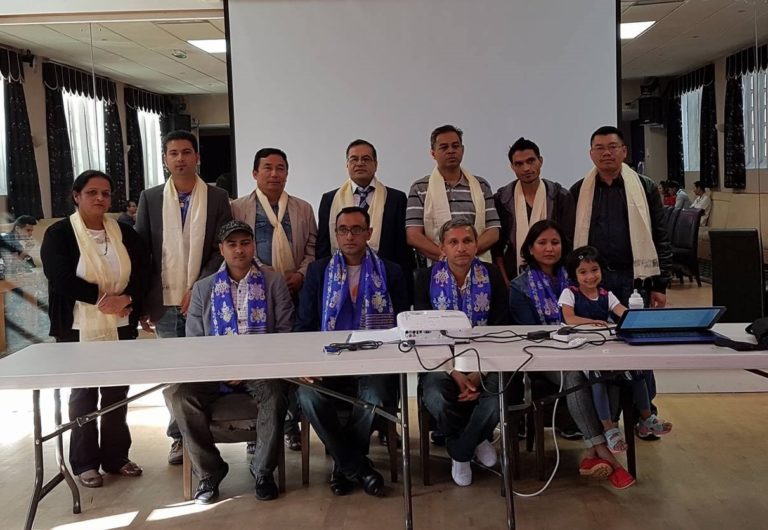
The outgoing and incoming executive members BWA/photo Santoshi Gurung
The outgoing and incoming executive members BWA/photo courtesy: Santoshi Gurung

Mrs Bhadri Subedi, outgoing Vice Chairperson, engaged the attendees in a brainstorming session assigning them group task. The group task rationally demonstrated that members focus on common goal despite sharing difference of opinions. She also used colour cards to illustrate some aspects of human characteristics and behavioral attributes.

Durga Giri gave an update of the programs successfully organised by BWA in the past two years. He credited the committee members and general members, women’s group, well-wishers and supporters.

Ghanashyam Pokhrel, outgoing Treasurer gave updates on financial situation of BWA. He provided printed copies of financial statement to all the attendees in the meeting. He also made a power point presentation to explain the full details.

The outgoing chairman declared the dissolution of the old management committee and welcomed the new executive members by presenting khada. Reaffirming his commitment for continuous support he expressed his belief that the new committee shall definitely take BWA to a new height.

Then Election Commission consisting of KN Pokhrel and Dr. Prakash Subedi took over the meeting and with election of new committee members.

After discussing all nominations, the meeting overwhelmingly supported and elected new executive team consisting of following members:

  • Yam Khadka – Chairman
  • Kishor Budathoki – Vice-Chair
  • Sita Ram Pokhrel – Secretary
  • Sabrita Giri – Treasurer

Further, the Executive Team nominated following members to reach full quorum of Central Working Committee:

  • Phauda Monger – Area representative (Bury)
  • Juna Rai – Area representative (Ashton)
  • Ganga Khadka – Area representative (Rochdale)
  • Ratan Acharya – Area representative (Salford)
  • Bhadri Subedi – representative from Women’s Group

Position for Youth representative and project director is now open.

The new Chairman, Yam Khadga, thanked everyone and outlined his vision to provide direction and leadership to the organization. He expressed his interest to create a Review Advisory Panel, review and improve membership procedure, communication strategy and partnership working. He also mentioned that the new committee would look at avenues to bring projects/activities for children, youths and elderly people for their empowerment.

Outgoing project director Prem Giri thanked all the members for their active cooperation in running projects during his tenure.

All outgoing committee members were presented khada in appreciation of their hard work and contribution to the community.

The meeting was formally concluded by the newly elected Chairman.

Note: Sitaram Pokhrel contributed to this news from UK. 


Interstate soccer in Harrisburg and Kansas

26,644

Bhutanese community of Harrisburg PA and senior players of Harrisburg organized two days interstate soccer tournament in Central Daulphin Middle school ground located in Harrisburg city.

Miss Bhutan USA Bimla with the players
Miss Bhutan-USA Bimla with the players

Twenty three teams from nineteen states played matches, the final  played  between Reynoldburg, OH and Massachusetts  (MA). According to Bimla Siwakoti, MA won the finale against Reynoldburg OH.

The winner was awarded with $5000 cash, trophy and certificates.

“ I volunteered for two days. From picking up the trash, running errands, serving food to the players and nursing  the wounded”, added Siwakoti.

Anil Neopaney of winning team was awarded with the best goal keeper.

The tournament was held for two days, Sept 17 and 18.

“The girls exhibition soccer added glamour to the game”, informed Siwakori to BNS.

Kumar Ghalley, Shiva Raj Gurung and Hari Adhikari judged the tournament.

Meanwhile, Kansas hosted the first Bhutanese interstate soccer tournament, Sept 17 and 18. Sixteen teams from different states participated in which Minnesota and Texas won final with 4-1 score.

Two Former Bhutanese Refugees are Honored in the White House

26,644

By Rup Pokharel, Pittsburgh PA

Two former refugees from Bhutan currently residing in Pittsburgh, PA, Khara Timsina, and Bishnu Timsina were among the eight refugee leaders honored and celebrated amidst a function at the White House on September 15, 2016.

It was President Barack Obama’s initiative to recognizing refugee leaders making the difference in the lives of refugees in the US. The White House celebrated the week of September 13, 2016, as the National Welcoming Week.

More than 50 cities and counties from nationwide were invited to submit the nominations. Eight nominees got selected and two were former refugees from Bhutan.
Both Timsinas were nominated by Barbara Murock, director of the Immigrants and Internationals Initiative for Allegheny County Department of Human Services Allegheny County, who traveled to the White House with them.

Speaking to the BNS regarding the nomination, Barbara Murock said, “The Bhutanese Community Association of Pittsburgh (BCAP) on the whole is valued on our region for its strong and effective leadership, both within the Bhutanese community, and outward reaching and participating in the civic life of the neighborhoods and municipalities where they live. I wished I could have nominated the entire organization.  But even with in BCAP, Khara and Bishnu stand out and it was very exciting to have them be chosen for this honor and I felt very proud that they were chosen out of more than fifty cities and counties invited to submit nominations.”

Khara Timsina with Barbara Murock Photo Courtesy: KN Timsina
Khara Timsina with Barbara Murock
Photo Courtesy: KN Timsina

The press release statement sent to the local communities by the White House has stated that the White House event lifted up the stories of these individuals who are contributing to our country and the communities that have welcomed them. The event showcased the welcoming spirit that is thriving in America and highlight who refugees are — artists, entrepreneurs, youth leaders, community volunteers, and more — and the contributions and vitality they add to our cultural, social and economic fabric. The United States has a long tradition of embracing refugees and other new Americans, and over the past 40 years, we have safely welcomed more than 3.2 million refugees representing more than 70 nationalities.

Khara and Bishnu Timsina fled Bhutan in the early 1990s as victims of an ethnic cleansing policy adopted by the Royal Government of Bhutan. They lived in the refugee camp in Eastern Nepal for 18 years. They moved to the US in 2009 under the Third Country Resettlement (TRC)-program.
Khara has served Bhutanese Community Association of Pittsburgh (BCAP) in the past as its president and vice-president in different tenures. Currently, is the program coordinator for the English Language and Civic Education (ELCE), one of the successful programs funded by Office of the Refugee Resettlement (ORR).

Here is the extract from the conversation Khara Timsina had with this scribe.20160919_214050

How was your feeling when you first heard about the nomination?

In the first place, it came as a complete surprise that I had never imagined. I felt happy and humbled by the nomination itself. And to have an opportunity to go to the White House was a never-dreamt thing. I went there with all the BCAP volunteers of past and present in mind. I had done nothing so remarkable except that helping the community establish itself with honor among the real Americans as my sole goal. But I work with lots of people (at BCAP) with the same purpose in their mind to have caused Allegheny County notice the works. So it was not just me that went to the House, but all those who spent tireless hours for the community went with me in spirit. The complete support from BCAP on my nomination and by the Allegheny County are the key that took me to the Welcoming Refugees: Honoring Refugee Integration and Refugee Voices event in the White House.

There can be a mixed of many deeds- yet, what might be one of the particular areas that you consider played major role qualifying you for this nomination?

 The organizing and hosting of the first Inter-neighborhood Quiz Contest last year caused quite a stir in the county and at USCIS. Another thing could be our attempts to involve local communities in our services, and to involve ourselves in the local community activities have been noteworthy. Here again, everything happened with the great teamwork at BCAP, which I pride myself on working at, working with and working for.

How will you reflect your past- in Bhutan and the refugee camp?

Like any Bhutanese youth back in Bhutan I was preparing for a good life with education and training. But that preparation proved futile with the imposition of blatant negligence, disparity and mistreatment on the Lhotshampa by the then RGOB. I was no exception to the massive ethnic cleansing propaganda of the government. I had done well, outdoing many of my non Lhotshampa peers on the training but they got appointed to a position and not me, for no any reasons, except that I was a Lhotshampa and spoke a different language, then. I had big dreams for my country. I carried that dream when I was exiled, retained for nearly two decades until I decided to resettle in the United States.
In the refugee camp, I taught kids and young boys and girls to love the country they came from, helped them learn and sing Bhutan’s National Anthem. Hope to live persisted, and thus lived on when the opportunity came to resettle in America.

What are the main factors that encouraged you to commit your extra time to the community members?

Once I relocated from New York City to Pittsburgh in late 2009, I met a good team of Bhutanese volunteers with different skills happened to reside here. I met wonderful friends and started to volunteer in many of the community activities, one among them was to gather older adults who never saw a school in Bhutan and Nepal, and teach them ABCs of English language and anticipated social behavior here. Perhaps, teaching being my last job while I was in Nepal- my interest grew to lend a helping hand to the less fortunate ones to adjust in the region. Passion for working for the community came blended with that interest and converted to be my responsibility. Then a lot of tasks and activities followed, and BCAP was founded. Local communities, both the governmental and non-governmental offices took notice of what we were doing. A good number of collaborative projects were launched in the community.

What new things did you get to experience during the event in the White House?

My visit to the White House event added more energy as I heard similar stories of success from other refugee communities. Some invitees had more complicated refugee life stories to share.

In a nutshell, I feel that our community, irrespective of what continent they have resettled in, has done a lot of exemplary things. Bhutan government ruined us but got treasured elsewhere. In doing so, I happened to be nominated for the recognition at the White House. To be precise and accurate, the recognition was for the entire present and former Bhutanese refugee and asylees. I am sure we continue to support one another within our community while extending full support to the new refugees that come to this country from the countries around the world. With that, we will have fully supported the dreams and values of this great nation, fulfilling part of our responsibility to this country we have come to live in.

I am under the impression that you are recognized for any extra effort you make in this country, I know my father was one of those farmers who gave hundreds of hours of free labor to build Bhutan, besides working on the farm to support his family, and the recognition? One fifth of a Century of life in the refugee camp.

In brief, how do you define the Bhutan’s intention towards you and the community you represent?
Exiled Lhotshampa wished by the Royal Government of Bhutan (RGOB) to perish, survived the sufferance in the miserable refugee camps. Their persistent desire to live as human with hopes and dreams did not die; we landed in the third countries. Started making gradual progress in managing the biggest transition. I can see through the lens of fellow former refugees advancing in Pittsburgh, once almost faded hopes sprouting with remarkable progress in all other US cities. Today we have ITs, RNs, Engineers, Medical students, social workers, numerous businesses and homeowners.

While, the other-half of Khara Timsina, Bishnu Timsina has been playing a pivotal role in the areas of empowering women and high school children. She is the vice-chair of the BCAP. Besides volunteering in the community, Bishnu has been equally helping Bhutanese and refugees from other countries as an employee at Jewish Family and Childrens’ Services (JF&CS).

JF&CS News &Notes- A weekly e-newsletter has quoted Aryeh Sherman, CEO as saying, “”We couldn’t be prouder of Bishnu and all she’s accomplished in the Bhutanese community and for all local refugees. Bishnu exemplifies every value that this organization strives to live by.”

“At JF&CS, Bishnu coordinates youth programming, including after-school activities for refugee high school students and the “Learn and Earn” summer internship program. She translates documents and advocates for refugee children, teens, and parents in school settings. Bishnu works with youth to help them prepare for college and employment; 95% of the students with whom she has worked over the past five years (more than 100 youth) have gone on to college or received training and transitioned into the workforce”, JF&CS News & Notes for reads.

Bishnu Timsina as one of the panelists (R) Photo Courtesy: KN Timsina
Bishnu Timsina as one of the panelists (R)
Photo Courtesy: KN Timsina

“We never know how many things we do in our lives and how many lives we touch. As a community person, I never keep records of what all things I do on a day to day basis but my involvement in the community and the help that I have provided to New Comers in Allegheny County must have considered me to White House. A youth program that I work for (Refugee Youth Employment Program) got highlighted and I was asked to be on the panel during the event in the White House”, shared Bishnu Timsina.

“It is a matter of pride for all the former Bhutanese refugees resettled in the US and other parts of the world. Among the eight honorees from nationwide, two were Bhutanese from this community organization and they being a couple is an additional exemplary one. This recognition is a true one for the community we serve and for the volunteers who dedicate their extra time in making the lives of others easier. I am thrilled to see the two BCAP volunteers got recognized in the White House”, said Ashok Gurung, the board chairperson  of the BCAP.

In a note received by BNS, the office of the Allegheny County has stated that Allegheny County was proud to be part of an event hosted by the White House to celebrate inspiring refugees and asylees who are contributing to their new communities across the United States, including local refugee leaders Khara and Bishnu Timsina.

Allegheny County is a member of Welcoming America as well as the White House’s Building Welcoming Communities Campaign.  Allegheny County was recently recognized by the White House as a Bright Spot in Welcoming and Integration for their welcoming efforts.

‘कंगारुको देशबाट’ बजारमा आउँदै

पदम काफ्ले
सिड्नी, अस्ट्रेलिया 

भूटानी समाज अस्ट्रेलियाका उदयमान युवा गजलकारहरुको संयुक्त प्रयासमा ‘’कंगारुको देशबाट’ नामक गजल सङ्ग्रह चाँडै नै प्रकाशित हुने तयारीमा रहेको छ ।

kangaroo-ko-deshbataप्रकाशकहरुका अनुसार अस्टेलियाका विभिन्न प्रान्तमा बसोबास गर्दै आएका नेपाली मूलका भूटानी गजलकारहरुले तीन पुस्ताका गजलहरु संकलन गरी उक्त कृति प्रकाशन गर्न लागिएको हो । क्रिएटिभ सर्कल अस्ट्रेलियाले प्रकाशनमा ल्याउन लागेको उक्त कृतिमा २५ जना गजलकारहरुको २०३ वटा गजलहरु समेटिएका छन् ।

भूटानभित्र, नेपालका विभिन्न शिविरमा छँदा र तेस्रो मुलुक पुनर्वासँगै नेपाली भाषी भूटानीहरुले निरन्तर गुणस्तरीय नेपाली साहित्यिक कृतिहरु प्रकाशन गरिरहेका छन् । गजल संग्रह ‘’कंगारुको देशबाट’ ले पनि नेपाली साहित्यको श्रीवृद्धिमा टेवा पुर्याउने नै विश्वास गरिएको छ ।

कृतिको सम्पादन दुर्गा रिमालले गरेका छन् भने कार्यकारी सम्पादकहरुमा प्रकाश धमला, रिमेन आलोक र छत्र दंगाल रहेका छन् । यही आउँदो १५ अक्टोबरमा अस्ट्रेलियाको मेलबोर्न सहरमा आयोजना हुने एक भव्य सांस्कृतिक कार्यक्रमबिच उक्त कृतिको विमोचन हुने कुरा आयोजक मध्येका झगेन धिमालले जानकारी दिए ।

अमरिकामा आफ्नो घर, अमेरिकी सपनाः पुनर्स्थापित होइन, स्थापित

राजेश कोइराला

अमेरिकामा पुनर्स्थापित भएको ८ वर्ष पुग्दा घर किन्ने भूटानीको संख्या सन्तोषजनक गतिमा बढ्दो छ । घर किन्ने इच्छाकै कारण एक राज्यबाट अर्को राज्यमा बसाइँ सर्ने क्रम जारी छ । घर किन्नेको संख्या राज्यपिच्छे कम-बेसी देखिन्छ । घरमालिक बनिसकेका आफ्ना सदस्यको संख्या भूटानीका धेरैजसो सामुदायिक संस्थाहरुसँग पाइँदैन । अनुमानका आधारमा धेरै राज्यको कुरा गर्ने हो भने देशभर १५-२० प्रतिशत भूटानी घरमूली हुनुभएको छ । यो आधिकारिक तथ्याङ्क होइन ।

नागरिकता लिने र घर किन्ने कामलाई स्थायी बन्ने प्रक्रिया मान्नुपर्छ । त्यसैले ‘पुनर्स्थापित’ शब्दलाई ‘स्थापित’ शब्दले विस्थापित गर्दैछ । कुनै पेशा-व्यवसायमा दरिलो देखिएको परिवार बढी स्थापित भएको छ । त्यस्तो परिवार ठाउँ सर्नेमा पनि कम छ ।

सस्तो घरको खोजी

अन्य सुविधासहित घर सस्ताले ओहायो सर्ने क्रम सबैतिर जारी छ । ओहायोबाहेक अन्य राज्यमा पनि घर सस्ता पाइएको बताउने भने प्रशस्त भेटिनुहुन्छ ।

केन्टकीको लुइभिलका भीम कोइराला भन्नुहुन्छ, ‘आएर बसेको पहिलो ठाउँबाट सर्ने गरेको दोस्रो ठाउँका रूपमा केन्टकी चिनिन्छ । यहाँ २० प्रतिशत जनसंख्या अन्तबाट सरेको हुनुपर्छ । त्यो पनि धेरैजसो स्थायी बसोबासको सोचमा यहाँ आउने गर्छन् ।’

लुइभिल, केन्टकी राज्यको सबभन्दा ठूलो शहर हो । भूट्निज सोसाइटी अफ केन्टकीका जनसम्पर्क-सचिव कोइरालाको बुझाइमा केन्टकीमा थोरै पैसामा बाँच्न सकिन्छ । काम पाउन सजिलो छ र देश मध्य-भागमा परेकाले जुनै राज्य जान सजिलो छ ।

भीमका अनुसार त्यहाँ इँटका घर छन् र सस्ता छन् । उहाँका अनुमानमा केन्टकीमा १ सयभन्दा बढी परिवार घरधनी भएको हुनुपर्छ ।

सरकारी तथ्याङ्कअनुसार केन्टकीमा २ हजार ४ सय ४० जना पुनर्स्थापित हुनुभएको छ । सबभन्दा बढी १ हजार ८ सय ४ जना लुईभिल तथा बोइलिङ ग्रिन र लेक्जिङ्गटनमा क्रमशः १ सय ७० र ४ सय ६६ जनालाई पुनर्स्थापित गराइएको हो । अरू केही ठाउँमा थोरै-थोरैलाई बसाइएको हो ।

उता मिनेसोटाका रोम बिस्ट भन्नुहुन्छ, ‘यहाँका घरहरू सस्ता हुन् । करिब एक सय ५० परिवार घरधनी भइसकेको छ ।’ यहाँको भूटानी समुदाय सामूहिक कार्यमा निकै अगाडी देखिँदै आएको छ ।

मिनेसोटामा १ हजार १ सय १९ जना भूटानीलाई पुनर्वास गराइएको हो । मुख्य गरी यहाँको मिनियापलिसमा ४ सय ९० र सेन्ट पलमा ४ सय ९८ जना पुनर्स्थापित गराइएको हो । अरूठाउँमा थोरै संख्यामा ल्याएको तथ्याङ्क देखाउँछ ।

यता न्यु ह्याम्सरका कंकर्ड र म्यानचेस्टरमा सबैजसो भूटानीको बसोबास छ । कंकर्डमा १६ र म्यानचेस्टरमा ३४ भूटानी  परिवारले घर किनेको भूट्निज कम्युनिटी अफ न्यु ह्याम्सरका कार्यालय सञ्चालन-निर्देशक एनपी पौडेल बताउनुहुन्छ ।

न्यु ह्याम्सरमा २ हजार १ सय ७३ जना ल्याइएकोमा मुख्य कंकर्डमा १ हजार १ सय २९ र म्यानचेस्टरमा ९ सय ९१ पुनर्स्थापित हुनुभएको हो । अरु दुई शहरमा थोरै संख्यामा पुनर्स्थापित भएको थियो ।

जर्जिया अगाडी

दक्षिण-पूर्वी राज्य जर्जियामा घर किन्ने ४० प्रतिशत नै पुगेको थियो । स्थानीय कृष्ण ढकाल भन्नुहुन्छ, ‘भूटानीले घर किन्न थालेका राज्यमा जर्जिया अगाडी पर्छ । यहाँ सन् २००९-२०१० मै घर किन्ने साथीहरू भेटिनुहुन्थ्यो । बढी नै यहीँ किनिएको हुनुपर्छ । तर बिस्तारै ५ प्रतिशतले बेचेर अन्यत्र बसाइँ सर्नुभयो ।’

जर्जियामा कुल ५ हजार ९ सय ३४ लाई पुनर्स्थापित गरिएकोमा अट्लान्टामा १ हजार ७ सय ८५, क्लार्कस्टनमा १ हजार ९ सय ३१, डिकेटरमा १ हजार २ सय ५२ र अन्यत्र सानो संख्यामा बसाइएको हो ।

उता सबैभन्दा बढी भूटानी पुनर्स्थापित गरिएको पेन्सलभेनियालाई घर किनेर स्थायी रूपमा बसोबास थाल्नेमध्ये अर्को गतिलो राज्य भने हुन्छ । त्यहाँ १५ देखि २० प्रतिशत परिवार घरधनी भएको अनुमान ह्यारिसवर्गका धन बस्नेतको छ ।

पेन्सलभेनियामा कुल ९ हजार ७ सय ९५ जनालाई पुनर्वासको बन्दोबस्त मिलाइएको देखिन्छ । यहाँ इरिमा २ हजार ७ सय १०, पिट्सवर्गमा २ हजार ९४, ल्यानकास्टर र फिलाडेल्फियामा बराबर संख्या १ हजार ४ सय ९, ह्यारिसवर्गमा १ हजार १ सय ८०, स्क्र्यान्टनमा ८ सय ९९ लाई पुनर्स्थापित गराइएको हो ।

कोलोराडोका पृथ्वी काफ्ले भन्नुहुन्छ, ‘यहाँ त २ सय परिवार घरधनी भएको हुनुपर्छ ।’ काफ्ले ग्लोबल भूट्निज कम्युनिटी कोलोराडोका उपाध्यक्ष हुनुहुन्छ ।

कोलोराडोमा ३ हजार ३ सय ५५ लाई पुनर्स्थापित गराइएको हो, जसमा डेनभरमा २ हजार ५ सय ४०, अरोरामा ५ सय ३९, कोलोराडो स्प्रिङ्समा २ सय ३५ जना हुनुहुन्छ ।

घर किनेरै न्यु ह्याम्सरबाट कन्सास बसाइँ सरेका धन रसाइलीको बुझाइ भिन्न छ, ‘यहाँ घरमात्र सस्तो नभएर काम पाउन पनि सजिलो छ ।’

कन्सासमा निकै कम भूटानी पुनर्स्थापित गराइएको सरकारी तथ्याङ्क छ । त्यहाँ ६ सय ४४ जनामात्र पुनर्स्थापित भएकोमा कन्सास सिटीमा मात्र ६ सय ५ को बसोबास देखिन आउँछ ।

यता म्यासच्युसेट्सको वुर्स्टरमा करिब ३० घर किनिएको नन्दु मिश्र बताउनुहुन्छ । मिश्र भने वुर्स्टरबाट न्यु ह्याम्सर बसाइँ सर्नुभएको छ । त्यहाँ करिब २ सय ५० परिवार बसोबास गर्दै आएको उहाँ बताउनुहुन्छ ।

म्यासाच्युसेट्समा ३ हजार १७ पुनर्स्थापित हुनुहुन्छ । सबभन्दा धेरै वुर्स्टरमा ९ सय ६९, वेस्ट स्प्रिङ्गफिल्डमा ८ सय ९२, स्प्रिङ्गफिल्डमा ३ सय ७८, लोअलमा २ सय १८ जनालाई बसाइएको छ । अरु स्थानमा स-सानो संख्यामा  राखेको पाइन्छ ।

महँगा ठाउँ

ठूला उद्योग भएका र महँगी बढी भएका शहरहरूमा घरको मूल्य चर्को छ । त्यहाँ घर किन्नेको संख्या त्यति छैन ।

भूटनिज कम्युनिटी अफ क्यालिफोर्नियाका कोषाध्यक्ष कृष्ण सुब्बा भन्नुहुन्छ, ‘हामी धेरैका लागि क्यालिफोर्नियामा घर किन्नु गाह्रो छ ।’

क्यालिफोर्निया अमेरिकाको तेस्रो ठूलो राज्य भए पनि यहाँ १ हजार ३ सय ७३ जना भूटानीलाई पुनर्स्थापना गराइएको सरकारी तथ्याङ्क बताउँछ । यस राज्यको ओकल्यान्डमा २ सय ८६, स्याक्रमेन्टोमा २ सय ९४, र सान डियागोमा २ सय ६३ जनासहित अन्यत्र सानो संख्यामा राखेको पाइन्छ ।

केही दिनअघि कामको सिलसिलामा मिजुरी पुगेका सुब्बा भन्नुहुन्छ, ‘मिजुरी त कता हो कता सस्तो छ ।’

‘के यतै सर्ने विचार त गर्नुभएन ?’, भन्ने प्रश्नमा उहाँ भन्नुहुन्छ, ‘मिजुरी होइन, ओहायो चाहिा सर्छु कि !’

उता वासिङ्गटन राज्यको सियाटल बस्ने युग दवाडी भन्नुहुन्छ, ‘सियाटल, अझ भनौं न ग्रेटर सियाटल महँगो छ ।’

उहाँका अनुसार त्यहाँ माइक्रोसफ्ट, बोइङ विमान जस्ता नामी कारखाना भएकाले अलि निकै कमाउने मात्रले घर किन्न सक्छन् । ‘सियाटलभन्दा अलिपर स्पोकेनमा घर सस्ता छन्,’ दवाडी भन्नुहुन्छ, ‘त्यहाँ राम्रै प्रगति भएको छ ।’

वासिङ्गटन राज्यमा २ हजार ८ सय १ जनालाई पुनर्स्थापित गराइएको हो । सियाटलमा ११ सय २५, स्पोकेनमा ५ सय ८३, केन्टमा ४ सय ५३, र टुक्विलामा ३ सय १० जना बसोबास गराएको देखिन्छ । अरु केही ठाउँमा थोरैलाई बसाइएको छ ।

सिराकसका काजीका अनुसार यहाँ करिब ८ सय परिवारमा १ सयभन्दा बढी परिवारको घर भइसकेको छ ।

न्युयोर्क राज्यमा ७ हजार ४ सय ४० जनालाई पुनर्स्थापित गराइएकामध्ये रोचेस्टरमा सबभन्दा बढी २ हजार ४ सय ४६ र सिराकसमा २ हजार ७४ जनालाई बसोबास गराइएको देखिन्छ । बफेलोमा १ हजार ८ सय ७०, युटिकामा ३ सय ४९ र अल्बानीमा ३ सय ३४ जना पुनर्स्थापित भएको देखिन्छ । अन्यत्र सानो संख्यामा राखेको पाइन्छ ।

एउटै भाषाको मान्छे

प्रत्येक राज्यमा घरबिक्रिको काम गर्नेको संख्या पनि एक/दुई गर्दै निकै हुनुभएको छ ।

न्युयोर्कको सिराकसमा घरबिक्रिको कारोबार गर्ने काजी गौतम भन्नुहुन्छ, ‘घर किन्नुअघि बुझ्ने कुरा धेरै हुन्छन् । नेपाली बोल्नेसँग काम गर्दा जान्नैपर्ने कुरा छर्लङ्ग हुन्छन् ।’

उहाँको बुझाइमा कसै-कसैको शंका गर्ने बानी हुन्छ । यहाँको घर किनबेचमा सबै काम छर्लङ्ग हुन्छ । कारोबारीले घर बेच्नेसँग पैसा खालान् भन्नु पर्दैन ।

घरको चाह

आफ्नो बास गुमाएको महसुस गर्ने पुस्तासँग काम गर्ने क्षमता छैन । भाषाका कारण सक्रिय छैन । आफ्नो घर नदेख्ने, देखे पनि सपना जस्तो ठान्ने युवा भने घर किन्न चाहन्छ ।

फरक परेको तथ्याङ्क

सरकारले ल्याएर देशभर गराएको संख्या बरु करिब उस्तै होला । राज्यपिच्छे बसोबास गराएको संख्या अब त्यस्तो छैन । बसाइँ सर्नेका कारण पक्कै कम-बेसी छ । शुरूको तथ्याङ्कलाई आधार मात्र मान्न सकिन्छ ।

किन्न हतारिनु हुन्नः काजी गौतम

काजी गौतम न्युयोर्कको सिराकसमा बस्नुहुन्छ । गौतम नियमित जागिरबाहेक फुर्सदका बेला घर-बिक्रीको काम गर्नु-हुन्छ । सन् २०१३ नोभेम्बरमा घर-बिक्रीको अनुमति-पत्र लिएयता करिब ५० वटा घर बेच्नुभएको छ । त्यसरी घर किन्नेमा धेरै भूटानीहरू नै हुनुहुन्छ । गौतमसँग अक्षरिकाका सम्पादक राजेश कोइरालाले गरेको कुराकानीः

• तपाईँको विचारमा घरमा लगानी राम्रो हो ?
घर किन्ने निर्णय राम्रो हो । लगानी रहन्छ । बेच्नुपर्दा घाटा हुँदैन । भूटानीहरूको हकमा यो झन् राम्रो हो । भूटानको घर छाड्नुपर्‍यो । शिविरमा बस्नुपपर्‍यो । अमेरिका आइपुगियो । सबथोक नयाँ शुरूवात गर्नुछ । अमेरिकी सपना भन्छन्, घर हुनुलाई । सपना पूरा गर्न पनि किन्नैपर्छ ।

• हामी घर किन्न अलि बढी किन जोड दिन्छौं ?
सपना पूरा त एउटा कुरा भयो । हाम्रो समाज, यसो जमघट हुनुपर्ने । रमाइलो गर्नुपर्ने । पूजाआजा नै भनौं । नाचगान, भजनकिर्तन । अपार्टमेन्टमा अरुलाई बाधा हुन्छ । घर भए, सबै सजिलो ।

• घर किन्दा के कमजोरी छन् ?
अलि हतारिएको जस्तो लाग्छ । नजानी हाम्फाल्ने बानी देख्छु । एउटा बैंकमा मात्र जाने । ऋण दिएन भने चुप लागेर बस्ने । दियो भने पनि सस्तो/महँगो के भयो अर्को बैंकसँग तुलना नगर्ने । यसो गर्नुहुन्न । एउटाले ऋण नदिए अर्कोमा जाने । एउटाले भनेको महँगो भन्यो कि अर्को बैंकमा गएर जाँच्नुपर्छ । घरको मात्र के कुरा ठूलो लगानी भनेको गाडी नै किन्दा पनि यसो गर्नुपर्छ । म साथीहरूलाई धेरै बैंक लैजान्छु । सस्तो कता पर्छ खोज्न मद्दत गर्छु ।

[अमेरिकाबाट प्रकाशित हुने जानकारीमूलक पाक्षिक पत्रिका “अक्षरिका” का सम्पादक राजेश कोइराला भूटान समाचार सेवाका लागि समेत नियमित रुपमा लेख्नुहुन्छ।  यो सामग्री अक्षरिकाको जुलाई, २०१६ अंकमा प्रकाशित भएको छ । – सम्पादक]

UNHCR calls for speedy check out for resettlement

26,644

Resettlement of Bhutanese refugees took an unprecedented turn when one hundred thousand Bhutanese refugees got resettled in eight countries, US being the largest receiver.

Assisst Secy Nisha Desai with Dr. Prakash Sharan Mahat
Assistt Secy Nisha Desai with Dr. Prakash Sharan Mahat Photo Courtesy: Kantipur

Despite this fact of ‘successful resettlement’, UNHCR in Nepal has issues pending resettlement, particularly of those families who are separated and those who wish repatriation, albeit minimal.

In order to give a sort of ultimatum, UNHCR has alerted refugees of imminent closure of resettlement process in a bulletin issued 18 August, 2016. According to the bulletin nailed at information boards of refugee camps, the purpose of the information is to announce the phasing out of resettlement by 2017.

While it has clearly outlined the effort by UNHCR to allow as much time and flexibility for the refugees to apply for resettlement, it does not say about what will happen to those seeking repatriation.

UNHCR bulletin in camps Photo: Govinda Rizal
UNHCR bulletin in camps
Photo: Govinda Rizal

According to one firsthand account of a camp resident BNS received, there is a kind of apathy towards the lone elderly folks whose family members have chosen resettlement. They are already vulnerable, and their hope for repatriation is still grim; the advocacy groups for repatriation themselves facing setbacks.

The issue of divorcees, who are either registered refugees, Nepalese or Indian citizen, is nowhere considered in the bulletin. The UNHCR field workers held meetings at sector level, discussed with people about the opportunity of resettlement that many refugees around the world are not able to get, but do not have any handy solution for people’s cases like this. According to a source, many such divorcees, especially the men, have moved closer to camps, hoping to take chance of resettlement.

People who were reported ‘missing’ by the family members to clear their resettlement process, are now back to the camp, falling outside the bracket of resettlement process. There is no talk about such ‘missing’ persons.

One interesting fact BNS could reveal from this account is the arrival of fresh refugees, either directly from Bhutan or from India, particularly those who fled after 1997 protest in eastern Bhutan. Some of their family members who had  registered in camps earlier are resettled in the US.

Another category of people are the absentees from camp, even during the three vital censuses that determined the refugee status. Their case is ‘de-registered’ in RCU data because of long absence. The UNHCR bulletin does not mention about their fate.

Abandoned Refugee Huts in the refugee camp. Photo: Govinda Rizal
Abandoned huts in Beldangi refugee camp.
Photo: Govinda Rizal

This source also mentions about a section of voiceless people who do not find right place to tell their story and know how to do about it. They find no one to advocate for them, nor they see right person to approach their case. They say,  ‘we have no money to spend.’

Meanwhile, fresh report from Kathmandu received by BNS mentions of a group of ten people from camps  currently in Kathmandu to lobby the Home Ministry on behalf of  census absentees. They met the Home Minister of Nepal at his residence and requested for considering the absentees for refugee ID cards.

In a news report published in Kantipur, September 3, US urged Nepal to assimilate the remaining refugees, which according to the news, is turned down by Nepal. In a meeting with foreign minister Dr. Prakash Sharan Mahat, US Assistant Secretary of State, Nisha Desai Bishwal urged the government of Nepal to ‘keep the remaining refugees’ after the end of resettlement process. Nepal has been reiterating that they must be returned to Bhutan, whatever number, and that Bhutan must accept its citizen.

The UNHCR has announced in the bulletin that it will not accept any application for resettlement after  December 31, 2016.

As per the bulletin 1,04,750 people have been resettled until July 31, 2016.  It also has the links to report any fraud activities suspected-  [email protected] or [email protected]

 Dr. Govinda Rizal from Nepal partially contributed to this report-Editor

Teej observed empowering women

26,644

Teej, one of the popular festivals among the ethnic Nepalese women is celebrated with various cultural functions and Saamuhik Daar (group meal) in different states and cities in the US.

Elderly community members observing the performances. Photo: Manav Timsina
Elderly community members observing the performances.
Photo: Manav Timsina

Pittsburgh
Resettled Bhutanese in Pittsburgh, Pennsylvania had a remarkable Teej (Women’s Day) celebration this year.  The auditorium at St. Anne Elementary School at Castle Shannon, Pittsburgh reverberated with Teejako Lahara Aayo Bari Lai (popular Nepali song that women sing during Teej festival) at 11 am in the morning on September 4, 2016.

Women from all walks of life clad in red saaris, tillaharis entertained the gathering with series of folk songs and group dances.

Bhutanese Community Association of Pittsburgh (BCAP) organizes Teej each year with the motto of empowering women and encourages them to engage in-group activities.  This year they celebrated the festival with the slogan ‘Empowering Healthy Families’.

Addressing the gathering on behalf of the organizing committee Lok Mahat Bhandari stated, “the community we represent, and the community we call it as “ours” has its unique identity. We are brought up in the community that has a rich culture and has successfully bonded us together. The Teej is not only meant for the women but also for a healthy and happy family. This festival is one of the preserved traditions by our ancestors that empowers women and sow the seeds of love and respect among the family members.

This year BCAP came with the slogan ‘Empowering Healthy Families’ to commemorate this unique festival.”

Child artist entertaining the audience with  solo dance. Photo: Manav Timsina
Child artist entertaining the audience with solo dance.
Photo: Manav Timsina

An octogenarian, Juddha Bir Bhandari, who attended the whole event, expressed his happiness stating, “ I am so happy. Before I left for America in 2009, I had a feeling that the culture, tradition or rituals – all would be left behind and would just remain in our memory. I was absolutely incorrect. If you have a wish, everything is possible in this land. I see all around us equally respect our cultural values. Young generation should be educated about our cultural values.”

Besides, women from the Bhutanese community- women representatives from different agencies, Department of Human Services, hospitals, schools, and foundations joined the group dances and Samuhik Daar (group meal).

Chief coordinator of the event, Bishnu Timsina thanked all the attendees, guests and volunteers for joining and making the event successful. She also thanked St. Anne Elementary School for providing the space for the second time to host Teej program. Khara Timsina and Biswaz Gurung emceed the event.

Photo: Manav Timsina

Harrisburg

Harrisburg observed a grand celebration of ‘Teej’, an auspicious event of Nepalese women today. It was wonderful to see hundreds of ethnic Nepalese women, who were in their best attire and ornaments throng together to dance their hearts out on September 4, 2016.

The program was well organized by Organization for Hindu Religion and Culture (OHRC). OHRC is a non-profit organization founded by Bhutanese volunteer elites of Harrisburg in July 2013 and supported by all the Nepali Hindus. This organization organizes numerous socio-cultural events each year for the good and spiritual contentment of Bhutanese and Nepali community. Currently, OHRC runs Nepali Language Class on Saturdays and Gita learning class on Sundays. It also hosts ‘Bhakti Sangalo’, a short TV program once each month.

According to the chairman of OHRC, Yadu P Achaya, Teej was celebrated with much more grandeur and exhilaration. He said, “The participation of our mothers and sisters was stupendous and unprecedented. For the whole day the atmosphere of Lingle Park (where the event took place) was charged with excitement and merrymaking”.

The program began at 9 in the morning with the priests chanting hymns. Women on fasting for wishing long and healthy life for their husbands participated with offerings to Lord Shiva. The actual musical thrill began at noon.  Young girls and adult ladies danced to the nostalgic Teej songs played from the stereo on the woofers. It appeared as if they were in a musical trance.

Yogi Luitel and  Manju Tamang acted the masters of ceremonies, who efficiently presented the flow of event items. In addition to unrehearsed amateur Teej dances, Rainbow Dance Class of Harrisburg (owned by  Durga Pokhrel) also presented four well-choreographed dances.  Tula R. Neopaney, an active member of OHRC, talked intermittently on the progress and programs of OHRC. Lucky draws with gift hampers and musical chair were other highlights of the program.

Religious-cultural programs like Teej definitely provides not only ample gratification to current ethnic Nepali population but also passes the cultural torch down to successive generations. Organizations like OHRC in various cities of the US and other countries of the world where the Bhutanese refugees were resettled are doing a pretty good job in keeping the candle of Nepali culture burning.

PA media, ABC27 and FOX43 also videotaped the highlights of the event and completed some Teej-related interviews.

 New Hampshire

Organizing committee members of the Teej- 2016. Photo Courtesy: Bhagirath Khatiwoda
Organizing committee members of the Teej- 2016.
Photo Courtesy: Bhagirath Khatiwoda


Amidst a great function on 4th of September, 2016 in the city of Manchester, Haritalika Teej was observed in a grant fashion. Over 150 women from different cities: Concord, Laconia, Manchester, Hooksett, Salem and Nashua were present in the event. The event was organized by Bhutanese Community of New Hampshire in coordination with Women Council and youths from the community with the objective of women empowerment and women engagement. Females were seen dancing, singing, getting together with friends, sharing stories, dressing up with henna-colored hands, wearing red, green or yellow clothes and sharing festive foods.

Women during photo session in NH.  Photo: BNS Correspondent
Women during photo session in NH.
Photo: BNS Correspondent

This monsoon festival represents celebration of the bounty of nature with social activities, rituals and customs. Teej is traditionally observed by women praying to goddess Parvati and lord Shiva for wellness of their husband, children and their own self.

Speaking to BNS, Bishnu Khadka, the coordinator of the event said, “Teej celebration is more than a festival. It is solidarity of women for achieving something productive and sustainable. It needs to be celebrated as a symbol of women liberation, women empowerment, women engagement”.

During the event, community volunteers were recognized. Recognizing the volunteers, Executive Director of Bhutanese Community of New Hampshire, Tika Acharya, said, “You are agents of change in our community. To make this event successful, I have witnessed you all actively involved by interacting with the organizing team and made opportunities available within the group for all. It is a symbol of informational leadership development”.

Recognized volunteers with the certificates of appreciation.  Photo Courtesy: Bhagirath Khatiwoda
Recognized volunteers with the certificates of appreciation.
Photo Courtesy: Bhagirath Khatiwoda

Tanka Suvedi, one of the members of the organizing team, stated, “The overwhelming presence of women made us proud and encouraged us to do more meaningful and constructive works in future”.

Radhika Acharya gave vote of thanks on behalf of the organizing team to the audience, volunteers, and sponsors. Cafe Momo, Namaste Nepal, International Literature Society-New Hampshire Chapter and Devi Timsina Foundation were the primary sponsors of the event. Program host of the event was Tika Rizal Siwakoti.

Community organizations based in Arizona, Colorado, Ohio, Tennessee, Texas to name some are reported observed Teej with various functions.

BNS correspondents from Pennsylvania and New Hampshire contributed to this report.

Columbus wins Michigan cricket tournament

26,644

A participating team from Columbus, OH became the winner of a three-day cricket tournament recently held by the Bhutanese Community of Michigan in Grand Rapids, Michigan.

Along with the trophy the winner also received a cash prize of $1,800. While, the runner-up team from Nashville, TN got $1,300.

Batting first, Nashville, TN was packed up in 70 runs with brilliant bowling efforts from Columbus.

Columbus met the target in 15.3 overs securing its victory by three wickets.
The tournament, although knockout, was played in a T-20 format with 16 overs on each side.

According to the organizers, altogether nine teams comprising Bhutanese players from various five states took part in the tournament.

Speaking at the closing event, tournament coordinators duo, Hari Pokhrel and Tanka Gurung, stressed for the importance of games and sports in the community in order to keep the youths engaged and motivated.

Meanwhile, Kharga Khadka, the president of the Bhutanese Community of Michigan expressed that the tournament was organized with a goal of promoting sports, especially cricket in the community, and encouraging younger generations to strengthen social bond through such events.

Prakash Bastola from Columbus became the best batsman of the tournament for his 112 runs overall. He was also awarded the best all-rounder for the tournament. Likewise, Siddhartha Roka from Tennessee won the best bowling award.

Awards were also given for emerging player and best catch-taker in the tournament, according to the event organizer.

The organizers charged $399 from each team for registration. “The rest of the financial costs was graceful donations from community based businesses,” one of the organizers told BNS.

(Contributed by Dhaka Timsina for BNS from Michigan)