A gardener’s life in Louisville

Sita Devi Adhikari, 56, and her husband Tankanath Adhikari, 61, are gardening heroes in their adopted homeland of Louisville.  They maintain four 30 x 30 plots of land in a community garden on Seventh Street, off flea market in Louisville.

In a typical growing season, they grow many green vegetables, chilli-peppers, beans, cabbage, chayote and corn. Neighbors come to the garden to buy vegetables. Local grocery stores also take the produce, supplementing their modest income.

Hot peppers in Sita and Tanka’s garden/ File Photo: BNS

When I visited recently, they showed me sprouts of chili peppers grown in trays in their brightly illuminated kitchen, kept cool with a fan,  ready to be planted come spring.

Life has not been easy for the couple since their arrival here.

In 2015, Sita was diagnosed with early breast cancer, adding to her chronic illness of diabetes.

At Norton Hospital, her cancer treatment took a good eighteen months. Those several trips were not easy for them without English to converse and no car for commuting.

“My body became like a whole new being during the treatment,” says Sita.

Though she is free now of cancer cells, diabetes and asthma still plague her. Every day she takes four injections.

Tanka and Sita in their apartment/ Photo: BNS

They are living in the same apartment in Georgetown circle which they were first assigned by Catholic Charities in September 2008. Now only four Bhutanese Nepali families live there.

“Many of our neighbors and relatives have moved away from the apartments,” says Tanka.

Sita’s nephews, Karna Kafley and his brothers, often visit them and help in certain circumstances even though they live in another part of town.  The couple does not have children.

 Now Sita is going to a daycare facility where most of the other thirty attendees are Bhutanese Nepali men and women. Normally, a day is spent with breakfast, lunch, some entertainment like games or videos and a little English learning activity. Sita enjoys the socialization.

A home care worker now helps her twenty hours a week, too. Another bright spot is that Tanka has learned to drive, and owns a car, which makes transportation far easier.

Disability income received by the couple stopped for a while as they were not naturalized to US citizens. But now they both are. Along with Medicaid and $70 in food stamps, they make ends meet.

They live for the joy of summer time in the garden-and the fruits of their efforts help to sustain them.

“We are not much worried of living here by ourselves unless someone of close relation willingly take us to live with them,”   Tanka expressed hope.

Sita and Tankanath Adhikari originally lived in ‘Daldaley’ village of Nichula gewog in Bhutan before becoming refugees.

Editor’s Note: Have a diaspora story you’d like to see us tell? Know of someone in the community who is doing formidable work? We’d love to hear about them. We are in particular seeking stories about women and elders and how they’re integrating into their new communities.

सामाजिक सञ्जाल ऐना हो

स्कूलमा एउटा वादविवादको विषयमा धेरैलाई पक्ष-विपक्ष लिएर बोलेको याद हुनसक्छ, ”विज्ञान बरदान हो की अभिशाप ।” सम्झौं त, तपाईं यसलाई बरदान की अभिशाप मान्नुहुन्छ । मानव, ठाउँ, सामान, हावापानी आदिको कुरा गर्दा हामी गुण-अवगुण, फाइदा-बेफाइदा आदिका कुरा गर्छौं । सबै चिजको दुई पाटा छन् ।

सेलफोन र सेल्फी बयान

विज्ञानले हामीलाई धेरै प्रविधिहरू दियो । जीवन सजिलो बनाइदियो । एउटा ज्वलन्त उदाहरण, आधुनिक सेलफोन । हात-हातमा सेलफोन सम्पर्क सजिलो भो, अरू धेरैथोक सहज भो । यो हातमा पर्न थालेपछि सेल्फी खिच्ने चलन बढ्यो । जेसँग पनि सेल्फी खिच्नेहरूले बेलाबखत नराम्रो परिणाम भोगेका छन् । यसको उदाहरण: इराक, अफगानिस्तान युद्धमा दिवंगतको शरीरसँग सेल्फि खिच्ने अमेरिकी सेनाका मानिस कार्वाहीमा परेको घटना धेरैले सुनेको हुनुपर्छ ।

मरेपछि आफ्नो शरीरमा आफ्नो अधिकार दाबी गर्न सक्दैन, मानिस । यही मौका छोपेर हामी तम्सिन्छौं, फोटो खिच्न, भिडियो उतार्न, यस्तै । फोटो खिच्दा के बिग्रियो ? भिडियो उतार्दा के नै गयो ? केही भएन । तपाईंले माया गर्नुभयो । सम्झनाको चिनो राख्नुभयो । तर नाता-सम्बन्ध नभएको मानिसको फोटो वा भिडियो, खास प्रयोजनका लागि होइन भने नउतारेकै राम्रो ।

तर त्यही फोटो, अनि त्यही भिडियो: फेसबुक, व्हाट्सअप ग्रुप, ट्विटर, इन्स्टाग्राम, बल्क म्यासेज सर्विसेस जस्ता आजकलका सामाजिक सञ्जाल (सोसल मिडिया) मा हालिदिनु भयो । वास्तवमा के हुन्छ भने यस्ता माध्यमले हामीलाई मनोवैज्ञानिक रूपमा उक्साउँछन् । जसले उक्सायो, हामी उक्सीहाल्ने त होइनौं । तर उक्सीन्छौं । हो, यो उक्साहटमा यहाँ गलत भयो । हामीलाई आफ्नो ”आरामदायी अवस्था” (कम्फोर्ट जोन) मा गरेको कामको परिणाम नसोच्ने मनोवैज्ञानिक स्थिति पैदा गरिदिनु ती माध्यमको बलियो पक्ष हो ।

यसरी त्यही फोटो, अनि त्यही भिडियो सोसल मिडिया हालेर उहाँको शरीरले उहाँको अधिकार दाबी गर्न नसक्ने भएपछि हामीले उहाँको मजाक उडायौं । निरर्थक भयो । गलत भयो । उहाँको सम्मान भएन यो । अपमान भयो । ज्युँदो हुँदा नगरेको अपमान अहिले गर्‍यौं ।

त्यसैले त यति बेला, ”सोसल मिडिया: बरदान हो की अभिशाप” भनेर वादविवाद गर्न आवश्यक भएको छ ।

आफूलाई प्रश्न

मानिसहरू यो कामलाई नकाम भन्छन्, बेकाम भन्छन् । किन भन्छन् त यसो ? हामीले विचार गर्ने गरेका छौं । सामाजिक सञ्जालमा दिवंगतका शरीरका फोटा वा भिडियो राखिदिनुअघि यी विषयमा यसो मनन गरेका छौं:

  • के मैले दिवगंतको परिवारलाई सोधेर फोटा वा भिडियो लिएको हुँ ?
  • होइन, यो फोटो वा भिडियो: फेसबुक, इन्स्टाग्राम आदिमा हाल्न जरूरी होला ?
  • यसले मेरा सञ्जालका साथीमाझ सुखद खबर पुर्‍याउँछ?
  • के यो सबैको चासोको कुरा हो ?
  • यसो गरे भनें साथी-भाईले मेराबारेमा के सोच्दा हुन् ?
  • के साना नानीले कतै हेरे भने यसले के असर गर्दो हो ?

सामाजिक सञ्जालप्रतिको तपाईंको यस्ता बानीलाई ”सामाजिक सञ्जाल बानी” (सोसल मिडिया ह्याबिट) भनिन्छ । यसबाट यस्तो काम गर्नेको बौद्धिकता झल्कन्छ । अरूले ”यो कस्तो मान्छे रहेछ, बा !?” भनेर सोच्छन् वा भनि पनि हाल्छन् । त्यसैले अरूलाई जोख्ने मौका नदिएकै राम्रो । अरूलाई भन्ने मौका नदिएकै राम्रो । आफूतिर औंला ठड्याउने मौका नदिएकै राम्रो ।

वास्तवमा सामाजिक सञ्जाल ऐना हो । त्यहाँ मेरो रूप देखिन्छ, तपाईंको रूप देखिन्छ, जो सामुन्ने पुग्छ: उसको रूप देखिन्छ । आफ्नो रूप अरूका लागि हाँस्ने विषय नबनाएकै ठिक ।

कानुनको कसिँदो मुठ्ठी

प्रविधि हातमा छ भनेर सजिलै अपलोड गर्ने बानीले कुनै पनि अप्ठ्यारोमा पार्न सक्छ । सोसल मिडिया ह्याबिटका कारण धेरै मानिस सामाजिक, कानुनी आदि अप्ठ्यारामा पर्न थालेका उदाहरणहरू प्रशस्त पाउन थालिएको पनि छ । सामाजिक सञ्जाललाई अझै पनि नयाँ नै भन्न सकिन्छ । प्रयोग गर्दै जाँदा यसलाई केलाउने प्रयास गरिन्छ । नियमको परिधिमा बाँध्ने प्रयास गरिन्छ र गरिदैं पनि छ । यसको दुरूपयोग रोक्न विभिन्न देशले कानुन पनि ल्याइसकेका छन् । हामीलाई थाहा नपाई आइसकेको पनि हुनसक्छ । हामीले माफी माग्ने समय नपाउन सक्छौं । पछिल्ला समाचारहरूमा पाइएका केही कानुन र त्यससँग सम्बन्धित प्रसंगहरू:

  • अमेरिकाको वेस्ट भर्जिनिया यस्तो कानुन ल्याउने प्रयासमा छ । कानुन नभए पनि यस्ता घटनाका दोषी कार्वाही भएका छन् ।
  • युट्युबमा आफ्ना भिडियो राखेर युट्युबर बनेका लोगान पलले मृतकको तस्बिर राखेका कारण केही महिनाअघि मात्र ठूलो विवादमा परे ।
  • फ्रान्समा दिवंगतको शरीरको फोटो सामाजिक सञ्जालमा राख्न नपाउने नियम बनाइएको छ ।
  • गत सेप्टेम्बरमा दिवंगतको शरीर फेसबुकमा राख्ने ४३ वर्षीय ओमेगा म्वाईकाम्बो नामका व्यक्तिले जेलको हावा खानुपर्‍यो ।

विवेक नै ठूलो

मृत्युलाई उत्सव होइन् । मर्यादित बनाउने चलन धेरै ठाउँमा छ । हामीले यसलाई गहन भएर नियालेका छैनौं । पत्रिकामा समवेदना छाप्दा मानिसहरू दिवंगत व्यक्ति जवान छँदाको फोटो राख्न मन पराउँछन् । पुलुक्क मात्र हेर्नेले सोच्दो हो, ”कति सानै उमेरमै बितेछन् वा बितेछिन् ?!” तर जन्म र निधनको मिति हेरेपछि खुल्छ । उहाँ उमेर पुगेर बित्नुभएको रहेछ । सम्मान गर्नेले यसो पनि गर्छन् ।

हामीले मिडिया वा भनौं न सोसल मिडियाको दुरूपयोग गरेका त छैनौं ? हामी दिनानुदिन निर्दयी बन्दै गएका त छैनौं ? मानवले सोच्ने दिमाग मानव-उत्पत्तिसँगै पाएको हो, यो प्रविधि अनि सोसल मिडिया निकैपछि । किन दिमाग पहिले प्रयोग नगर्ने ?

केही देशले बुझी-नबुझी सामाजिक सञ्जालमाथि नै प्रतिबन्ध लगाएका छन् । उनीहरूले ठिक गरे वा गरेनन्, हामी त्यस विषयमा नजाऔं । हामीले यस्ता सञ्जालको प्रयोग गर्न पाएका छौं, बुद्धि पुर्‍याएर गरेको राम्रो । त्यसैले अब हाम्रो कर्तव्य के बाँकी रह्यो भने विज्ञानको अद्‌भुत देनलाई रचनात्मक कार्यहरूमा प्रयोग गर्नु ।


LCOB to hold conference in June

Literature council of Bhutan has announced a two day conference featuring cultural sessions and planning sessions for June 9 and 10 to be held in Cincinnati, OH. This announcement was  emailed to BNS in a press release signed by Bhakta Ghimirey on behalf of LCOB and Khem Rizal on behalf of organizer.

The press release states, “The two day  long event is releasing five literary books authored by former citizens of Bhutan residing in different countries. The books comprise of collection of short stories by sixteen prominent writers  Samakaalin Bhutani Nepali Katha, and collection of poems  by the members of Matri Bhasha Samuha.

According to the press release, LCOB shall honor long time volunteers who contributed to enriching Nepali language, social workers who spent valuable time for bettering the life of refugees in camps since its establishment.

Release of music album by Manoj Rai is another component of the event.

Guests are expected to come from Bhutan, Nepal, India, Canada and across the US.

LCOB expects to chart out future strategic plans, organizational structure and working guidelines during the convention session.

LCOB was established in 1993 with an aim to promote Nepali language and literature among the refugee population. It has produced around 200 Nepali language teachers and enable thousands to be literate in Nepali conducting voluntary classes in camps. The council’s  annual publication “Kopila” is transformed to the online literary forum www.bhutaneseliterature.com

No Longer Confined

I was born in Sanischare Refugee Camp in 1998. My parent’s families arrived in Nepal in 1992, though my dad left in 1990 and arrived 1993. My parents actually met and fell in love in Nepal.

I arrived in Charlotte, North Carolina in April of 2009 at the age of ten. My transition into the life in the United States was extremely difficult — I remember it like it was yesterday. I was immersed into standard classes instead of English as Second Language (ESL) classes. Along with the language barrier and the culture shock, I was bullied because I did not fit the “mold” the other students were expecting. Everything I did (or, did not do) seemed to be a problem. For instance, the way I dressed, the way I talked, and even the way I stayed silent at times seemed to attract negative attention. This harassment took quite a toll on me. I was ashamed of my culture, my family, our lack of English proficiency, and how we were not “American” enough.

There are times when I feel like maybe I would have been better off in Nepal. But that thought merely lasts for a split second, rightfully being trumped by the plethora of positive things that have happened to me as a result of resettling to the United States. Although I moved to the US at a very tender age, I was old enough to remember the dire conditions in which we lived in the refugee camp. My status as a refugee and a female confined me to a box that included going either going to two years of college and teaching English or living a burdened life of a “traditional” Nepali housewife who is subservient, always, to everyone. Luckily that is not the case, thanks to my parents who moved their entire lives across the planet so that my brother and I could have a life they were never fortunate enough to have. It has been nine years since arriving here, and although my journey has not been without challenges, I am proud of how far I have come.

After winning a scholarship in middle school that would cover my tuition for all four years of college, I started to think seriously about college. I wanted a college that would challenge me and help me grow into the best person that I could be, equipped with professional skills that would help me as I pursued my career. Naturally, UNC Chapel Hill became my top choice. Their rigorous curriculum along with their diversity and inclusiveness made me fall in love with the college. The day I got accepted and realized that I could graduate without having my parents pay a penny was one of the best days of my life.

I knew I wanted to pursue a health career since I was a little girl watching my mom cure the sick in Nepal (my mother served as an informal pharmacist in the camps) but it was merely a dream until we came to the US and I knew that dream could be a reality. Additionally, I wanted to help underprivileged people around the world, inspired by the work of the UNHCR, CARITAS, other NGOs, and their spirit of volunteerism that completely transformed my life along with the lives of thousands of other refugees. Since medical schools do not require their prospective students to major in STEM, I chose to major in Global Studies with concentration in global health, which allows my two passions for health and philanthropy to intersect.

I am currently a sophomore pre-medical student majoring in Global Studies and minoring in Chemistry and Hindi-Urdu and although college is more challenging than I anticipated, I could not be more proud of my decision to attend UNC. With my course of study, my long term goal is to become a successful family physician, work with organizations such as Doctors Without Borders, and eventually open a local clinic to serve our Bhutanese community. In the meantime, I am working to start a Nepalese student organization at UNC and create a newsletter for the Bhutanese Community Association of Charlotte (BCAC). I hope to continue giving back to my community that still shelters me, whether it is through performing, hosting, advocating, or just volunteering at different events, and see it grow to its fullest potential.

Editor’s Note: Have a diaspora story you’d like to see us tell? Know of someone in the community who is doing formidable work? We’d love to hear about them. We are in particular seeking stories about women and elders and how they’re integrating into their new communities.

Momos as cultural ambassador: Subedi’s food truck about to roll

Not very long ago, the average meal in Charlotte, North Carolina was likely to center around fare traditional to the southern region of the United States, like chicken fried steak, shrimp grits, collard greens and a big Mason jar filled with very sweet ice tea.

Since Jay (Praja) Subedi arrived there in 2008, he’s been committed to helping spice things up. Now, his dream about food as a cultural emissary is about to come true as his family’s new business, Momo Truck, prepares to roll around his adopted hometown.

“I want to be part of the cuisine trend,” he said.

Introducing customers to what he claims are the “best dumplings ever” is just part of the goal of his new business, which will also serve rice bowls and noodles.

He hopes that buyers who enjoy his food will wonder about the origins of the cuisine—and the people preparing it.

He imagines they’ll wonder about the Himalayas., he said: “Then they’ll say, ‘Where is Bhutan?’” A map on the truck displaying the south Asian countries will allow him to explain his family’s roots, and that of the food.

In the last weeks, as he waits for final inspection from the health department and other nuts and bolts required to run a roving restaurant, Subedi’s been pre-occupied with another essential ingredient to a twenty-first century business: Advertising.

Testing food items and building the menu has been critical, of course, but a good social media strategy that creates buzz will ultimately be essential to the truck’s success. Hand in hand with the need for popularity with potential eaters is the importance of building awareness with breweries and office parks that invite these mobile restaurants to park and serve up their offerings to their constituents. To prepare himself, he took a class on running a food truck from the local community college.

Subedi family once owned a grocery store called the Central Market in Charlotte. His goal here is to offer low-cost food that will inspire hungry eaters to try something new.

“This is quick food,” he explained. “People don’t expect to pay a lot of money.” Charlotte’s cuisine has been morphing as newcomers from around the world are resettled there. “People want to eat something that reflects something else. If you’re only hungry, having our dumplings is not the best,” said Subedi, who goes by the Americanized name, Jay. “If you’re hungry to try something new, then that’s us.”

By day Subedi supports his family with his job as civil engineer, overseeing hydraulics and drainage projects for a private firm that does public works projects—a job he enjoys. He earned his degree at UNC-Charlotte after arriving here. He and his wife, Ambika, whom he married in 2012, just welcomed their second child, a boy.

They’ve traveled a long way from their first meeting as kids back in the refugee camps in Nepal. Ambika’s family was one of the first three resettled in Vermont, and Subedi courted her after his family was resettled in Charlotte.

Since arriving here, Subedi has reveled in the abundance of different foods available here—he loves a great, juicy steak in particular. The culinary culture here is so different from back home, where it was much harder to find varied cuisine. While he feels that he’s so lucky to have landed here, he believes this next generation is even luckier. “They will grow up in a community that carries everything from every culture. They will get to choose and adapt what they like,” he said.

And he’s not worried if his kids grow up to marry people from another culture—in fact he welcomes it. “That would be a game changer,” said Subedi. “You don’t want to be an outlier in this changing world. If you are not inclusive, then you’re not adapting to this environment. “

Have a diaspora story you’d like to see us tell? Know of someone in the community who is doing formidable work? We’d love to hear about them. We are in particular seeking stories about women and elders and how they’re integrating into their new communities.

Gautam’s aim: Improving mental health of former refugees

Since arriving in western Massachusetts a decade ago, Bhuwan Gautam has never forgotten what he’d seen written on a wall at a school in Birtamod, Jhapa, Nepal:

‘Bidhya Dhanam Sarba Dhanam Pradanam’

The maxim that “education is a wealth that can be shared” has guided him since he was nine and first became a refugee from Bhutan. In the camp where his family stayed, he juggled his own studies while helping other kids. He loved, in particular, to teach them how to get online, so they could explore and learn in a wider world—and be able, once they were resettled, to stay in touch.

At Tribhuwan University, he earned a bachelor’s degree in business studies, thanks to support from Dr. DNS Dhakal. His hope was always to return to Bhutan, but as so many in the community know, he said, “things didn’t go the way we wanted.”

After resettlement in the United States in 2008, he went on to receive a Bachelor of Liberal Arts at Western New England University, and then a Master’s degree in Public Administration from Westfield State. Working at a mall at a fast-food establishment after he first arrived here taught him how to treat customers, he said, while at the same time reminding him of the importance of education for upward mobility.

As one of the first families resettled in the Springfield area, Gataum found himself filling a similar role that he had back in the camp as a de facto community leader. In particular saw how hard it was for resettled community members to understand how to bury their loved ones; he spent time teaching people how to navigate the American way of death.

This volunteer work gave way to the work that’s now his profession, assisting in the plight of other resettled refugees, and in particular the impact of resettlement on their mental health. After learning in a published report that the suicide rate among the Bhutanese was twice the national average, he felt it important to help tackle issues of cause and prevention.

Today, he is the co-leader of a unique and exciting partnership of universities, including Harvard, Boston College, and the University of Massachusetts, and funded by the National Institute of Health. He and his colleagues are working to strengthen mental health awareness and service to refugee families in New England, including among the resettled Somali population as well as Bhutanese.

Along the way, he has helped to train community members and other health professionals in suicide prevention techniques, and contributed book chapters to scholarly publications about mental health and the refugee community.

Even as he becomes more deeply involved in the United States, Gautam’s work back in Nepal hasn’t ended. He’s a co-founder of a Sanitation, Health and Nutrition study center in eastern Nepal, with a focus on the health issues faced by marginalized people there.

A father of a new baby, Gautam has also served in executive capacities with the Bhutanese Society of Western Massachusetts. In what spare time he has, he enjoys photography and raquet sports: Tennis in the spring and summer, and ping-pong in the fall.

Have a diaspora story you’d like to see us tell? Know of someone in the community who is doing formidable work? We’d love to hear about them. We are in particular seeking stories about women and elders and how they’re integrating into their new communities.

भूटानी पुनर्स्थापनाको १० वर्ष, अमेरिकामा ९५ हजार ७ सय ९८

न्यु ह्याम्सर सन् २०१८ फेब्रुअरी अन्तिममा अमेरिकामा भूटानी शरणार्थी पुनर्स्थापनाको १० वर्ष पूरा भएको छ भूटानीको पहिलो खेप सन् २००८ मार्चमा अमेरिका आएको थियो दश वर्षको यस अवधिमा अमेरिकामा पुनर्स्थापित भूटानीको संख्या ९५ हजार ७ सय ९८ पुगेको छ एक दशकलाई हेर्दा आर्थिक वर्ष २०११/१२ मा सबभन्दा बढी र आर्थिक वर्ष २०१६/१७ मा सबभन्दा कम पुनस्र्थापित भएको देखिन्छ

तेस्रो मुलुक पुगेका कूल भूटानीमध्ये करिब ८७ प्रतिशतभन्दा बढि भूटानी अमेरिकामा हुनुहुन्छ

हालैको अवस्था

सन् २०१७ सकिएसँगै औपचारिक पुनर्स्थापना कार्यक्रम सकिएको छ सिफारिश भइसकेका भूटानी मात्र पुनर्स्थापनाका लागि नेपाल छाड्दै हुनुहुन्छ आर्थिक वर्ष २०१६/१७ सकिएपछि सन् २०१८ को फेब्रुअरी अन्तसम्म कतिजना अमेरिका आउनुभयो त ?

सन् २०१७

अक्टोबरः२७३

नोभेम्बरः५३२

डिसेम्बरः७३०

सन् २०१८

जनवरीः२५७

फेब्रुअरीः९२

करिब ९६ हजार अमेरिका आइपुगे पनि सन् २०१८ मा यो प्रक्रिया जारी रहने काठमाडौंस्थित युएनएचसिआरको कार्यालयले जनाएको छ

१० वर्षमा कहिले कति ?

प्रत्येक वर्ष (आर्थिक वर्ष) को यो तथ्याङ्क अक्टोबर १ देखि अर्को वर्ष सेप्टेम्बर ३१ सम्मको हो, जस्तोः सन् २००७/०८ भन्नाले सन् २००७ अक्टोबर १ देखि सन् २००८ सेप्टेम्बर ३१ सम्म, सन् २००८/०९ भन्नाले सन् २००८ अक्टोबर १ देखि सन् २००९ सेप्टेम्बर ३१ सम्म आदिको हो भन्ने जानिन्छ अक्टोबर १ देखि अर्को वर्षको सेप्टेम्बर ३१ सम्म अमेरिकाको आर्थिक वर्ष हो

वर्ष (सन्) ……… संख्या

सन् २००७/०८ ….  ,३२०

सन् २००८/०९ …. १३,४५२

सन् २००९/१० …. १२,३६३

सन् २०१०/११ …. १४,९९९

सन् २०११/१२ …. १५,०७०

सन् २०१२/१३ …. ,१३४

सन् २०१३/१४ …. ,४३४

सन् २०१४/१५ ……. ,७७५

सन् २०१५/१६ ……. ,८१७

सन् २०१६/१७ ……. ,५५०

सन् २०१७ अक्टोबर १ देखि सन् २०१८ फेब्रुअरी २८ सम्म …. ,८८४

––––––––––––––––––––––––

जम्मा …….९५,७९८

साभार: अक्षरिका, मार्च २०१८

Blood and devotion: the Regmi family’s commitment to science, and service

Several distinct memories have set the course of Bikash Regmi’s life.

One is the pervasive smell of human feces that permeated the air in Beldangi 2, the refugee camp back in Nepal where he lived since he was boy.  In his mind, even today, he equates this with an early feeling of helplessness, his inability to help address or alleviate human suffering.

“There was nothing I could do, just watch,” he said.

The other powerful memory is of the kindness he encountered upon his arrival in Syracuse, New York in 2009: In particular, a stranger rescuing him from the freezing cold by giving him a ride home as he trudged home from the grocery store without the proper footwear.

Many other helpful gestures along the way have set the course for his life here, he said.

Today, having earned his degree as a nurse practitioner from SUNY Polytechnic last year, and also begun a family, Regmi is committed not just to his work in medical science, but to keeping the stories of the Bhutanese diaspora alive.

His public speaking resume is almost as long as the formidable education he’s undertaken since his arrival.

Photo by Kumari Regmi

Regmi has taken it upon himself to stand as a symbol of the contributions refugees can make to a community—and to explain the circumstances from which he and the 90, 000-plus other Bhutanese resettled here in the US came.  He’s appeared on local television, been profiled in a number of newspaper articles, and even delivered a prestigious TedX talk at Syracuse University in April 2017.

It was in his new home region of upstate New York that he met his wife, Kumari, who was resettled from Timai camp.  (She, too, earned her degree as a registered nurse, and will soon complete her nurse practitioner degree—while expecting their second child later this year.)

One night a few years ago, while they were having dinner, they talked about blood: Administering it to patients, the occasional short supply, how essential it was in saving lives

That’s when they hatched the idea of holding a blood drive in their community.

“We know from our experiences, they lack the knowledge about donating blood,” he said.  “People are scared to donate.”

The blood drive is now in its third year, and is a firm example of both Regmis ongoing commitment, despite their busy careers and young family, to helping others—not just others in the Bhutanese community, but beyond.

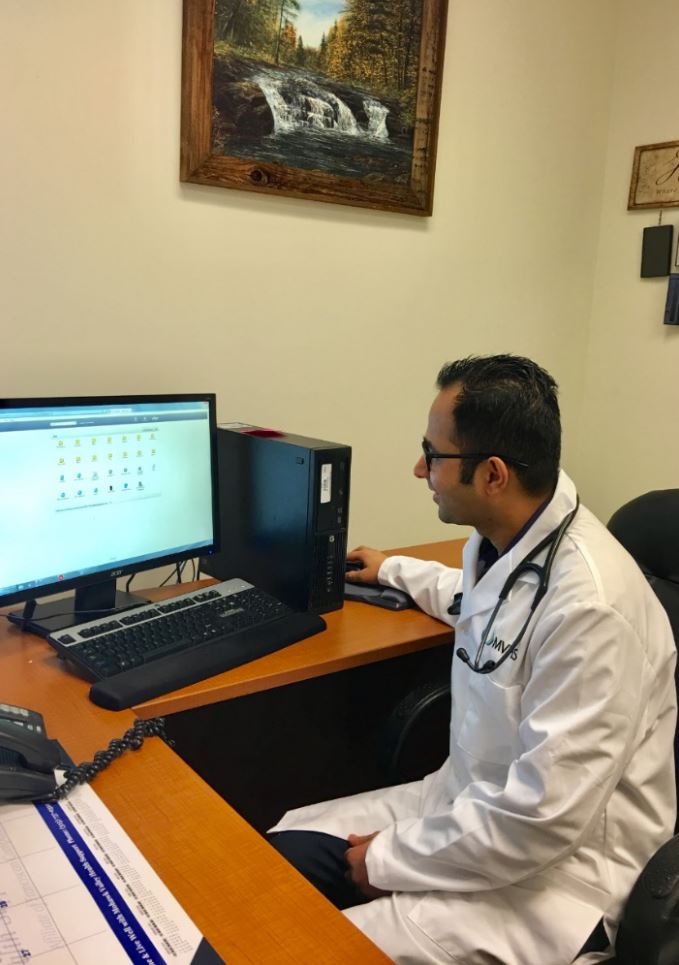
A framed article hangs in the doctor’s office where he practices.  The clientele isn’t particularly diverse, and this is a perfect way for patients to learn about his ethnic origins.

“They read and appreciate what I have come from, the challenges I faced, and what I am doing now,” he said.

__”Have a diaspora story you’d like to see us tell?  Know of someone in the community who is doing formidable work?  We’d love to hear about them. We are in particular seeking stories about women and elders and how they’re integrating into their new communities.”  

Helping to fight addiction in the new homeland

By the time D.B. Khatri was resettled to Greensboro, North Carolina in January, 2009, he’d earned both his undergraduate and graduate degrees in microbiology from Tribhuvan University in Nepal.

Though he was still considered stateless, he was teaching at National School of Sciences (NIST College), too. Life was a different sort of difficult than it was in the refugee camp where he’d lived since he was a teenager, having left his native Sarbhang, Bhutan with his family.

In Kathmandu, there was “no one to help you. You were by yourself,” he said.

Having excelled in his studies while in high school in Beldangi 2, he’d been awarded a UNHCR scholarship. The last in his family of eight to arrive in the United States, he was committed that he would not squander the abundance of educational opportunities in his new homeland.

“I didn’t want to leave my education aside and do a job without any skills,” he said. “This is the land of opportunity. I needed to grab this opportunity for something.”

After working to help other resettled refugees at Church World Service in Greensboro, then working a job at the prestigious University of North Carolina, Chapel Hill, Khatri decided to pursue his PhD in Integrated Bioscience with a focus on neuroscience. (He tabled his love of English literature for science; a particular favorite is Shakespeare’s Julius Caesar, and The Bridges of Madison County by Robert James Waller.)

Doing the hard work to earn this degree—while married, with a toddler, and while caring for his elderly mother—did present challenges, he said, and there were times, despite a personality he describes as “positive,” that he thought about discontinuing his studies.

But he stuck with it, and last year, he achieved the milestone of graduation when he was presented with a doctorate from North Carolina Central University in Durham. This was a test, he said, “not just of your knowledge, but your perseverance.”

The focus of his studies was the effect of alcohol and marijuana on the brain, particularly on the brains of adolescents. He shudders to think of how substances are abused by people during their university studies, or back in the camps, where there was little else to do.

“My hypothesis was if you drink and smoke during adolescence, that will have a significant effect” on one’s developing neurons, he said. His laboratory research found confirmed that. “Taking these drugs alone or together will kill these neurons,” he found.

This can have wide-ranging implications on our mental health. The fewer neurons we have, said Dr. Khatri, the more likely we are to be depressed—which can lead to suicidal tendencies.

Today, he is working on his post-doctoral studies and also at an internship where he’s getting hands-on training in the clinical trials of drugs. His dream job is to take that knowledge to a pharmaceutical company where he could work on developing a drug that would combat addiction.

He’d also love some day, if possible, to go back to the land of his birth, particularly if he might be able to impart what he learned there.

“We can’t do anything besides hoping,” he said.

__”Have a diaspora story you’d like to see us tell?  Know of someone in the community who is doing formidable work?  We’d love to hear about them. We are in particular seeking stories about women and elders and how they’re integrating into their new communities.”  

BCAW thanks Ontario Premier

26,644

The Bhutanese Cultural Association of Windsor submitted a letter of gratitude to Ontario Premier, Kathleen Wynne, last week, thanking the Canadian government for accepting to relocate around 6,000 Bhutanese refugees from Nepal.

Indra Timsina hands over a letter of gratitude to Ontario Premier, Kathleen Wynne

Working community member of the association, Indra Timsina, handed over the letter to the premier during his town hall session

“At first, we would like to thank the Government of Canada and the Government of Province of Ontario for taking a leadership in resettling refugees from around the world, including Bhutanese refugees. As part of the resettlement, about 6,000 Bhutanese refugees were resettled in different parts of Canada,” said the letter.

The association has said that after nine years since the beginning of the resettlement process, majority of the resettled folks have moved to the province of Ontario.

“Currently, we are about 120 families living in Windsor, and the number keeps growing,” said the association, “It is also noteworthy that about 40 percent of the resettled Bhutanese have been naturalized and they are proud to be the new citizens of Canada.”

The association also mentioned that it is looking for continuous supports from the provincial government, and expressed its commitment that towards working for the better lives of the new Bhutanese-Canadians.

Reported by Yadap Neopane for BNS from Canada