Teej celebration continues

26,644

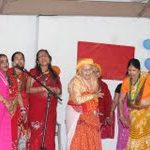
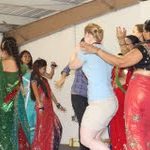
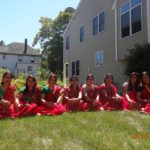
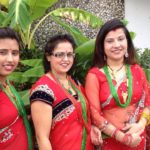
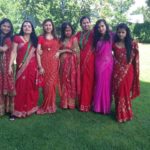
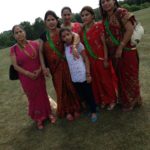
Teeja ko rahara aayo bari lai…. the song is evergreen and so is this women’s festival of gathering and socializing. Celebrations took place in all states, ranging from a small gathering to fanfare functions in open metro parks or booked halls.

Women celebrating Teej in Louisville, KY

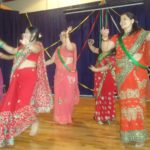
Women dance to the nostalgic songs related to Teej, the time for all married and unmarried females to observe a day’s fasting and ending it with a puja on the fifth day of new moon.

In Louisville of Kentucky, women and girls gathered on Saturday in a hall of leasing property office at Finley Avenue. It was a good mix of all age groups including the male members who supported by organizing and transporting to the venue. It was an evening program, so many could come after work. Bhutanese Society of Kentucky organized the program.

In Pittsburgh, Bhutanese Community Association of Pittsburgh (BCAP), observed the Teej festival by organizing a cultural program at Clairton Park last Sunday.

The program entertained the community members by performing series of competitions and solo songs. Kishore Pradhan, the BCAP President, chaired the event.

Bidesh Dhakal from Aurora, IL reports that the community celebrated this year’s Teej festival by gathering in a park.

In Manchester of New Hampshire, Bhutanese community of NH organized Teej celebration on Sunday. Women and girls danced to traditional and modern songs related to Teej. Special was the sari wearing competition for young girls in which contestants Kusum Acharya, Maneesha Chhetri and Duka Dhakal ranked as first, second and third position.

Addressing the function Radhika Dhital, the chairperson of the program said, “We are busy throughout the year, but Teej is a reason to a take break from this busy schedule and reunite with family members”.

In Washington, a community puja and social gathering took place in Everett where around hundred women and young girls took to the floor on music of teej songs. Pundit Mukti Subedi coordinated the performance.

In Salt Lake City of Utah, Teej celebration was a grand event.

The Bhutanese refugees residing in Utah State observed Teez on September 7 with cultural dances, sangini, and songs, reports our correspondent.

The celebrations also marked honoring of the community volunteers, and high school graduates.

Mukti Bhurtel, the President of the Bhutanese Community in Utah chaired the event.

Speaking at the program, Bhurtel assured of celebrating the upcoming programs in a participatory manner and with improved sound system.

The Utah celebration also attempted to raise funds by demonstrating its activities through documentary video.

Back in Bhutan, Teej is not very special social celebration. Sisters married off to far flung villages try coming to the parental homes or homes of brothers, traditionally. Because of continuing monsoon, many could not make their way across swollen rivers. So most celebration was limited to private homes with few people gathering.

Election aftermath: A milestone or a millstone?

26,644

sonam-207x300I arrived in Bhutan a few days after the second general elections – a milestone in the journey of our country’s fledgling democracy.

A milestone unfortunately marred with ugly accusations hurled at each other from both sides of the two political parties that had contested – The People’s Democratic Party and Druk Phuesum Tshogpa.

The air over Thimphu, I found was heavy with mistrust, fear, whispers and confusion.

The rumor mill was busier than usual and many had taken to social media to air and battle out their differences. The most insidious of these posts and comments on social media seemed to come from those who have much to gain from inciting fear and hatred by branding people as “anti-nationals” and “Ngolops” thereby expressing their hate and hoping they appear “patriotic.” Some of these posters were ostentatious enough to let others know that they were the only ones concerned for the King and country.

Having split my life between Bhutan and living overseas for over a decade now I can only speak from what I have witnessed outside and from the experiences of what others in the world have gone through before us in history. When segregation is promoted and a group of people are targeted and branded as traitors simply because of their race, religion, caste, color, choice of a political party, and for speaking their thoughts, then it means that people promoting it are ignorant enough not to understand what a functioning democracy is. This behavior actually undermines the democracy it pretends to promote.  It, therefore, makes me wonder, is it a true democratic culture that we aspire to build or do we want to become a caricature of a democracy like those we see all to often around us in the region.  A caricature where a small few inspire outrage and violence because they cannot tolerate the views or differences of those in the community.

Without fail, those inculcating this climate of fear have vested interests to control the dialogue and outcome for the larger population because this is what fear-mongers do. If leaders and a government heed to the divisive calls of these small-minded inciters then our country will likely go down the path of many other nations that have suffered immensely from these consequences. We are not starving for examples either. There are plenty of them out there in the world today where categorization of a group of people through hate speech, fear, and incitement can have such unthinkable consequences.

The individuals who have called to “hang” certain people or demanded the death of certain individuals only goes to show that we have amongst us, ignorant blinkered individuals who have no understanding of the consequences and implications of their words and actions. Individuals who in fact look to nations beyond our borders not to learn to curtail them within our borders, but to promote violence/imprisonment/hanging/death-threats on their adversaries through hate speech. What is worrisome is when they see nothing wrong in doing it or think it is justified because of their cause.

Editor’s note: BNS has partially reproduced this article from The Raven with the author’s consent. The full texts of this article are here.

The stereotype of illegal immigration

26,644

Damcho Dorji, one time a para-legal, member of opposition party in DPT government, and now the home minister of Bhutan is harping an old rhetoric: illegal immigration continuing to threat the sovereignty of Bhutan. In an interview published in kuensel of September 9, the home minister has not cared to show his sincerity of evidenced based answer to the question of ‘how many have not got the citizenship card’. He seems to have despised the objectivity of the question meant to get an official figure of the pending citizenship cases.

Illegal immigration is talk of the show for Bhutanese cabinet officials and some constitutional post holders in judiciary. And, it comes always with a tag: sovereignty of Bhutan. The response of the home minister is distracting one from the real pending cases of the citizenship cards of the people in south to a more utopian and idealistic hypothesis of fear of small nations being overwhelmed by immigration. In the case of Bhutan, sovereignty is already at stake in the northern and western border with China claiming parts of Bhutan. This has nothing to do with the immigration whether legal or illegal, since the border mismatch with China has arisen out of official myopia in adopting foreign policy. Contrarily, going by Lyonpo Om Pradhan’s book, Bhutan’s sovereignty was protected by the immigration and settlement of Nepali-speaking people in the south undertaken by late J B Pradhan. 


The home minister of democratic government of Bhutan is treading upon the foot steps of erstwhile home minister, Dago Tshering, who branded all people in the south as ngolops, terrorists and ostracized them to be illegal immigrants who came to Bhutan for all the welfare provided. He is indicating that illegal immigration is continuing even after the mass exodus but does not provide the basis of his assumption. So it is a cycle of official rhetoric that government officials are deliberately throwing out to create fear in the people whose citizenship cases are under scrutiny. With this statement, the air is thickened with suspicion, attitude in the home ministry ripening to malignant rather than benign, fear and frustration instilled and waves of whispers set in motion again.

Citizenship issues can be resolved only if we find a lasting solution to the problem of continuing illegal immigration in to our country” is definitely the other way of saying “ we cannot issue citizenship unless we are completely convinced that (they) are not illegal immigrants”.  What people in Samtse have shown their concern with Tshering Tobgay in the election campaign is all gone sublime.

The home minister should not have turned away from the very fundamental and genuine concern of the question to his philosophical and assumed parlance which simply blames the country’s policy and weakness of hiring non-Bhutanese workers throughout the history of Bhutan’s development.

‘Efforts to involve India for repatriating refugees underway’

26,644

The British Ambassador to Nepal, Andrew James Sparkes, is learnt to have said that efforts to involve the government of India in repatriating the interested exiled Bhutanese were underway.

The British Envoy to Nepal

Media reports from Jhapa quoted the Envoy as saying during his visit to Damak earlier this week. However, he didn’t choose to elaborate in the said matter, according to the report.

Meanwhile, the Norwegian Ambassador to Nepal, Alf Arne Ramslien, visited Beldangi Refugee Camp and its affected area, Thursday.

Envoy Ramslien, who also visited a police station under construction near the refugee camp, inquired about management and operation of the refugee camps.

He also visited UNHCR-funded Mawa River Drinking Water Project, and an agricultural farm, informed Damak Police Station, Jhapa.

Haa tragedy

26,644

TTI am shocked and deeply saddened to hear about the tragedy in Haa that cut short the lives of eleven of our young soldiers and injured ten others. Young Bhutanese men in uniform with their entire lives ahead of them, some with wives and children, laid down their lives while in the service of our nation.

I join all Bhutanese in offering my heartfelt sympathy to the families and loved ones of the victims of the Anakha tradegy. I hope that you can draw some measure of comfort knowing that you are not alone in your grief – that people across our country, and Bhutanese everywhere, pray and mourn with you.

For the families of the injured, please know that we will do whatever possible to restore the health of your loved one. We join you in your prayers for their full and speedy recovery. And, we will be there with you for as long as it takes.

At this time our hearts also go out to all members of our armed forces who risk so much in the service of our nation – who are always ready to risk their own lives so that the rest of us can live in safety and security.

And, at such times, it is always His Majesty the King who is first on the scene, the greatest source of comfort for those in pain, and the provider of welfare to the children and spouses of the victims. We are blessed to have His Majesty at Anakha, offering solace to bereaved families and ensuring that the injured receive the best medical attention. All of us in the government humbly stand by His Majesty the King, our Kidu-Gi-Pham, to serve and do whatsoever is required of us to provide support and comfort to the victims and their families of today’s tragedy.

At a personal level, it pains me deeply that I am not in Bhutan at this moment of tragedy. I will return home as soon as possible but until then my thoughts and my prayers will be with the families of our soldiers who have suffered a terrible fate.

(The author is Prime Minister of Bhutan. The write-up has been adopted from his personal blog, and published unedited. The PM visited survivors of the Haa explosions on Wednesday.)

Syracuse wins inter-state soccer trophy

26,644

The Syracuse team lifted the inter-state soccer tournament title by edging the Lovey Guys of Rochester New York 1-0 in the final battle on Monday.

The Syracuse (white jersey) with the Lovely Guys of Rochester
The Syracuse team (white jersey) with the Lovely Guys of Rochester, referee and volunteers (Picture courtesy: Narendra Neupane)

The Syracuse team received the winner trophy and cash award of US $1400, while the runner bagged US $1,000 and a trophy, Narendra Neupane, the lead organizer informed.

According to Neupane, the tournament saw expenditures of around US $9,000 that was collected on monthly basis from among interested working youths from Lancaster.

“The objective of organizing the tournament of this kind was to have an

The winner team members lifting the trophy
The Syracuse team with the trophy

opportunity for interaction between the Bhutanese kids, adults and seniors about the progress we have made, and inculcate the habit of guiding children to path of progress and teach Bhutanese culture to the young,” explained Neupane.

Chairperson of the Organization of Bhutanese Communities in America (OBCA), Hari Bangaley Adhikari, inaugurated the three-day-long tournament judged by Jitu Basnet, Hemant Lama, Arjun Gurung and S.B Neupane.

Organized by the Bhutanese Youth Association of Lancaster, Pennsylvania, all matches of the tournament were held in the S&M College soccer field, where altogether 26 teams from various states participated.

A Bhutanese woman for drug traficking

26,644

A Bhutanese women identified as Zhimo was nabbed by customs officials of Thailand at Suvarnabhumi International Airport. According to the acting director general of customs Yuthana Yimkaroon, the officers found 4.9 kg of  illegal substance called Ketamine in the luggage of a 26-year old Bhutanese women.

The Ketamine drug (Photo: Internet)

The detainee confessed that she was hired by an Indian to be paid Thai Bhat 20,000 once the substance get picked by another accomplice. She also confessed that she traveled to Tahiland with a tourist visa five times.

It is reported that she will be charged initially for smuggling the drug and possessing the drugs for sale and distribution.

The customs director Yuthana said that it used to be Indians who smuggled drugs into Thailand, but now they have turned to hire the Bhutanese to evade the law against drug smuggling.

Nothing is reported about the value of the substance she smuggled.

Similar but unconfirmed report of drug smuggling by Bhutanese in Thailand came to news some years ago.

11 soldiers killed, PM condoles their death

The explosion site (Picture: BBS)

The official reports from Bhutan confirmed that a series of explosions trigged by “expired” ammunition killed at least 11 Royal Bhutan Army (RBA) soldiers and technicians in Samar Gewog of Haa district, Monday.

The state-owned television reported that at least eight soldiers died on spot, while other three succumbed to death in a hospital. Five injured were airlifted by RBA to the National Referral Hospital in Thimphu, reported BBS.

The soldiers and technicians were in Haa to remove the outdated ammunition, according to RBA Chief Operation Officer, Major General Batoo Tshering.

Meanwhile, Prime Minister Tshering Tobgay condoled the soldiers’ death through Tweeter.

“Mourning the loss of lives in the Haa accident. Prayers for the victims and their families,” tweeted PM Tobgay from India, where he reached for  the six-days-long state visit on August 30.

HM King Khesar (K5) has reached Haa for the site inspection. He is also learnt to have asked the RBA for “proper arrangement of the funeral rites of soldiers and technicians, and welfare of their families”.

Bhutan, China and India on border, fuel and economy

26,644

Govindarizal-150x150Bhutan, China and India share several outstanding issues and the border issues top the list. Earlier this year in August, Chinese Vice Foreign Minister Liu Zhenmin led a delegation to Bhutan for the 21st border talk. He also talked on opening Chinese embassy, increasing tourist flows, increasing exchange visits, among others. Before visiting Bhutan, VFM Liu’s delegation visited India, met the officials there including Sujatha Singh, the Indian Foreign Secretary, who had been in Bhutan just a week back. While in India, Chinese delegates engaged their Indian counterparts with the issues of line of control in Ladhak region where the armies of two countries had a face-to-face situation for three weeks in April 2013, import of buffalo meat from India, exchange visits and formation of BCIM (Bangladesh-China-India-Myanmar) economic corridor. On the issue of Bhutan, Chinese delegation clarified that it would deal bilaterally, means without India. The profiled Chinese delegation flew from India to Bhutan to sort out border mismatch and offer some tips of financial support to the new government in Thimphu for a price.

A week prior to Sujatha-Liu meeting, Sujatha Singh and Shivshankar Menon (National Security Adviser) delegations were in Thimphu to study the strength and orientation of Bhutan’s newly elected government.

In China, VFM Liu is becoming an unfailing officer in handling border disputes. After the change of guards in Beijing in March 2013 VFM Liu made remarkable progress in China’s bilateral relations with Myanmar, Thailand, Japan, Philippines, Nepal and India. Bhutan-China border issue remains to be solved.

Bhutan-China border talks that began in 1972 have taken many important decisions. Since 1984 the talks took place without the presence of Indian delegates in Bhutanese team unlike in the past. In 1998, the two countries signed “Agreement on The Maintenance of Peace and Tranquility in the Bhutan- China Border areas-1998”. During the period of transition from the fourth king’s abdication to fifth king’s coronation with first democratic election in between, the first interim government for first election published the country’s map without Kulakangri, which is Bhutan’s tallest peak. And, the news unnerved the Bhutanese populance, yet, had to agree willi-nilly. It unofficially looks like ceded to China. However, China had been seeking the 269 sq km lands in the western Bhutan including Dramana, Shakhatoe and Sinchulung for which China would barter 495 sq km of Pasamlung and Jakarlung in Bhutan’s North, a vivid evidence of the Bhutan-China border mismatch. For five years (2008-2013) the government neither accepted the idea to exchange lands nor tried to regain the cartographically ceded land. This time too, Bhutan-China foreign minister level meeting could not come to any conclusion. FM Rinzin Dorji, who hails from Sarbang constituency, which too has unsolved border issue with India, led the Bhutanese team. After a humble deadlock, the VFM Lui resorted to the audience of the Fourth king, who was behind the secret cede of Kulakangri and is above the law. After the discussion, the teams seem to have agreed to take up the demarcation of border of Pasamlung and Jakarlung. The result of the settlement in the northern border will determine the strategy and course of action for settling the differences on the western border.

The Vice foreign minister of China Liu Zhenmin with the fourth monarch of Bhutan Jigme Singye Wangchuck. Zhenmin called on K4 on August 22, 2013 in Thimphu (Photo: MOFA-PRC)

Bhutan-China border settlement is under India’s scrutiny; Bhutan alone cannot decide to further cede the land from its west and expect India still friendly. The intimacy of Bhutan-India relationship was not realised seriously until July 1, 2013, when India declared end of subsidy on petroleum and cooking gas that it was providing to Bhutan.

Recent recession in western countries was instrumental in flowing money out of US to developing economies including India. It initiated a confidence in the economic growth. The US changed its policy for financial resilience and back flow started making the developing economies vulnerable once again. Rupee has plummeted low with a rapid decline since May 2013. It is lowest since 1991. India may have to resort to IMF like financers for rescue from it’s at least $ 170B short term loans to be paid by March 2014, unless it decides to roll its US$ 180B reserve. Economists in Delhi were censoring the less productive public investments. Cut on the subsidy on fuels given to Bhutan was a small cut for India but it caused a political topsy-turvy in Bhutan. It had a direct effect on Bhutan’s national election on July 13. The ruling party lost two third of the seats secured in 2008 election, when it had 45 out of 47 seats in the lower house, the national assembly. The withdrawal also showed that Bhutan had Nu 200B only at its coffer for the new government to survive. The new government has all first timers in its cabinet, which makes it difficult to win the trust of the economic player(s). The border issue is pegged with the financial graces.

By June 2013, the banks in Bhutan were without enough Indian Rupee notes to keep the bank counters open. India took long time to respond to Bhutan’s request for Indian currency assistance to alleviate the rupee crunch. The government responded by selling its dollar reserves. On June 26, 2013 Bhutan government sold USD 200M earning INR 11.93B enough to meet the election costs. India saw friendship with Bhutan cracking. On the same day, India offered INR 3B as excise duty refund (EDR) of fiscal year 2010-2011. Government of India (GoI) refunded excise duty paid by Bhutan to import goods from India. Manufactured goods purchased from India by Bhutanese importers were given EDR, 100 percent for goods purchased directly from factories and 40 percent for goods bought from market. Four days later, it slashed the subsidy.

When the new government took the office in Thimphu, Indian leaders were in Bhutan to judge the new government’s orientation. The delegates from China reached there to iron out the creases in the border and to open her embassy. Thimphu government has limited options to satisfy both neighbours whatsoever, it must listen to the Bhutanese people- provided if democracy should benefit people to its true definition.

Editor’s Note : Govinda Rizal, originally from Lodrai, Gayglegphug is one of the Contributing Editors of the Bhutan News Service. He writes about the Bhutanese people in the country and in exile, and about Bhutan’s international border. He blogs at: http://redroom.com/member/govinda-rizal  

One Nation One People Pie: A treat tasted bitter

  • Dagapela Series IV (…contd)

“All truth passes through three stages: First, it is ridiculed; second, it is violently opposed; Third, it is accepted as self-evident.” – Arthur Schopenhauer


Slaughter of Nepali language
Three languages (English, Nepali and Dzongkha) were taught in school till 1985. English was the medium of instruction; it was compulsory to pass English and one of the second languages either Nepali or Dzongkha to get through eighth grade board examination. Nepali speaking students used to study both second languages in class. Drukpa students, if there were any, they didn’t attend Nepali class. Since 95% of students studying in Goshi School were Nepali speaking, they used to perform well in Nepali and used to get through the board exam easily. Along with Driglam Namza scheme, Dzongkha was declared a compulsory (major) subject from 1986 whereas Nepali was declared a minor subject which meant passing in Nepali language would not get through board exam any more. In that year out of 37 students in eighth grade only two (5.40%) passed in Dzongkha It was not only Goshi School that had poor result, other schools of Dagepela -Namchela, Dokap and Powang primary schools too had similar fate in the fifth grade board examination.

As Goshi was the only Junior High school in the sub-division, it was a serious blow to the community, teachers, students, parents; and whole community was worried. They appealed to the Department of Education (DoE) to review the decision, suggested the DoE to allow the students to study both the languages and give equal importance to both the languages. The community then didn’t deny Dzongkha as a national language, they just called attention that curriculum was not well developed. There were no professionally trained teachers, books and stationeries were not available on time and pleaded the DoE to review the decision. Mandals tried their best to make the government aware of the issue. Mr. K.B Chauhan, who was the national assembly member, then submitted agenda in the National Assembly (NA).

In the 65th session of National Assembly Chhimis (peoples’ representatives) of southern Bhutan raised the issue in the NA floor, excerpts of the resolution is given in quote;

“Recognizing the importance of Dzongkha, the Chimis of Southern Bhutan said that it should be made easier for students to understand. They felt that the textbooks in Dzongkha are of a higher standard and that the students had difficulty understanding them. They also expressed their earnest desire to learn Dzongkha. Therefore, they requested that simple books be written in Dzongkha and adequate numbers of Dzongkha teachers be sent to all schools and villages in Southern Bhutan as well as to other places within Bhutan.

In response, the Director of Education informed that new office called Dzongkha Development Advisory Committee has been opened recently in addition to the Dzongkha Division of the Education Department. A budget of Nu.0.47 crores has been allocated to the new office to write Dzongkha books and compile Dzongkha Dictionaries. The Director said that the government would try to meet their requests with regard to sending teachers into the villages and circulating Dzongkha books. The National Assembly endorsed the decision of the government.”

The commitment of Director of Education quoted above remained in paper, slaughter of dreams of innocent children continued. From 1987 through 1989 about 20% students got through eighth grade board examination. Every year about 30-35 students failed in Goshi School whereas in primary schools number was even alarming. Rather reinstating Nepali a major subject as suggested from the community, teaching of Nepali language was completely banned from 1989. About 2300 students were in schools in Dagapela sub-division when their mother tongue was slaughtered from the curriculum, dreams of pursuing higher education got shattered, life ruined and fate is still continuing.

K4’s dramatic visit
In February 1990 news of King Jigme Singye Wangchuk’s Dagapela visit came to light, community thought that they can present the issues affecting them and their children’s life. Preparation started week ahead, goods and materials needed were mobilized through forced contribution from the community. Five days before the king’s visit the community was surprised to hear that there was a strict order from Deputy Home Minister that no ordinary citizens would be allowed to meet the king to present gifts and appeals. Two days before his visit organizers informed that they received another order from Deputy Home Minister that even the peoples’ representatives (Mandals and National Assembly Member) will not be allowed to meet the king to present gifts and appeals. The dream of Dagapela communities to present their concerns to the king was turned into ashes.

The venue for the Kings address was fixed at Goshi school ground. There was an order from the Dungpa that head of family of every household of Dagapela sub division must be present to welcome the King. As per the order, the citizens assembled at the venue with due diligence. When the king arrived only Drukpa officials and staffs were allowed to go near the king. Dagana Dzongda Hari Sonam Tobgay, Gom Bahadur Gurung and Mr. Siwa were exceptions being retired army. No Nepali speaking citizens were allowed to enter the compound. Mandals and members were kept in army cordon, citizens were asked to sign blank sheet of paper. The king gave a speech about Teknath Rizal being an antinational, distributed a booklet about Tek Nath that contained information about his family background, education, jobs he did, his latest position and antinational activities he was involved in. No interaction took place between the public and the King. It was just a one-way presentation.

The 69th session of National Assembly of Bhutan 19-26, March 1990 resolution records the given quote;

“On this issue, the Royal Advisory Councilors and the People’s Representatives from the southern dzongkhags said that more than the disappointment felt by the people of other dzongkhags, the recent anti-national activities had become a cause of even greater distress and shame to the people of southern Bhutan. They said that during His Majesty’s visits to the southern dzongkhags in February this year, it was reported in the meetings by the general public of these dzongkhags that most of them were not even aware of such activities and that these acts were the work of a few persons instigated by anti-national elements, some of whom were not even bonafide Bhutanese national. However, these disloyal and seditious activities by a few misguided people was a cause for deep regret and shame for the people of southern Bhutan”.

When Dagapelian read the National Assembly resolution published in Kuensel they understood the drama and the purpose of asking them to sign on the blank paper. They realized that they were deceived. The quotes “the Royal Advisory Councillors and the People’s Representatives from the southern dzongkhags said that during His Majesty’s visits to the southern dzongkhags in February this year….” “it was reported in the meetings by the general public of these dzongkhags…..” contained nothing else but blatant lies. General public was not allowed to enter the compound-people too were asked to sign a blank paper, neither there was interaction with peoples’ representatives nor with general public during Jigme Synge Wangchuk’s visit to Dagapela in February 1990. As the doors of justice were locked for lesser citizens the atrocities covered and continued pounding over the heads of innocent citizens.

Jangchup’s Death
A constable named Jangchup of Damphu police force was transferred to Dagapela police force in 1984. He had one son about twelve year old living with him, it was not known about his past life, whether he had family or not, other family members never visited him.

Jangchup was a Sarchop very polite and friendly. He used to drink more than normal person did but was able to control himself. He never spoke bad words even when he was drunk. He was an admired police constable of Dagapela police force.

After retirement Passang Tshering started an illegal liquor shop in his newly built house in Goshi bazar. Operating a liquor shop needed a license, but for Passang Tshering, no law enforcement dared to question him. Prem Lal Sherpa of Paseybung village was his local wine brewer and supplier. Constable Jangchup was asked to carry wine in bulk from Prem Sherpa’s house to Passang Tshering’s illegally operated pub.

Prem Lal Sherpa had grown up daughter, Jangchup used to visit his house frequently to carry the wine. One evening of October 1989 Jangchup walked to Prem sherpa’s house, no one knew for sure what happened inside Prem sherpa’s house that night. The constable was found dead with slit throat at the side of the road about half a mile away from Prem Sherpa’s house the next morning. Passang Tshering (not the acting police chief) led the investigation. Dozens of residents of Paseybung village and Goshi bazar were interrogated and some were even fingerprinted as they found a Khukuri in the crime scene. While interrogating Goshi bazar and Paseybung village residents, numerous tips led to an individual (suspect) who was a close confidante of Passang Tshering. The suspect bribed Passang Tshering and received good protection that he was neither questioned nor fingerprinted; and that case still remains unsolved.

Madan’s fate
Madan Kumar Pradhan was a forest guard assigned to Dagapela forest post. Passang Tshering asked Madan to sanction a tree for timber without completing formal application procedure in September 1988. Madan sticked to the rule and denied authorization without completing due process. Passang Tshering threatened Madan that he belonged to a clan and he didn’t have to follow rules. Madan stood by the rule, and there after the relation turned sour.

On the eve of October 1989, while Madan Pradhan was going home on Tihar vacation in the morning, he looked for Constable Jangchup to borrow an umbrella. He didn’t find Jangchup that evening. He left next morning for home via Kalikhola without knowledge of Jangchup’s death. It was an unfortunate coincidence that Madan was looking for Jangchup to borrow an umbrella in the evening. Jangchup met mysterious death at night and the following morning Madan left for home.  In this way, Passang Tshering found place to pour his vengeance over not authorizing tree for timber year earlier.

Madan was captured from the way before reaching Kalikhola, put in jail and tortured without any clear evidence. In the beginning he was declared 100% guilty by Passang Tshering and his team. All Dagapelian knew that Madan was innocent and real killer had bribed Passang Tshering. As the time progressed the news of Madan being punished without any evidence became wide spread.

There used to be two channel to file a complaint: (i) to go through Dagapela police chief-Divisional Police officer, Damphu–the Police Headquarter Thimphu or (ii) to go through Dungpa Dagapela-Dzongda Dagana–Home Minister Thimphu. Days, weeks and months passed but Madan was continuously tortured in detention, his agony of pain used to echo across Passeybung, Salleri and Panakhola village. Dagapela public filed numerous complaints through both channels; and the final recipient of both the channels was Dago Tshering, then Deputy Home Minister. Since Passang Tshering had family relation with Dago Tshering, the complaint was not given any attention.

After eight months through some special channel, the complain reached the desk of then Zimpon, the Royal chamberlain. Zimpon ordered the home minister to launch an investigation. The news about assignment of investigative team from Thimphu leaked before the assigned investigation team arrived Goshi detention center. Madan was told that if he remained in Bhutan he had to serve life imprisonment. However, if he left the jail at night and go to India he did not have to spend life in prison. Since there was no sign of getting justice he chose to walk away from detention at night. A few days after Madan’s choreographed escape the special investigation team arrived and found Madan 100% innocent. Since Madan had left Bhutan there was no further question why he was imprisoned and tortured. That was how Passang Tshering covered the crime for money and saved Jangchup’s killer. Madan Kumar Pradhan is currently living in Gauradaha in eastern Nepal.

Rogue Passang Tshering’s come back
After retirement Passang Tshering settled in Goshi bazar. He was corrupt and immoral, so Dagapela community deplored him. When Bakhu enforcement in public places and place of work began in 1989 it was a good come back opportunity for him. He became self-declared enforcer; he harassed residents, forced to pay fine and took it himself. Bakhu enforcement policy turned out a means of livelihood for morally decayed Passang Tshering. Dagapela residents were penalized for wearing half Bakhu, and for putting on Dhaka Topi. Goshi bazar residents were penalized for not wearing Bakhu or Kira while fetching water from the tap.

It was not clear whether Passang Tshering was the relative of Dago Tshering or just a confidante, then Duckpa staff working in Dagapela used to call him a mad man. They couldn’t do anything-they just used to avoid him, even Dungpa Thinley couldn’t control him. He was afraid that Passang Tshering had direct reach to Deputy Home Minister Dago Tshering.

During K4’s visit in February 1990 Passang Tshering received award for being strong enforcer of the ‘One Nation One People Policy’. The award encouraged rogue Passang Tshering to accelerate his rampage further–he termed every Nepali-speaking citizens as Jyaga or ngolopi Shopkeepers were banned listening BBC Nepali program, Radio Nepal, Radio Kurseong and Radio Shillong, and Nepali news. They were even penalized for tuning Nepali songs or Hindu Bhajans in radio or cassette player. People were even penalized for wearing half Bakhu during scorching heat in summer. Shopkeepers were harassed for chanting Sanskrit mantras, asked to throw away Hindu Gods’ idols and pictures and asked to put Buddha’s picture in the altar. Aita Sing Rai’s portable radio was smashed for tuning Nepali song Mr. Mongar, a villager was slapped on the face accusing him of looking that directly at him. Mr. Chhetri, another villager was beaten for asking questions; scores of incidents of throwing away Dhaka topi from residents’ head with a stick, wiping out Tilak from the forehead, hundreds of incidents of using filthy words, and patting on the butts or touching on other body parts of women which was grossly inappropriate in Nepali culture. Rogue Passang Tshering continued his rampage; helpless people of Dagapela continued burning in injustice.

Author’s note: This write up is a part of Dagapela series. It is not the intention of this write up to generalize and pour vengeance against all Drukpas, it respects all human beings irrespective of race, gender, ethnicities and religious belief they hold. The purpose of this write up is to give real life scenario predominant then. The fact shows there were twelve permanent resident Dukpa families in Dagapela sub division in 1990 they were in Goshi bazar, Goshi village and Majua village, amongst members of those twelve families two of them possessed corrupt and decayed morality rest were wonderful human beings. At the same time there were about two dozens Duckpa staff working in different departments of sub divisional administration then, they were all great people. The sources show Passang Tshering had four sons and two daughters, they were not involved in the rampage and they didn’t have control over their father’s barbarousness. 

Editor’s Note: Padam Rizal is one of the contributing authors at Bhutan News Service (BNS). This piece and/or his opinion doesn’t reflect the official view of BNS