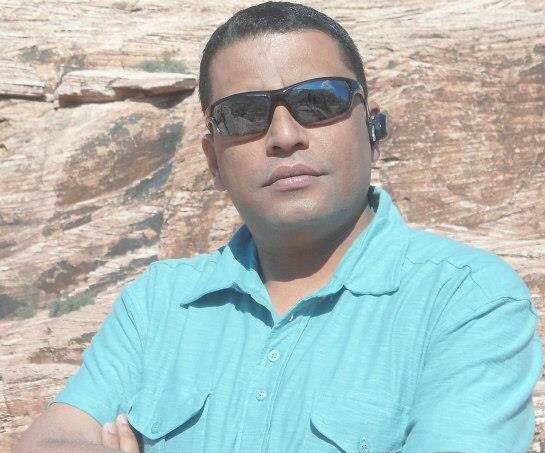
Kala Bhattarai,41,died a day later after she was admitted to OSU hospital on September 22, resulting to crash on Morse Road in Columbus, OH.
Late Kala Bhattarai (Picture courtesy: Columbus Connection’s Facebook)
Bhattarai was in the rear seat when another car slammed to her car at a crossing. The incident took place around 5:15 am while the deceased and others were riding to their work.
According to an unconfirmed source, her funeral is scheduled tomorrow. According to the source, the Bhattarai family moved from Virginia, originally resettled there from Khudunabari refugee camp, Nepal.
There are five members in the family.
Update: According to a late report obtained from Columbus today, funeral of late Kala Bhattarai took place at Shaw Davis Funeral home around 4:30. She was the only working member in the family, survived by husband Khadka Bhattarai, two sons and a daughter.
Other survivors who were injured in the crash returned home after trauma treatment, says the report.
The patron and the former executive president of World Hindu Council, Ashok Singhal visited and spoke to Hindu followers from Bhutan considering them “part of his heart”. Mr. Singhal was speaking in a felicitation program organized by Hindu Sanatan Sewa Samaj (HSSS) in Worcester, Massachusetts on Sep 9, 2015.
Viswa Hindu Parishad Logo
Addressing to the devotees gathered in the program in the premise of a Hindu Temple operated by the Bhutanese Hindu Followers of Worcester, Mr. Singhal said, “Nepali speaking Bhutanese were expelled from their country of origin because they follow Hindu religion and had to struggle a lot in their life. I remember the terrible situation when I visited most of the Bhutanese refugee camps in eastern Nepal but you still keep your culture alive and follow the path of Hindu religion’.
HSSS, representing all Hindu organizations in America recognized him for his life time efforts to protect, promote and preserve Hindu Religion. Singhal said “You are part of my heart”. He also said that the Hindu dharma is one of the oldest religions that always guides people stay in the right path because of which many people from other religion started following Hinduism. “I want you to keep on practicing Hindu Religion and later on people from other religion will follow you”. Singhal said.
In the program Mr. Singhal was honored with a letter of felicitation by the HSSS. The Executive Director of HSSS Mr. Hari Khanal read the felicitation letter and handed over to Mr. Singhal on behalf of the Bhutanese Hindu Followers. The contributions made by him were highlighted in the felicitation letter. Mr Khanal also offered khadaa to other team members of World Hindu Council including Mr. Vijay Dalal who is one of the Board of Directors of HSSS.
The President of the Board of Director of HSSS Mr. Narad Adhikari presented the overview of HSSS. Mr. Adhikari also coordinated the event.
The Executive Director of Bhutanese Community of New Hampshire Tika Acharya and Devi Khanal also spoke in the program and express happiness of being with renowned Hindu figure like Mr. Singhal. Executive Director of Bhutanese Community of Massachusetts (BCM) Mr. Ganesh Gurung presented the welcome speech while the President BCM Mr. Nandu Mishra gave vote of thanks.
Prior to formal felicitation program, Mr. Singhal was welcomed with chanting Swasti Bachan (a religious prayer for well-being) by the Hindu priests and the devotees. The priests also offered garlands to Mr. Singhal. The felicitation program attended more than hundred devotees from Western Massachusetts, Worcester and New Hampshire.
Mr. Ashok Singhal arrived US on September 8, 2015 for three days visit to meet and interact with the faith based Hindu organizations and religious figures. Mr. Singhal also attended few other programs organized by the Indian Communities before returning to India.
Teej used to be a festival of women folks in traditional Hindu society, but now it is more a community event, not without men. Teej celebration has crossed the borderline of purely ‘Hindu’ practice to become a festival of women socialization, sensitizing the feminist power to appease God and seek protection to the family, while showing a degree of love and devotion to the masculine element of the nature. BNS attempted to reach various cities of US states and other places in North America, to get a glimpse of this festive occasion.
Here is the snapshot of what we received :
Teej in Pittsburgh/Photo: Balaram Gurung
RN Pokhrel in Pittsburgh: Bhutanese Community Association of Pittsburgh (BCAP), organized ‘Teej-2015’ as a part of Women Empowerment program. Over 1200 women attended the event organized at Saint Anne School, Castle Shannon, and Pittsburgh, Pa 15234. Volleyball for youths, songs and dances followed by mass Daar on behalf of the community were the attractions of the event.
Hasta Bhattarai from Chicago: Teej was celebrated by the community on a city park space, managed by the community organization-Bhutanese community association of Illinois. Uma Mishra, Dilli Acharya and Ram Subba played a key role in managing the event. Food, dance and some poems, folk stories of Bhutan and Nepal, were other attractions. A skit based on the relationships between women in the family, was also shown.
Teej in Chicago/Photo Facebook of Hasta Bhattarai
BM Dhakal in Louisville: In Louisville, Teej was celebrated at a church space that was regularly used for ACT preparation class run by Bhutanese Society of Kentucky. BSK and Bhutanese Hindu community collaborated in managing the event. A large crowd of around three hundred people- men and women, old and young, gathered and danced to the popular teej songs. Teejako rahara aayo bari lai dominated the stage and floor, opened by the dual dance of Lucky Rai and Dolma Tamang. Sangeeni was played by a group of elder women. “It was a huge turn out to mark this festive event, more than expected”, said Jiwan Bista, the president of BSK.
Panchami puja in Louisville/Photo Nirmal Guragai
Kazi Gautam in Syracuse: Bhutanese Community in Syracuse (BCS) Inc. marked Haritalika Teej 2072 amidst a big gathering of nearly 200 people on Saturday, September 12th.
The event kicked off with the candle lightning by Menuka Raut, an elderly member of the community.
A group of small children did a welcome dance followed by number of exciting songs and dances. Devi Maya Adhikari highlighted through her brief speech, a history and importance of Teej celebration.
Shanti and group dancing teej/Photo: Kazi Gautam
Nepali singer Sangita Thapa Magar expressed her happiness that Bhutanese-Nepalese have been playing a major role in promoting and preserving Nepalese culture. She presented few Teej songs, men and women went along with her, dancing.
A group of middle aged women performed a dance on festival song, jaba aaunchha najik chahad ra prava. The performance was liked by many, and expressed that it was the heart of the event.
Elderly women of the community sang and danced Sangeeni that was composed on the theme of eviction from Bhutan.
This year’s event was organized by the women wing of BCS, and sponsored by local entrepreneurs. The event took place at the auditorium of Franklin Elementary school.
CM Niroula and Bhagirath Khatiwoda in New Hampshire: The Women Council of Bhutanese Community of New Hampshire (BCNH) organized the event of Teej celebration on Saturday, September 12, 12 to 5 pm at Currier Museum of Art in the city of Manchester. The objective of the event was women empowerment and engagement through culture.
Bishnu Koirala, a member of organizing committee, delivered the welcome speech and extended her best wishes to all the participants. During her deliberation, she urged all Nepali-speaking Bhutanese women who are living in different parts of the world to stay connected with their culture and share the beauty of this valuable culture to the youths. “I would like to thank all the volunteers including the employees of BCNH for their support in making this event a great success,” she said.
Speaking on the importance of this festival, Dilu Rasaily, an active volunteer and a participant of the event expressed that this was the day Parvati came to the Shiva’s abode, marking the union of the husband and wife.
The festival was marked by colorful celebrations, particularly by the womenfolk, who enjoyed songs and dances. Women decorated themselves with mehendi (henna), bright colored sari and adorned with jewelry. Over 200 women participated on this auspicious occasion.
Dhaka Timsina in Michigan: No organized community event took place, but Teej celebration among the extended families and relatives continue, gathering for delicacies and dance in private residences. “Teej is being observed in the same traditional fashion as used to be in Bhutan and Nepal,” reported Dhaka Timsina for BNS.
Rom Bista in Tennessee: The Hindu community in Nashville gathered in a rented space of global mall for the teej celebration. It was not the event organized by Bhutanese community of Tennessee, but self-motivated people took the initiative. Rom Bista and Charan Timsina coordinated the event. It was attended by some hundred people. Food was brought by the attendees and shared by all.
Teej in Nashville/Photo: Rom Bista
Coumbus OH: Laxmi Rasaily, vice-president of Bhutanese Nepali Community of Columbus (BNCC), reported the celebration of Teej festival in Columbus. According to Laxmi the event was organized on Saturday, September 12, at her own initiative in the BNCC resource center and Vedic Welfare Society of Columbus. “It was a great turn out of the people, across all the religious groups, attended by around four hundred men, women and children”, reported Laxmi. The event was sponsored by Vedic welfare Society of Columbus, individuals Jhuma Nath Acharya and Roshan Shankar and local Nepali stores- South Asian Bazaar, Asia Clothing & Accessories, Fancy Fashion Clothing.
” I would like to appreciate and thank my team Tika Lamitarey, Khileshshwari Sharma , Arjun Rasaily and all the sponsors, cook and everyone who helped us to make this event a great success,” added Laxmi in her report to BNS.
In a separate event in Columbus, another group of women gathered for a potluck vegetarian dishes in a free space in the University campus, where around seventy people showed up. According to Nirmala Ghimirey, it was an informal gathering of Nepali speaking women, both from Nepal residing in Columbus and resettled Bhutanese in Columbus.
Teej in Tasmania/Photo: Facebook page of Bhutanese community of Tasmania
Tasmania, Australia: Far off in the island of Tasmania, resettled Bhutanese celebrated the Teej festival on Friday, September 18 with all observations and funfair. Panchami puja, a worship and offering to Lord Shiva took place in Migrant Resource Center, Launceston. Over one hundred, mostly females, from Bhutanese community attended the celebration organized by Launceston Bhajan Mandali (PrayerGroup) . Many of the guests from wider community invited to join the celebration also attended in traditional Nepali attire and enjoyed the open dance on the floor, that went for hours. The program was supported by Bhutanese society of Northern Tasmania and Migrant Resource Center, Launceston. The puja was presided by priest Kamal Khanal.
In report received late from Akron, Mahananda Luitel reported that Greater Akron Hindu Sewa Samittee organized Hindu women festival, “Haritalika Teej” at Water Works Park, Cuyahoga Falls, Ohio on Friday, 18th September, 2015.
Teej in Akron
Though it was typical Hindu women festival, people from other religious minorities- Kirat, Magar, Buddhist and local Americans participated in the event with live dances and music. In fact, diverse sections of people actively took part in the function. Digital Editor/ Reporter from WKSU, Kent State University, MS M.L Schultz was present for the news coverage. Some five hundred people attended the observation.
Some five hundred people attended the event. Priest Narad Timsina presided the Panchami puja.
Meanwhile, according to our correspondent Hem Rizal, approximately 500 attended the Teej celebration organized by resettled Bhutanese women in Des, Iowa on Saturday, September 12th. Participants included women of all ages, according to him.
Bhutanese women celebrate Teej in Des, Iowa (Picture: Hem Rizal/BNS)
Coinciding the 150th birth anniversary of late Moti Ram Bhatta, the pioneer of gajal writing in Nepali, a literary program was held at a church space in Louisville KY, attended by some three hundred local audiences and guests from various states.
Attending guests releasing the book/Photo Nirmal Guragain
The program hosted by Antarashtriya Shrijansil Manch (International Creativity Forum) and supported by Bhutanese Society of Kentucky began almost two hours late than the scheduled time of 12:30 pm running until 6:30 pm.
The program was opened with a mangalacharan by Bhim Prasad Timsina, a brief welcome speech by Khem Regmi and welcome dance by Leela Subedi.
Some entertainment by vocal artists like Manoj Dhakal, Rajesh Subba, Meera Rai brought a vigor to the audience.
The book “Dabaiyeka Awaajharu” (suppressed voices) was released collectively by all guests and chief guest Krishna Dharabasi unveiling the package. The book contains three hundred sixty three gajals by eighty nine exiled Bhutanese writers resettled in different countries. According to Bhim Timsina who critically analysed the book said that the book shall serve as cornerstone of modern Bhutanese Nepali literature.
Rajesh and Meera singing
Other literary figures Bhakta Ghimire and Ganga Ram Lamitarey also spoke on the occasion of release. Both of them talked more about the consolidation of literary activities, under one umbrella organization like literary council of Bhutan.
Mr. Rakesh Kafley, the proprietor of Bhutani Dhuk Dhuki, was recognized with an appreciation letter.
Gajal writers-Tilarupa Acharya, Roshani Khanal, Mamata Moktan, Lucky Rasi, Sahayatri Dhakal and Sanchaman Rai read aloud their creation.
Peace Zone of Akron team is crowned champions of the first league cricket organized by the Bhutanese Cricket Club of Iowa (BCCI) in Des Moines, IA.
In the final, Peace Zone won the toss and got elected to bat, setting the target of 92 in 16 overs. Given the challenge, Team Iowa could not chase the target within the allocated Wickets and Overs.
The cricket teams posing for photo/Photo: Nabin Khadka
Ram Rai and Prakash Bastola were named the man of the match and man of the series, respectively.
Teams from Iowa, Minnesota, South Dakota, North Dakota, and Ohio participated in the three-day league tournament concluded on the final day of the Labor Day weekend. Community leader Kamal Dahal served umpire to the final.
Volunteer Nabin Khadka said, “One objective of the tournament is to inspire youths to play cricket and foster sense of brotherhood with the community members from the participating teams.”
Om Basnet, a lead member of the organizing committee of interstate volleyball tournament was curious, excited and exuberant about the game.
Players in action/Photo: CM Niroula
Bringing their culture and tradition to greater community, they keep on their culture, tradition and their values along with their sportsmanship in this country. By means of organizing a non-profit to help acclimatizing to new world, these people feel they can do more for the community and the coming generation.
Youth council, the youth wing of Bhutanese community of NH, organized one day interstate volleyball tournament on September 5 in southern New Hampshire university stadium, 2500 N River road. Fourteen teams from different states joined the indoor tournament.
The final match/Photo: CM Niroula
Talking to BNS, Executive director of Bhutanese community of Mass-Worcester, Nandu Mishra said,” I haven’t been lucky enough to watch such a organized tournament after I get resettled.”
The guest players of different states, spectators, and participants talked about the organizing capacity of NH youths who openly appreciated the effort. They all applauded for the well-managed game.
Heman Pulami a player from Lowell talked to BNS,”I feel so welcomed and honored to participate in the game organized by youth of this community, I am truly their fan and got encouraged to see their management skill.”
The final match was won by Vermont Trinity against BCM-Worcester by 25:20 and 25:24. Sarbajit Magar from Vermont trinity was declared as man of series.
Winner and runner teams were awarded trophy, individual medal, certificates and cash prize. The Umpires were also awarded with trophies and certificate and volunteers were honored with certificate by the youth council.
There were around six hundred audience for the game, who attended from different states and cities.
Tika Achraya, executive director of Bhutanese community of NH, thanked all participants, audiences, sponsors and community youth for their success of hard work.
It was during the early days of 1991 majority of Bhutanese have no or very less idea of the existence of an UN organization UNHCR, a humanitarian body of United Nations that takes care of the refugees. Even the educated personals in the struggle for Human right and Democracy in Bhutan were with fair information and little knowledge about UN bodies and were uncertain of its address and who to approach. On the other hand, local administrators and army deployed in the rural villages in the Southern districts were busy making more and more people to abandon home, hearth and leave their homeland, out of fear of persecution, rape, torture, arrest and death by the Royal Bhutan Army and Royal Bhutan Police, let lose by the Royal Govt. of Bhutan
Those evicted and the ones leaving Bhutan because of the fear of persecution were eking out their living by begging in the villages in Assam and West Bengal tea gardens. The areas were infested with malaria and people were suffering coupled by hunger, shelter and malnutrition. The situation was turning bad to worse as increasing number of people fleeing the country every day. Some student leaders and human rights defenders including I were concerned about the safety and security of the fellow countrymen. On the other hand, the Indian forces, police, CRPF and the BSF were hunting the leaders from Bhutanese Community. Albeit, we sought the protection from the local leaders and that was on humanitarian ground.
The worst fear of uncertainty came in when we received a letter addressed to Mr. S B Subba (I presume the letter is with Mr. Subba) from the chief secretary of Assam government expressing inability to provide safety and security as a reply of the meeting with the then chief minister of Assam, Hiteswar Saikia. It was towards the end of April 1991 a delegation comprising S.B Subba Hari Prasad Adhikari, Tara Subedi, Narayan Timsina and I travelled to Guwahati to mobilize support for our cause. However, Narayan Timsina and I had to leave Guwahati on the 4th day to assist Bhagiman Magar and Ganga Ram Nepal helping villagers of Neoly and Samrang who fled the country to take shelter in Samrang and Bholajhar Assam. So, we did not know what transpired in the meeting. But I learned that the memorandum prepared in a Hotel in Paltan Bazzar Guwahati was submitted to the Chief Minister requesting safety and shelter in Assam. Next day news was aired in Assam Batari (State Radio News of Assam) of the Chief Minister’s solidarity and support to the human rights and democratic struggle of Bhutanese people and assured the protection and shelter to the Bhutanese in Assam.
Exiled Bhutanese assembled at temporary shelter at Garganda, Assam India in 1990. Photo: Balaram Poudyel
We rejoiced. The local, regional and national leaders of All Assam Nepali Student Union, All Assam Gorkha Parishad, Village Defensive Parishad, All Assam Student Union appreciated the approach of Mr. S.B Subba and the delegating team. These leaders soon helped us develop plans to support the Bhutanese who fled to Assam and West Bengal. After the meeting and assurances from the Chief Minister of Assam, five shelter camps came into operation established with support from local level. All these camps were later dismantled by Assam/Indian forces. The Nagrijuli camp in Rangiya district, dismantled by CRPF (Central Reserve Police Force) was right in front of the residence of standing Member of Legislative Assembly of Assam and ex-Minister Shree Padam Chauwan. Shree Chauwan became mere spectator when the commanding officer of the force told him that it was an order from union government. Member P.L. Gurung and T.R Regmi of Bhangtar and Health professional Jagat Thapa had narrow escape from arrest. Narayan Timsina and I were in Bholajhar camp. The Bholajhar camp was a local primary school, turned into a temporary camp just couple weeks before. With the help of locals, Narayan and I managed to jump off the bus and made escape. Many Bhutanese were deported to Assam-Bhutan border and left in Barnadi Wildlife Reserve. An adult with last name Gajurel was found hanging in a tree three days later, while a mother of Baniya kanchho died later from heart attack during deportation. Mr. Gajurel left behind three kids and wife with unknown future. Today the widow of the Gajurel and those kids are currently in Texas USA.
It was the joint effort of Shre Hari Prasadh Adhikari and S.B Subba to try and contact some influential people with international image and knowledge inside Bhutan who can really give guidance and steer the movement. Till then the movement was maverick without proper strategy, programs and plans. It was sort of a spontaneous reaction of people on inhuman atrocities perpetrate to the people. So, if I remember correctly, Mr S.B Subba and Hari Prasad Adhikari jointly wrote letter to late R. B Basnet and Bhim Subba from their base at Patgoan-Assam. Bhim and late R.B. Basnet were prominent figures of southern Bhutan in Thimphu.
Suddenly on 2nd June 1991, the Radio Nepal aired the arrival of prominent people from southern Bhutan- R.B.Basnet (Director Post and Telegraph), Bhim Subba (Director General, Power), D.P Basnet (Joint Director, Trade and Industry) Mandhoj Tamang (Deputy Director Trade and Industry) Usha Tamang (Assistant Director, Royal Monetary Authority), Rakesh Chettri (Deputy Director, state trading corporation). They met, the then prime minister of Nepal, Girija Prasad Koirala and sought asylum for themselves and other refugees fleeing the country out of fear or forcefully evicted. Thanks to Charka Bastola, then active leader of Nepali Congress, a high-level meeting was organized and other necessary help sought. The news was a great relief to the aggrieved populace scattered in Assam, Bengal and Nepal with some exceptions to few novice leaders who felt overshadowed. There was ray of hope that the movement would be given shape and properly guided under the leadership of able seniors. At least there was a sense of feeling that it was with their knowledge and some exposures we would be able to find shelter for the population forced to flee their homeland. Mr S.B Subba in the capacity of the acting chairman of the Peoples Forum for Human Rights played great role in saving the lives of these languished Bhutanese. Mr Subba and Hari Adhikari proactively called on the then Chief District Officer(CDO)and asked for help securing a place adjacent to Maidhar Temple for our people in the initial phase`. Thereafter, there was continuous flow of people to the banks of river Kankai Mai.
Immediately, the freshly arrived top officials approached the UNHCR office in Katmandu for humanitarian relief to the desperate refugees who started coming in hundreds and thousands. They also started highlighting the issues in International Forum through correspondence, radio interview, and other media in Nepal and building personal contacts. They wrote letters to the government of India requesting support and solidarity for human rights and democratic fight in Bhutan, besides providing safety, security and protection to those who fled.
Hari Prashad Adhikari and S. B Subba from Patgaon Assam were called to Kathmandu. On August 8 1991, a meeting was held in Kathmandu to discuss in details about the ongoing movement, strategies, plan and programs and above all the crisis faced by the refugees. It was felt imperative by the seniors to consolidate the movement under one umbrella to achieve ultimate goal of human rights and democracy in Bhutan. It was also decided to re-name Peoples Forum for Human Rights formed by T.N.Rizal before his extradition to Bhutan in 1989 as Human Rights Organization of Bhutan (HUROB) keeping all the members and T.N.Rizal as the chairman.
On 11th August, formation of an umbrella organization, Bhutan Democratic Movement Coordinating Committee (BDMCC) was finalized. Operating exiled organizations and party- Bhutan Peoples Party, (BPP), Students Union of Bhutan (SUB), and Peoples Forum for Human Rights (PFHR) were invited. Considering the need of time and situation, the SUB and PFHR agreed to come under the umbrella led by seniors who were better knowledgeable of Bhutan government’s policy and international politics. Except S.K Pradhan, the BPP representative, other delegates of the meeting decided to advance the cause collectively and BDMCC incepted. Mr. R.B.Basnet was unanimously elected as chairman and Mr. Bhim Subba as vice Chairman. BDMCC, then, started working for the advocacy and solidarity bring in UNHCR for humanitarian support and to establish the camps.
By then the number of refugees in Maidhar reached 134, the number burgeoning each day as eviction drive in Bhutan was accelerating. Late R.B. Basnet and Mr. Bhim Subba started exploring ways and means through their personal contacts in the UN and other International Organizations and diplomatic missions. Fortunate enough for all, Mr. Paul Mathew who knew Bhim and Basnet came in helping the refugees. For information to the readers, Mr. Mathew was head of UNDP in Bhutan and came in contact with Mr. Bhim Subba and R B Basnet after his term in Bhutan was over.
It was 10th December 1991, the day we were at Pulchowk (Kathmandu) to participate in an appeal program in front of UN building. S.K Pradhan was the coordinator of the program. The program was interfered by Nepal police, however, in a peaceful way. I with Tara Subedi, Narayan Timsina, Prem Subedi and L.B Basnet met R.B Basnet and Bhim Subba. In the course of interaction, late Basnet had told us that Bhim Subba was offered help by Mr. Paul Mathew at personal level to get UN service. But Bhim Subba chose to deny the offer on ground that he has left Bhutan in opposition to the discriminatory policies of the Bhutan Government, and would fight for justice in spite of the hardship and difficult life. Instead he requested Mr. Mathew to help to get UN involvement and save our people.
Perhaps, it was the luck of the refugees that a UN conference was held in Bangkok which Paul Mathew attended and the UNHCR country representative in Nepal, Terry Leki, also happened to attend. There, Mathew had briefed Terry Leki in details about the southern Bhutanese problems and government policy with profiles of Bhim Subba and R.B Basnet. On arrival in Kathmandu, Terry Leki immediately called Bhim Subba and requested a meeting in UNHCR office. UNHCR was ready to give humanitarian support to him, his family and Basnet family as well. But they denied and requested that UNHCR should provide assistance to needy refugees who are dying of hunger in Jhapa. Meantime, Mr. Bhim Subba and Mr. R.B. Basnet also wrote appeal to UNHCR Geneva as a follow up.
Needless to say that the mass eviction ensued after the circular issued to district head of six southern districts by the then Deputy home minister Dago Tshering. Lhotsampas became the victims of ethnic cleansing and were made destitute and stateless. HUROB, launched in September 7,1991, shouldered the responsibility of campaigning, advocacy and rehabilitation of refugees on the bank of river Kankai Mai. The initial number of 134 increased exponentially and the incoming refugees had to be located in upstream Kankai, a forested place called Domukha, while the forest edge on either side of road also occupied till fringes of Surunga bazar. Food and medicines went all scarce. We used to go to the villages in Jhapa begging alms and carry on our shoulder whatever we could get and sympathetic people of Nepal could offer and divide among the refugees measured by a tobacco container.
There were dozens of infant death every day and the calamity reach to record of 48 on a particular day. Mostly dying were children because of malnutrition, cholera, pneumonia and malarial fever. Dr. Bhampa Rai’s single handed effort in absence of medical supplies was just like drizzles in desert. Under the leadership of S B Subba, HUROB did a commendable job by disseminating refugee data of death, human rights violations and testimonies of the victims to regional, international and other human rights organizations for action and help. Refugee leaders attended conferences, seminars and meetings in Kathmandu and Delhi and taken victims of violence for their testimonies. Media attention was sought.
In those days communication was not easy. There was no telephone and least to talk about mobile and internet. There was one ISD telephone set at Birtamod was charging NRs 25 per minute to call Kathmandu. So dissemination of information was herculean task, the alternative being postal service that was time taking. The seniors in Kathmandu, particularly Bhim Subba, were active lobbying to UNHCR, other International community and diplomatic missions. He was in constant touch with Paul Mathew urging him to raise the issue in UN and request UNHCR step in. At the local level, HUROB constantly was in touch with CDO, police, local people and leaders. Finally Nepal government agreed and allowed UNHCR to provide humanitarian assistance to Bhutanese refugees. A high level officer, Peter D. Souza, came to Nepal and met Bhim and Basnet. D. Souza visited Maidhar and took firsthand information of the people and prevailing ground reality. He was convinced of immediate intervention of UNHCR to provide humanitarian assistance. It was sometimes in February 1992, one UNHCR official in Kathmandu, N.B. Chettri, flew to Jhapa. Soon the humanitarian assistance started arriving on emergency basis. By that time number reached almost ten thousand and the death toll was around 800 (I believe these records are available at HUROB office). Bhim Subba and late Basnet’s timely response brought changes differently to rescue refugees from epidemic. HUROB shouldered the camp administration and helped UNHCR in camp management till February 1993 and handed over fully to UNHCR thereafter.
CARITAS AND CAMP EDUCATION.
Despite woeful situation in the camps with sufferings, death and hunger, it was the determination of S.B Subba and HUROB, together with some student activists that our brothers, sisters and children could continue the school education in the refugee camps. Bhim Subba’s desire was that children should not lack good education and when we go back to Bhutan, they should go with a good education. With this ambition, HUROB started establishing schools on the bank of the Maidhar together with Student Union of Bhutan. HUROB, through Mr. Bhim Subba approached the German Embassy in Kathmandu and arranged DAFI scholarships for higher studies in India and Nepal. So, most of our brothers and sisters who had to leave their studies incomplete, could complete their degrees, some in professionals like Agriculture, medicine, law and computer science.
Mrs. Manikala Gurung-Basnet played a great role in bringing CARITAS for supporting the education of refugee children. One of the well-wishers and person of relation in Kathmandu met Manikala Gurung-Basnet, Joshna Gurung and Usha Tamang who introduced them to Ashis Gurung, the executive Director of CARITAS Nepal. Hearing the plight of refugee situation, Ashis Gurung visited the refugee camp in Kankai. Relocating the camp to better locations in Beldangi and Goldhap had begun, while Timai and Pathri camps were being filled with more evictees. After the visit and getting firsthand information on ground realities and urgent need of education to thousands of children, CARITAS agreed to facilitate education at the camp level and serve as implementing partner to DAFI scholarships or any higher education on availability of funds. In this way CARITAS engaged in camp education and made education a reality to thousands of our children making easier for resettlement and adaptation today.
Note: The author is one of the freelance columnists. The views expressed are solely of the author and doesn’t represent that of BNS. -Editors
Bishnu Kanta Rizal, 82, did not return home for the dinner yesterday, the day of Krishna Asthami, auspicious of Krishna’s birth. When the family began to look for his whereabouts, it was almost 10 pm.
Bishnu kanta Rizal holding a picture of Lord Krishna
Bishnu Kanta walked out of home with a black umbrella, went to a neighbor, and at around 1:30 tried crossing Tower road and 47th Avenue. He was hit by a car, and died on the scene.
This was known to the family only at 11:30 pm when the police they called brought his long rosary of ‘rudrakshya‘ as material of identification secured at the scene.
According to a son of Bishnu, the accident might have taken place between 1:30 pm to 3 pm.
The police gave the family a number to call for getting the body, but due to labor day weekend, no one answered their call. “We shall probably get chance to see the dead body only on Tuesday,” said his son.
Bishnu Kanta Rizal was naturalized to US citizen on February this year. The Rizal family originally hailed from Chakramari of Nichula block in Dagana district. They were resettled in 2008 from Beldangi 2 camp in Nepal.
Meanwhile, his wife has to be rushed to hospital today to emergency room.
Several resettled Bhutanese representing the Cairns Bhutanese Community (CBC) participated in the Cairns Festival, a multicultural event being organized since 1961 in Cairns, Australia.
Tej Man Rayaka, CBC President (left) with Prahlad Dahal, CBC advisor display Bhutan’s flag during the grand parade (Picture courtesy: Narayan Mishra)
According to CBC, dozens of youths, children and elderly citizens on various traditional costumes from the community took part in the grand parade on August 29 from 5 p.m. until 6 p.m.
The festival organizer has claimed that over 20,000 people from various backgrounds and ethnicities joined the “record breaking grand parade”.
Themed, “Celebrating our Cultural Diversity”, this year’s Grand Parade promises to be a spectacle of color and energy, featuring imaginative floats designed by a broad range of groups and organizations, reads the festival website.
The festival that begun on August 28 ends on September 6.
मेरो नाम भवानी दंगाल हो । म भूटानको ललाई भन्ने ठाउँमा जन्मेको हुँ । अरू भूटानी जस्तै हाम्रो परिवार भूटानबाट लखेटिएको हो । हामी भारत हुँदै नेपाल आएका हौँ । म नेपालमा हुर्केको हुँ ।
मेरो कथा अरूको भन्दा भिन्न छ । म कान सुन्दिनँ । म ९ वर्षको भएपछि कान सुन्न छाडेको हुँ । त्यसअघि म ठिकै थिएँ । सुन्थें ।
सांकेतिक भाषा सिकें
नेपालको गोलधाप शरणार्थी शिविरमा बस्दा मैले बहिरा तथा श्रवण शक्ति नभएका व्यक्तिहरूको राष्ट्रिय संस्थामार्फत नेपाली सांकेतिक भाषा (एनएसएल) सिकेको हुँ । शिविरमा सेभ द चिल्ड्रेन-युके तथा कारितास नेपालको सहयोगले गर्दा मैले सो भाषा सिक्ने अवसर पाएको थिएँ ।
मैले हाम्रो शिविरभित्र रहेका बहिरा, सुस्त श्रवण तथा अन्य अपाङ्ग व्यक्तिका लागि काम गरेँ । मैले ३ वर्षसम्म शरणार्थी शिविरमा अपाङ्ग कार्यक्रम केन्द्रमा रहेर सांकेतिक भाषा सिकाउनुका साथै अपांगता संस्थामा सहायक (एसिस्टेन्स) पदमा रहेर काम गरेँ । मैले नेपालमै कक्षा १२ सम्म पढें ।
दोभाषे प्रशिक्षण कक्षामा भवानी दङ्गाल
अनि म अमेरिका आएँ
सन् २०११ अक्टोबर महिनामा म अमेरिका आएको हुँ । म न्यु ह्याम्सरको कंकर्ड आएँ, मैले नयाँ जीवनमा सफलता हात पार्न अमेरिकी सांकेतिक भाषा (एएसएल) सिक्न आवश्यक छ भन्ने महसुस गरेँ । यहाँ पनि सिक्ने काम रोकिन । मैले नर्थ-इस्ट डेफ एन्ड हार्ड अफ हेयरिङ सर्भिसेस तथा बहिरा स्वयंसेवकबाट अमेरिकी सांकेतिक भाषा सिकेँ ।
नेपाली सांकेतिक भाषालाई एनएसएल भनिन्छ भने अमेरिकीलाई अमेरिकी सांकेतिक भाषा, एएसएल भनिन्छ । एनएसएल र एएसएल धेरै फरक छन्, एनएसएलको भूटानी शरणार्थीबाहेक एकदमै थोरै प्रयोगकर्ता छन् ।
यसो भनौं न नेपाली-भाषीले नेपाली सांकेतिक भाषामा मलाई सङ्केत गर्नुहुन्छ र म अङ्ग्रेजी-भाषीलाई अमेरिकी सांकेतिक भाषामा सङ्केत गर्छु ।
यहाँ मैँले शरणार्थी शिविरबाट आएका हामीजस्ता अन्य सदस्यलाई उक्त भाषा सिकाएँ । अरूलाई सिकाउन त सुरुमा अलि गाह्रो भयो । तर सिकाउँदै जाँदा सजिलो हुँदै गयो ।
सांकेतिक भाषा शिक्षक र दोभाषे
हाल म सांकेतिक भाषाको दोभाषेको काम गर्छु । साथै अमेरिकी सांकेतिक भाषा सिकाउँछु ।
म कंकर्ड र म्यानचेस्टरमा सांकेतिक भाषा सिकाउँछु । अन्य समयमा हाम्रो राज्यका बहिरा तथा सुस्त-श्रवण भएकालाई परेको काममा मद्दत गर्छु ।
म अमेरिका आएका हाम्रो देश वा अन्य देशबाट आएका आफू जस्ता कान नसुन्नेलाई सहयोग गर्न चाहन्छु ।
मेरा आफ्ना कुरा
मेरो परिवार यहाँ ठुलो छ । तर हामी सरकारी घरमा बसेकाले छुट्टाछुट्टै बसेका छौँ । पहिला नेपालमा एकै परिवार थियो । अहिले चाहिँ हामी चार जना, जसमा दुई छोरा, एउटा ७ वर्षको र अर्को २० महिनाको र श्रीमती गरी ४ जना छौँ ।
म ३० वर्षको भएँ ।
म नेपाली, अङ्ग्रेजी लेख्न तथा नेपाली बोल्न सक्छु ।
मलाई हाम्रो परम्परा धर्मअनुसार मनाउँदै आएको दसैँ र तिहार मन पर्छ ।
अन्त्यमा धन्यवाद
अमेरिकामा मलाई सांकेतिक भाषा सिकाउन युआर भोकेसनल रिहाबिलेसन तथा नर्थइस्ट डेफ एन्ड हार्ड अफ हेयरिङ सर्भिसेसले सहयोग गर्यो । म यी संस्थाबाहेक भूट्नीज कम्युनिटी अफ न्यु ह्याम्सर, डिसएबिलिटी राइट्स सेन्टर र ग्रेनाइट स्टेट इन्डिपेन्डेन्ट लिभिङलाई धन्यवाद दिन चाहन्छु ।
(यो स्तम्भ ‘अक्षरिका’ को जुलाई, २०१५ बाट लिइएको हो । न्यु ह्याम्सरको म्यानचेस्टरमा साउथ न्यु ह्याम्सर एरिया हेल्थ एजुकेसन सेन्टरका तर्फबाट प्रशिक्षक फ्लोरेन्टिना डिनुले दिएको दोभाषे तालिममा सहभागी भवानीसँग स्तम्भकार तथा अक्षरिकाका सम्पादक राजेश कोइरालाले गरेको सवाल-जवाफमा आधारित आलेख हो यो । कोइराला www.koirala.com.np मा नियमित ब्लग गर्दछन् – सम्पादक)