Operating as Bhutan Ice Cream, the country’s first Ice cream manufacturing unit has opened up in Hangey village in Sipsu. A group of twenty five villagers named Choling Yargay Daytsen, started the manufacturing unit with support from Livestock department and UNDP’s small grant program funded by Global Environmental Facility.
The group which was doing business of dairy products, saw more benefit from selling ice-cream rather than just selling milk. “The margin is much higher, Nu 400, for ice-cream made out of one liter of milk that sells in just Nu 30”, said Gaurishankar, the leader of the group.
First Ice-cream products of Bhutan
The group is also planning to increase the daily milk production to over 300 liters against 40 liters of what is produced now. ‘So high yielding jersy cows shall be purchased’, said Gaurishankar. Moreover, it is now convenient for milk producers in the area to sell milk.
The obvious challenge that the group is likely to face is the lack of cold storage, difficulty of transportation and trained manpower for maintenance of the production unit.
The production unit has the capacity to produce 45,000 packets of ice-cream with approximate value of Nu 90,000 everyday.
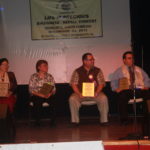
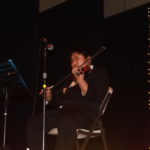
Aimed at raising awareness towards suicide prevention, the Bhutanese Artists of Charlotte, NC organized a musical concert today with a slogan ‘life is precious.’
Bhutanese artists living in various cities of North Carolina including the artists from Georgia, Virginia, among other places performed their presentations during the event. The event saw the combination of dances and solo songs.
A dancer on the stage while a child applause from the floor. Photo/BNS.
An estimated 300 people including Bhutanese and Nepalese living in and around Charlotte, NC attended the event.
Manoj Rai, DB Gurung, Kanchi Maya Subba, Tara Tiwari and his brother, Ram Gurung, Hari Dhimal, among other Bhutanese artists performed during the event. The entry fee for the concert was set $15 for adults, $10 for children and VIP tickets at $50.
Singers Nalina Chitrakar and Yesh Kumar from Himalayan Nepal were also the major attractions of the concert. The organizers also honored some Bhutanese and non-Bhutanese organizations that are helping refugees in the locality.
An estimated 2000plus resettled Bhutanese live here in Charlotte, NC.
Dr Chhabilall Timsina (Sharma) is originally from Gaylephug Bhutan. He worked in Bhutan as the District Medical Officer . After he became a refugee, Dr. Sharma worked for eight years with the Save the Children (UK), and UNHCR in Nepal, caring for Bhutanese refugees. He completed his psychiatry residency at Hennepin- Regions Psychiatry Program, Minnesota in 2011, where he served as Chief Resident . He is currently Board Certified psychiatrist working for Health Partners, and spends part of his clinical time at Health Partner’s Center for International Health taking care of refugees and immigrants. Dr. Sharma is recently been appointed by University of Minnesota as Global Health Faculty (as Nepal Site Director).
In an attempt to bring out more detail picture about the alarming suicides among the resettled community, BNS talked to Dr Sharma. Here is what he has to say about the issue and probable measures of solution:
You have long served as a medical professional in Bhutan as well as in exile; can you share about the overall health condition of Bhutanese Community? After graduating from Kanpur Medical College in India, I worked for about 8 years in Bhutan from 1984 to 1992. I worked in Bumthang, Thimphu, Chirang, and Wangiphdrang districts. I initially started as General Duty Medical Officer and then was promoted to District Medical Officer with the responsibility of managing the district level hospitals and advising and supervising other medical establishments in the districts. Ours was a country at a very early stage of modern development with low level of literacy and limited infrastructural facilities and amenities of living. However, we had great faith in our capacity to improve and there was great enthusiasm and goodwill among all people. Our capacity and sophistication of services was limited and accessibility to care was constrained by lack of awareness and geographical distance and terrain. People in Bhutan suffered from the following diseases:
Respiratory illnesses due to smoke-filled houses with wood burning stoves without vents and in some cases, smoking. Upper respiratory infections, bronchitis and pneumonia were very common. Pulmonary tuberculosis was also very prevalent.
Diarrheal Diseases were common due to lack of safe drinking water and open space defecation.
Skin, eye, and ear infections
Measles, mumps, chicken pox, and diphtheria
Malaria, meningitis, and encephalitis
Obstetric, surgical, and medical emergencies
Leprosy
Malnutrition, anemia and iodine deficiency
Dr Sharma
When our people were persecuted by the government of Bhutan for demanding their cultural, religious, and citizenship rights, several thousands were beaten up, arrested, tortured and imprisoned. I provided medical care for people who were detained and tortured at Damphu Junior High School in Chirang, which was converted into a detention center. They looked dirty, weary, weak, and extremely scared. They told me that they were beaten on their backs and soles of feet with sticks, that they had no access to toilets and safe water, and their food was contaminated with inedible particles. I saw many prominent citizens of Chirang totally broken down and humiliated. I admitted and treated number of critically ill political prisoners from Chamgang prison in Thimphu, when I worked in the infectious disease ward as physician- in-charge at Thimphu General Hospital just before I fled Bhutan, with my wife and two daughters (3-yearsrs and 2-months olds).
Nepali speaking citizens of Southern Bhutan started to flee from Bhutan in late 1990 and by 1991; substantial population lived as refugees in Assam, Bengal, and Nepal. When I arrived in Jhapa, Nepal in March 1992, about 8000 people lived in Maidhar refugee camp and another 3000 in Timai Refugee camp in very poor and despicable circumstances. They had just polythene sheets for their roofs and no protection against wind, rain, and cold. The water supply was unsafe for human consumption. There was no sanitation. The camps were a chaotic place with poor and insufficient food distribution and nonexistent regular health care. UNHCR had not yet begun its work. Many children, elderly, and pregnant women died from combination of malnutrition, stress, infectious diseases, and lack of access to health care. Malaria, meningitis, and cholera took its own toll. Diarrhea, dysentery, skin, eye infection were common. Marasmus and Kwashiorkor became rampant among children.
You are a psychiatrist. How would you describe the mental and emotional health of people in the camp and after resettlement? Our people have suffered from injustice, brutality, and loss of properties for no fault of theirs. People were forced to forfeit their citizenship, their ancestral land, and properties. They suffered the ultimate humiliation of losing their country and sense of belonging. They were hounded, looted, humiliated and hoarded in the trucks and dumped like garbage in Nepal border at Kakarvita by Indian security forces, who worked in league with Government of Bhutan. They were mostly illiterate farmers who had seen nothing but their own villages, they were preyed by all sorts of bad actors that took advantage of their naivety and simplicity and took away their meager resources and possessions.
Refugee camps were crowded, noisy places that lacked privacy, safety, and amenities of healthy living. They received basic food items like rice, lentils, oil, salt and green plantains and potatoes for vegetables year after year. They lived in stressful security environment with nutritiously compromised diet for two decades in many cases. They had no opportunity to earn extra income to supplement their basic needs as they were confined to the refugee camps. Nepali Bhutanese have always provided for themselves and have lived with dignity of hard labor. It was painful for our families to live at the mercy of others and felt that it was due to unknown bad Karma from their previous lives.
Almost two decades of unsolved problems and failures of negotiation for political solution between Bhutan and Nepal led people to become frustrated and lose faith in amicable solution. Young people started various activities, such as marches to Bhutan and Satyagraha, to seek attention from international community for permanent solution. On the other hand, mistrust and dismay prevailed towards the leaders and responsible Governments on the minds of majority of people living in the camps leading to increased mental health problems borne out of hopelessness. Most people, including the stoics, started showing signs of wearing down, not able to enjoy things they liked in the past and losing interest in everything, worrying all the time, unable to sleep well, becoming irritable and isolating and not talking to anybody. People had started to present multiple unexplained physical symptoms, some would breakdown and cry incessantly.
When the third country resettlement option was presented in the camp, people were divided in their opinions. Younger people who had grown up in the camps and had very little emotional connection to Bhutan saw new opportunities of living a dream life in developed countries opted wholeheartedly, while the older people with fond memories of life in Bhutan felt they were betraying their mother land in opting to migrate. Different political and human rights groups in the camps spun their own takes on the issue increasing disagreements, and sometimes fights. Security situation in the camp became precarious, increasing stress for everybody.
Younger people with some education had chosen to immigrate first with the hope of making some arrangements before the entire family arrived. They had to face the daunting task of supplanting themselves from a refugee camp to fast paced life in developed country where everything was unfamiliar and challenging. There was no existing community to get guidance and support from. Cultural and language barriers made it hard and not having the emotional support of the family made it harder. Difficulty finding jobs in the recession, difficulties to commute to work to the dead-end jobs with the risk of being mugged or meeting with accidents as a new driver cannot be underestimated. The family back in the camp demanded money the resettled people did not have leading to accusations and serious misunderstandings in some cases. Some of them opted to drink to drown overwhelming sense of responsibility and burden. Early spate of suicide among the people who were trying very hard to become providers may be understood in that light.
Alarming rate of suicide after resettlement is a hair rising issue.What factors are in play to make people think about ending their lives? It is believed suicidal thoughts are triggered by[i]:
External stressors like inability to adjust to new and challenging environments, death of a loved one, separation from loved ones, job loss, public humiliation, and serious illnesses.
Internal conflicts , psychological impasse , cognitive distortions and binds, more clearly seen in people with borderline , histrionic and poorly compensated narcissistic personality disorders, people who use drugs chronically.
Neurobiological dysfunctions due to serious mental health conditions like depression, bipolar disorder, schizophrenia, panic disorder, acute stress disorder and PTSD. Alcohol and substance abuse problem can affect judgment and increase impulsivity.
The following factors seem to be at play with the Bhutanese refugee community:
A person who is going through overwhelming stressors, who lacks family and community support, who is isolated from community and friends, who does not see any solution in sight and uses alcohol and drugs to cope are at increased risk of suicide
History of previous suicide attempt increases suicidal risk the most
Exposure or knowledge about suicide among family, friends, and acquaintances increases risk. It is plausible our community might be suffering from the copy cat factor to at least some extent. We have to support each other and get help for those suffering so that they do not have to opt for a violent end of their precious lives.
Emotionally dysregulated, agitated, disorganized and impulsive person may be violent to self or others
Financial stress, physical distress from pain and suffering, family conflict and domestic violence, physical, sexual or emotional abuse may increase the risk
Gambling, legal complications and insolvency could expose one to suicidal thoughts and acts
Unmarried, isolated, youths with impulsive tendencies increases the risk
In most instances when a person thinks the suffering is overwhelming, unbearable, interminable without any hope for solution the person feels taking one’s own life as the last solution
Courtesy: Refugeehealth.org
What are the findings of research done earlier? How long can individual harbor suicidal thoughts before actually completing it? According to the Center for Disease Control (CDC)[ii], suicide is the 10th leading cause of death in the US. Over a million people commit suicide annually all over the world. 38,000 people committed suicide in USA in 2010 and it is 3rd leading cause of death among youths after accidents and homicide. Annual rate of suicide in USA is 10.4/ 100,000 population and for the Bhutanese Refugees both in the camps as well as in the US is double of that figure[iii].
Different people commit suicide in different circumstances. It may also vary accordingly whether the person had personality problems, substance abuse history, and lack of good support system or not. Certain religions and faiths may condemn the act of suicide, acting as positive protective factor. However, if a person is telling some people that he or she does not want to live and are considering ending their lives, it should be taken very very seriously. They may be in danger of hurting themselves. Seventy five percent of people who commit suicide are known to have conveyed some people prior to the act. We should talk to them and provide care and support to get professional help. When intervention is done at the appropriate time, lives can be saved and loss and suffering for the family and friends can be prevented. With therapy and medication in addition to love and care of the family, the suicidal thoughts and intent can be prevented.
What effective measures do you want to suggest in order to prevent the present trend of suicide among the resettled Bhutanese Community? We have to address it with multipronged approach as it is a complex issue involving spiritual, emotional, social, financial, and cultural aspects.
We have to remain vigilant in our houses, in our neighborhoods, and the community to identify people who are suffering from the following stressors: serious mental health conditions, major setbacks like losing jobs, financial distress, loss of prestige, family break ups, and/or trauma, alcohol and substance abuse, domestic violence and physical or sexual abuse. We have to take them to Emergency rooms of local hospitals and provide sufficient collateral information to the providers so that they can make appropriate decisions. Most acutely suicidal people will need hospitalization voluntarily and in some cases involuntarily to save lives. The more support and care the family and friends can provide, the better it is for the quality of care that can be provided, including discharge planning and follow up care arrangement with culturally sensitive providers in the area.
We should ensure safety of vulnerable individuals at any cost. We should remove medications, chemicals, guns, and other potential objects that may be used as weapons to commit suicide. Somebody should monitor and stay close to the person to avoid fatal lapses. Mental diseases can be treated like any other and there is help available in all parts of USA, we must seek help.
We all can identify people in our own families, relations, and community who are suffering from mental illness but not getting help due to stigma related to mental illnesses. Mental diseases are like any other diseases which happen to affect the functioning of brain. Let us all campaign to treat mental illness without secrecy and taboo.
We have to avoid indulging in risky behavior like drinking and driving, drinking too much alcohol, using drugs, gambling, risky and unprotected sex and reckless driving and crossing roads without proper inspection for safety. The communities should encourage educated youth with good moral standings to become role models and guides to younger children, get people to involve in healthy activities like games, cultural activities, and other stimulating learning activities. We can seek help and guidance from other more established and culturally similar groups to organize and manage volunteer activities.
We can organize the community to establish community centers to provide a venue for elderly to meet for get-togethers, celebrate events, and culturally appropriate senior day cares.
We have survived famine, natural calamities, epidemics and Bhutanese government’s brutality. Let us summon our resilience and tide over the stress of adjustment and formidable barriers to live productive lives and nurture and guide our children towards stable lives. We have a bright future in front of us as equal citizens in the most powerful, rich, and accepting country of immigrants. Let us all work together to build our American dream.
References:
[i] Shea, Shawn C. The Practical Art of Suicide Assessment: A Guide for Mental Health Professionals and Substance Abuse Counselors. [Lexington, Ky.?]: Mental Healthes, 2011. Print.
[In an emergency, call 1-800-SUICIDE (1-800-784-2433), the national suicide hotline. For more information on depression and other mental illnesses, contact the National Institute of Mental Health (NIMH) at: 800-421-4211, www.nimh.nih.gov]
Bhutanese Community of New Hampshire (BCNH) concluded its two-day long seminar ‘intervene on traumatic situation’, aimed at preventing suicide and other evil activities ongoing in the community.
Healing and Rebuilding Our Communities (HROC) trauma management experts Shelly Stratton, Amy Raskusin, Bill Jacobsen, Hannah Simon-‐Girard and Kirsten Mandala and practitioners’ team facilitated the sessions.
More than 25 Bhutanese front liners, staffs, board of directors of BCNH, International institute of New Hampshire (IINH), Lutheran Social Services (LSS), Organization for Refugee and Immigrant Success (ORIS), New Hampshire State Refugee Coordinator and New Hampshire State Refugee Health Coordinator also attended the event.
The seminar aimed at healing and rebuilding community where skill and education on overall personal development, community strengthening, overcoming illness, stress management, personal therapy and value of team work were broadly highlighted, informed, Motikhar Bhujel, one of the participants.
This training was practiced by HROC in Rwanda and has been working in different countries of the world, according to facilitator Dr.Amy Rakusin,
“BCNH is fortunate to provide our community leaders such training without traveling abroad,” said BCNH Executive Director, Tika Acharya.
“Our gross objective is to build quality human capital in the community so that each member could play a pivotal role in achieving BCNH’s mission to create enduring legacy of our community in US for our future leaders.”
The seminar was conducted on Dec. 16 and 17 in New Hampshire.
When the entire nation engaged in celebrating the 106th National Day, hundreds of exiled citizens also virtually joined their fellow Bhutanese from Beldangi refugee camp, Monday.
Camp management committees of Beldangi and Sanischare camps jointly organized the event that marks the institutionalization of the first heredity monarchy in Bhutan.
106th National Day celebration in Beldangi on Monday (Picture courtesy: Ratan Gazmere, Beldangi)
Nirmal Khanal from Refugee Coordination Unit (RCU) attended the National Day celebration as chief guest. Beldangi Camp Secretary, Sanchahang Subba chaired the today’s program.
Field Director of Caritas Nepal, Fr Amalraj, Dr Bhampa Rai, representatives from World Food Programme, Lutheran World Federation, AMDA-Nepal, UNHCR, and camp-based Armed Police Force (APF) also joined Bhutanese refugees in their celebrations.
Hundreds of school children, teachers, and refugees marched around the camp before the rally concerted into a gathering followed by live performances such as dances, songs, speeches and a drama by volunteers from Youth Friendly Center (YFC).
This section has been set up to promote community events. Interested groups, agencies, families or individuals can contact Bhutan News Service ([email protected]) for promoting their events. In some cases, a nominal fee may be applied for site maintenance purpose. BNS is not responsible for the external contents published in this section. -Editorial Board
With a theme of “human life is precious; stop suicide”, the Bhutanese Artist of Charlotte is organizing a Bhutanese-Nepali concert on December 22, 2013 in Charlotte, North Carolina. Tickets: US $15 (available at Nepali grocery stores).
Venue: 7400 City View Drive Charlotte, NC, 28212 (Hindu Center – (Vihar Hall)
The latest statistics have shown that nearly 85,000 exiled Bhutanese have been resettled in various countries in the west. Altogether 84,738 persons have departed from Nepal-based refugee camps as of December first week.
The United States has accepted some 90 percent of refugees numbering as high as 71,581, Gopal Gadtaula from Jhapa reported in the Himal weekly published from Kathmandu.
According to the United Nations High Commissioner for Refugees (UNHCR), resettlement in other countries included Canada (5,673), Australia (4,734), Denmark (759), The Netherlands (326), New Zealand (856), Norway (550) and the United Kingdom (358).
The report further said that the refugee camps still continue to house 31,107 exiled Bhutanese.
“It was our community effort to address suicide issue, and exercise possible preventive measures,” said Hasta Pradhan, BCAC Chairperson.
Perry Griffin, Multicultural Advocate at Mental Health Association, and her colleague, Carey Davies, facilitated the QPR training that was attended by around two dozens of Bhutanese youths.
Bhutanese youths attend a QPR training in Charlotte (Picture: Vidhyapati/BNS)
The training discussed myths and misconceptions about suicide, risk factors and clues, role of QPR gatekeepers in intervening to help prevent someone from attempting a suicide, and available helps and resources.
“I was impressed by the turnout, and concerns for one another. I believe this is a great start to help understand suicide, its warning signs, and methods to help those living with suicidal thoughts,” Griffin told BNS after the training.
According to her, those who die by suicide actually do not want to die, but only want their psychological pains to end permanently.
“Helping to reach out to those in such a pain will help prevent suicide. I hope through education and good support to those in need, we can help prevent future tragedies. The Bhutanese-Nepalese are strongly community-minded people and will be successful in helping one another,” added she.
She also talked about addressing mental health status of resettled Bhutanese through similar trainings by involving Office of Refugee Resettlement (ORR), local resettlement agencies, and community groups among others in future.
The issue of pending citizenship and census status for many southern Bhutanese has once again surfaced in the media. It was during the last parliamentary election that candidates of both DPT and PDP vowed to solve the problem being faced by people in the south for over two decades now. The strongest of all the voices raised seriously was in Dorokha when Tshering Tobgay, the present Prime Minister spoke to them in Nepali during his election campaign for PDP.
But to the surprise of many voters who anticipated the PDP government to take speedy measures, the Home Minister, Damcho Dorji, spewed out the rhetoric of alleged illegal immigration by which citizenship issue cannot be resolved so soon. His statement for the kuensel dated September 9, 2013 came like this:
“Citizenship issues can be resolved only if we find a lasting solution to the problem of continuing illegal immigration into our country. The challenge will be even greater as we become more prosperous, coupled with enduring peace and stability. Our people must therefore realise that any illegal immigration is not only a threat to the security and sovereignty of our country, but also deprives us of various social benefits, as well as economic opportunities. Hence, all of us must be concerned and act responsibly in curbing both legal and illegal immigration. After all, Bhutan is a small welfare country with a small territorial size and a small and vulnerable economy.”
The above stated fact congregates a vague image from a hidden mirror.
‘The rule through Democratic norms–and not by— the coterie of selected people for years and years can only ascend Bhutan towards prosperous and progressive path and represent aspirations of the people”, was, believed to be the main theme of message the fourth king Jigme Singye Wangchuck conveyed to the people while transforming active monarchical rule to constitutional democratic path. But, Damcho Dorji’s recent open ended statement says, there is no change in fact but the present system of governance is the continuation of same tactics played under the leadership of the then deputy home minister, Dago Tshering, in August 1990.
The bridge linking these two ends—- rule by selected people and the amateur democracy players, Dago Tshering vs Damcho Dorji, clearly speaks of the acrimonious statement of Aug. 17th, 1990 circular signed by Dago Tshering.
The image of 1990 circular and its version is reproduced here.
A directive issue by the then deputy home minister Dago Tshering to various five Dzongkhags
“It has come to the government’s notice that a large number of Southern Bhutanese people have left the country to join forces with the ngolops. You are hereby instructed to immediately inform all gups, DYT members and the general public in your dzongkhag that any Bhutanese national leaving the country to assist and help the anti-nationals shall no longer be considered as a Bhutanese citizen. It must also be made very clear that such people’s family members living under the same household will also be held fully responsible and forfeit their citizenship.
I would like to assure you that the government is fully aware of the recent developments and the situation in Southern Bhutan. The Home Ministry will extend all possible assistance to the concerned dzongkhags to look after the security and well-being of both the government servants and the general public.
Isn’t this circular appearing a secret? The copies sent don’t indicate this circular is made known to any ministries or even to His Majesty’s Secretariat.
For any layman, this perplexing scenario speaks aloud two things;
The concerned citizens whose citizenship status is pending are really worried about the way the Home Minister is becoming irresponsible and apathetic to the long-standing issue of nationality for the Bhutan-born generations in the south.
The present democratic government of PDP is no less authoritative than undemocratic and unscrupulous Dago Tshering’s home ministry.
The latest of the media reports about people’s concern raised to National Council member came on October 31. During his visit to villages of Samtse, Sangay Khandu listened to villagers’ story about how they have been marred while traveling to Thimphu without the citizenship cards.
Yangchen C Rinzin of the Kuensel reported that “villagers said many police checkposts do not allow them to move from one dzongkhag to another”.
One said, in trying to go to Thimphu to process the documents, they were not allowed to cross Rinchending checkpost, 5 km from Phuentsholing.
“My documents are in Thimphu, but I’m here,” an elderly man said. “How am I going to solve my problem? We’d like to request the government to at least let us move freely in our own country.”
Kuensel further mentioned an instance of inhumane attitude of those security persons in the check posts: “In a recent incident, a father was taken to Thimphu hospital in an ambulance,” he said. “But when daughter wanted to follow him to Thimphu, she was sent back, while the father was left all alone in the hospital.”
Ironical and quite disgusting is the remark of NC member Sangay Khandu. He said, “We were never aware about such problems.”
A respondent in Gelephu narrated his story of how the family had once been placed arbitrarily on F5 status for getting a certificate of origin (CO) by the name of grandmother instead of grandfather. He said, “My father was asked to bring CO during the 1992/93 census in order to prove my mother’s side of ancestral domicile status in Bhutan. My mother’s parents in Chirang(Tsirang) were the proof, but that CO was unwittingly obtained by the name of grandmother who was not the registered head of household under the Thram (the land registration document). The census officials refused to accept this, although grandfather and grandmother invariably lived in the same household. Our family was put under F5, meaning that we were considered to be of Bhutan, but no valid proof could be produced. I accosted and fought with the local administrative officers in Gelephu later when I could speak Dzongkha and Sarchhop fluently. The name in the CO was corrected again in Chirang, and we were upgraded to F-1 citizen of Bhutan.”
Page 159 of Pradhan’s book
“The citizenship or the census status is very often determined arbitrarily by those officers who come for enumerating census, but it depends on how best you can fight with them to claim your genuine status. The language you use also makes difference. If you can speak in Dzongkha, you might be able to win the decision in your favor quickly. But if you speak in Nepali (Lhotshamkha), processing of your paper may be delayed,” he adds.
Three pages, 157, 158 and 159, of Lyonpo Om Pradhan’s – Roar of the Thunder Dragon(a book believed to be written on the king’s advice) speak of how unscrupulous and unprofessional were those people employed by home ministry for carrying out census in the south. The book dedicated to His Majesty the King and launched by Her Majesty Queen mother, in itself boomerangs to the Article 6:2, of the Constitution of Bhutan. Article 6 is stated as “a person, domiciled in Bhutan on or before the Thirty-First of December Nineteen Hundred and Fifty Eight and whose name is registered in the official record of the Government of Bhutan shall be a citizen of Bhutan by registration”.
In another story from Gelephu, two brothers who are left behind by their parents in Bhutan, both employee of government, do not have any issue with the census or citizenship. But absurd and interesting is the fact that their ancestral land (by the name of father) is given to someone else, while their census and voter registration continue to remain in the same ‘thram’ where a resettled family is living. The part of family, now living in The Netherlands, tells that the two siblings continue to fight for getting back the parental land.
In Dagana, an old woman of about 68 years is left stateless for all these years. She was married to a man in Dagapela from Lamidara (now Mendrelgang) and now lives with her only daughter and son in-law. She could not produce her proof of origin, CO, during the census in Suntoley, Dagana, because her parents died years ago when she was a child. She was brought up and taken care by her maternal uncles. Now that her daughter married to F1 citizen, also do not have the proof of domicile from the mother’s side. She is categorized as F5. And, a granddaughter who is now undergoing a vocational training in Trashigang, could not obtain police clearance for furthering her study after grade 12.
The family has now put up an application in the Gewog center pleading their genuine Bhutanese status. The officials who came to the Gewog for taking up applications from such cases have assured them to forward the application to Zimpon (the king’s secretary) who will oversee the matter.
A success story told by an aspiring engineering student from a remote part of Dagana is heart-warming, despite the hurdles his family had to bear throughout these 23 years. His father, originally from Tala in Chhuka, served in the country’s armed forces for longtime. At the time of recurrent census in Tala as well as Dagana he could not present himself, thus he was considered left out. Nor could he obtain the certificate of origin from the administration in Tala. The father lived with his broken nerves throughout. Now the son, 21, who frugally lived in Thimpu to follow up his application (to get the clear census and citizenship status), received Kasho of citizenship signed by HM King recently on behalf of his family. The long-standing statelessness of his family has now come to an end. But he definitely has to fight back many local administrators to process the application for Kasho.
In 100 days pledges fulfilled, the PDP government has claimed to provide citizenship to 4000 people in the south.
Kuensel issue dated Novemeber 13 reports on granting of citizenship: In the last seven years, His Majesty the King granted citizenship kidu to a total of 8,577 people in the country, Lyonchhoen Tshering Tobgay said yesterday at a press conference, which was held on completion of the government’s first 100 days in office.
Out the 8,577, a total of 4,000 people received citizenship kidu within the last three months, Lyonchhoen said.
“Prioritise solving the census issue” was one of the 34 pledges the government had made to fulfill in its 100 days in office. By this the government had meant that it would give census issue high priority for the census issue is a matter of kidu, lyonchhoen said.
Among commentators to this news stand a grade 11 student in Bajothang HSS. His comment.
I am also one of the student of Bajothang higher secondary school studying in grade 11 taking science stream, who have the same problem and that is i have not yet received my citizenship ID card though i am 16 years old and my parents both of them have, but my mom’s is in form five, i am also hoping that my problem will be also be solved very soon… Chidananda
When asked, how long will this census issue keep lingering in Bhutan, an analyst and former senior journalist in Bhutan said, “Nobody wants to solve it completely so soon. Citizenship and census issue is a vote bank in Southern Bhutan. It might go for another thirty years. It is similar to the Latino immigration issue of Arizona in the US.”
Fundamental rights of an individual can never be caged in custody, intending, to meet the vested interest of handful of the elites, nor citizen’s right be made a political card. True democracy and respect towards democratic norms will only be meaningful if ‘equity’ in practice is shown irrespective of class, creed, color, race and religious beliefs. Otherwise, more than two-decade time is more than enough to punish someone socially, economically, mentally and psychologically in the last Shangri-La.
Including six Bhutanese, former 60 refugees from Syria, Iraq, Rwanda and 20 other nations, all of whom now call the U.S. home, became a part of 2013 Refugee Congress of the United Nations High Commissioner for Refugees (UNHCR) that ended in the US capital from on Dec 11.
During the congress, the delegates also met policymakers, and tried to ensure the refugee voice is part of the conversation on U.S. refugee policies and programs. It was also followed by a day of meetings on refugee issues with delegates’ respective representatives in the U.S. Congress.
The UN High Commissioner for Refugees Antonio Guterres delivered a videotaped message to the Refugee Congress. Anne C. Richard, the U.S. Assistant Secretary of State for Population, Refugees and Migration addressed delegates in a plenary session.
Bhutanese delegates of the Refugee Congress: From left, Jagat Acharya, Hari Niroula, Tika Acharya, Kamal Dhimal, Karna Gurung and Tek Darnal (Picture courtesy: Karna Gurung)
“The Refugee Congress was an opportunity for us to draw attention of policymakers and delegates towards increasing cases of suicides observed in the Bhutanese community,” Executive Director of Bhutanese Community of New Hemisphere, Tika Acharya, told Bhutan News Service.
According to Acharya, discussions with officials of Office of Refugee Resettlement (ORR) and UNHCR generated some hopes, basically, in finding a common mechanism to address “alarming suicide rates of resettled Bhutanese in the US”.
The Bhutanese members are also learnt to have asked ORR and government officials to involve community leaders in addressing this issue.
Another delegate from Nebraska, Karna Gurung, stated that the Bhutanese delegates also asked UNHCR to expedite resettlement of cases awaiting family reunification at the earliest.
“The UNHCR officials were found positive towards this call. They assured us that the agency will expedite prolonged cases awaiting resettlement since over five years,” said Gurung.
On Wednesday, the delegates also called on respective representatives in the U.S. Congress.
“We met congressmen with some common agendas like involvement of community leaders in addressing suicide, extension of benefits for new arrivals from eight months to 12 months, and expediting of prolonged cases of family reunion,” explained Kamal Dhimal, who represented the Refugee Congress from North Carolina.
While, Hari Niroual said, he called on senator Maria Cantwell and raised the issues of repatriation for those refugees dwelling in camps .
Other Bhutanese delegates of the congress included Tek Darnal from Illinois, Hari Niroula from Washington Seattle and Jagat Acharya from Missouri. Puspa Luitel from Vermont couldn’t make it to the congress.