Dayahaang, Ugyen Chhoden and a Desi

0

Last month I watched a YouTube video featuring an interview with Bhutanese actress and filmmaker Ugyen Chhoden. Another one was a conversation with Dayahaang Rai and Ugyen.

Ugyen Chhoden seems pretty interested in Nepali film industry. And, Dayahaang, the young theater-spirited film maker of Nepal, has been quick enough to add an ingredient of diversity into his crew. Ugyen did fit well.

For many centuries, Nepal and Bhutan, as isolated Himalayan Kingdoms, had engaged in casual and civic interactions. Often known, the Bhutanese royal family members visited Nepal on pilgrimage to Lumbini, Boudha and Swoyambhunath. Nepal is the land of Buddha, the “Sangay” for Bhutanese. The present King of Bhutan is known to be born in Nepal.

Dayahaang expresses with outpouring optimism that he would like to visit Bhutan and take the opportunity to learn about Bhutanese film industry. He is interested to bring other Bhutanese artists to Nepali film, if they agree to sign a contract. Ugyen is motivated to be back when time permits.

Historically, a Deb Raja (also Druk Desi) Deb Jeedhur, had established a strong connection with the King of Nepal for help when he was candidly ousted from office of Druk Desi. J C White mentions another Desi having good relation with King Ram Shah of Nepal; eighteen monasteries granted to Bhutan. Why a feudal chief of Bhutan sought help from Nepal is unclear just from the account, but proves that Nepal-Bhutan interactions have taken place for a long time, mostly in the form of pilgrimage.

I can presume Dayahaang or Ugyen has not dug up the historical exchange of relations between the two Himalayan countries. They won’t probably bother to take the challenge, since it involves extensive research both in Nepal and Bhutan.

Some facts, mostly found in Nepal and rarely in Bhutan, give us the clue that friendliness existed so long, but had gradually tormented due to unfortunate events which unfolded in Bhutan in the 1960s.

Some historians have written that Shabdrung, the founder of the dual system of Bhutan, had been to Nepal occasionally. He was also awarded some enclaves in Nepal dedicated to maintaining Buddhist monasteries.

So, if he was interested in exchanging cooperation with Nepal, Dayahaang and Ugyen could easily emulate it. If that distressed Desi found hope in Nepal’s brave Gurkha soldiers, any Bhutanese dissident can seek shelter in Nepal. And so did respected Nado Rinchhen and others, who fled to Nepal in the tumult ensued after assassination of ‘prime minister’ Jigmie Palden Dorji in 1964.

Lhendup Dorji, the younger brother of Jigmie Palden, later took shelter in Nepal after being removed from the office offered to him in lieu of his slain brother.

Whatsoever, the diplomatic relations between Nepal and Bhutan should never be the basis of torturing citizens- like they did in 1988 when dissident leader Tek Nath Rizal along with two others were extradited to Bhutan.

In 2018, I met a group of Bhutanese (non-Nepali speaking) in the Indo-Nepal border check post in Panitanki, heading to Lumbini. Such road travel by non-lhotshampa Bhutanese citizens via Kakarvitta was stalled for a long time.

5: Hypertension: Health talk with Bikash and Kumari Regmi

26,644

Right now it is more important than ever that we think positively and try to
boost our overall health. “ Health is a state of complete physical, mental
and social wellbeing (WHO, 2020).” Healthy lifestyle habits will
turbocharge your mind and body. For your benefit, each month, Bikash
and Kumari, nurse practitioners and health care promoters, will share
their insights on healthy living. These podcasts will help you to make
self-care and a healthy lifestyle your priorities. If you want to learn more
about healthy living and primary prevention, this podcast is for you.

Manual on Nepali language curriculum released

26,644

After two years of consistent effort to design the curriculum for teaching Nepali language in the Diaspora of Nepali speaking people, the committee finally made the curriculum booklet public amidst a zoom conference today.

The coordinator of the committee Mr. Khim Khatiwoda said in his presentation at the conference, “It is just a beginning of what we ought to accomplish in years to come for making Nepali a established second language in mainstream educational institutions.”

“It is designed in such a way that volunteer teachers can deliver the lessons more effectively in short period with student centered approach based on activities for learning. We have at the most 45 periods in a year. So, we cannot expect much to cover in the same way as in Nepal’s schools.”

Another committee member Khagendra Bhandari Jantarey said, “We have a learning target of 500 common words in a year for the beginner level.” He added, “This is more a teacher’s manual than actual curriculum. It laid foundation for designing manuals for successive higher levels.”

The curriculum manual contains the basic listening and speaking activities. It will help the teachers to develop materials and implement the listening and speaking activities outlined in the manual.  In order to engage the students for maximum learning output in a limited time, the hands-on practice of these activities and any relevant ones are essential.

The manual also includes sample questions for three term tests and a final test.

Guest speakers from Nepal, India, Norway and Canada spoke about how significant the manual would be to improve Nepali teaching and learning in the Diaspora.

Professor Dr. Hari Adhikari of Sampurnananda Sanskrit University said, “I have only words of accolades for you. Nothing more.”

Denzome Sampang, president Global Bhutanese Literary Organization, remarked this task as the process towards unison of definitive steps for preserving Nepali language in the Diaspora.

Khem Rizal, the secretary of Sahitya Parishad Bhutan hosted the conference on organization’s behalf.


President Joe Biden’s inauguration speech – full transcript

26,644

Chief Justice Roberts, Vice President Harris, Speaker Pelosi, Leader Schumer, Leader McConnell, Vice President Pence, distinguished guests, and my fellow Americans.

This is America’s day.

This is democracy’s day.

A day of history and hope.

Of renewal and resolve.

Through a crucible for the ages America has been tested anew and America has risen to the challenge.

Today, we celebrate the triumph not of a candidate, but of a cause, the cause of democracy.

The will of the people has been heard and the will of the people has been heeded.

We have learned again that democracy is precious.

Democracy is fragile.

And at this hour, my friends, democracy has prevailed.

So now, on this hallowed ground where just days ago violence sought to shake this Capitol’s very foundation, we come together as one nation, under God, indivisible, to carry out the peaceful transfer of power as we have for more than two centuries.

We look ahead in our uniquely American way – restless, bold, optimistic – and set our sights on the nation we know we can be and we must be.

I thank my predecessors of both parties for their presence here.

I thank them from the bottom of my heart.

You know the resilience of our Constitution and the strength of our nation.

As does President Carter, who I spoke to last night but who cannot be with us today, but whom we salute for his lifetime of service.

I have just taken the sacred oath each of these patriots took — an oath first sworn by George Washington.

But the American story depends not on any one of us, not on some of us, but on all of us.

On “We the People” who seek a more perfect Union.

This is a great nation and we are a good people.

Over the centuries through storm and strife, in peace and in war, we have come so far. But we still have far to go.

We will press forward with speed and urgency, for we have much to do in this winter of peril and possibility.

Much to repair.

Much to restore.

Much to heal.

Much to build.

And much to gain.

Few periods in our nation’s history have been more challenging or difficult than the one we’re in now.

A once-in-a-century virus silently stalks the country.

It’s taken as many lives in one year as America lost in all of World War II.

Millions of jobs have been lost.

Hundreds of thousands of businesses closed.

A cry for racial justice some 400 years in the making moves us. The dream of justice for all will be deferred no longer.

A cry for survival comes from the planet itself. A cry that can’t be any more desperate or any more clear.

And now, a rise in political extremism, white supremacy, domestic terrorism that we must confront and we will defeat.

To overcome these challenges – to restore the soul and to secure the future of America – requires more than words.

It requires that most elusive of things in a democracy:

Unity.

Unity.

In another January in Washington, on New Year’s Day 1863, Abraham Lincoln signed the Emancipation Proclamation.

When he put pen to paper, the President said, “If my name ever goes down into history it will be for this act and my whole soul is in it.”

My whole soul is in it.

Today, on this January day, my whole soul is in this:

Bringing America together.

Uniting our people.

And uniting our nation.

I ask every American to join me in this cause.

Uniting to fight the common foes we face:

Anger, resentment, hatred.

Extremism, lawlessness, violence.

Disease, joblessness, hopelessness.

With unity we can do great things. Important things.

We can right wrongs.

We can put people to work in good jobs.

We can teach our children in safe schools.

We can overcome this deadly virus.

We can reward work, rebuild the middle class, and make health care
secure for all.

We can deliver racial justice.

We can make America, once again, the leading force for good in the world.

I know speaking of unity can sound to some like a foolish fantasy.

I know the forces that divide us are deep and they are real.

But I also know they are not new.

Our history has been a constant struggle between the American ideal that we are all created equal and the harsh, ugly reality that racism, nativism, fear, and demonization have long torn us apart.

The battle is perennial.

Victory is never assured.

Through the Civil War, the Great Depression, World War, 9/11, through struggle, sacrifice, and setbacks, our “better angels” have always prevailed.

In each of these moments, enough of us came together to carry all of us forward.

And, we can do so now.

History, faith, and reason show the way, the way of unity.

We can see each other not as adversaries but as neighbors.

We can treat each other with dignity and respect.

We can join forces, stop the shouting, and lower the temperature.

For without unity, there is no peace, only bitterness and fury.

No progress, only exhausting outrage.

No nation, only a state of chaos.

This is our historic moment of crisis and challenge, and unity is the path forward.

And, we must meet this moment as the United States of America.

If we do that, I guarantee you, we will not fail.

We have never, ever, ever failed in America when we have acted together.

And so today, at this time and in this place, let us start afresh.

All of us.

Let us listen to one another.

Hear one another.
See one another.

Show respect to one another.

Politics need not be a raging fire destroying everything in its path.

Every disagreement doesn’t have to be a cause for total war.

And, we must reject a culture in which facts themselves are manipulated and even manufactured.

My fellow Americans, we have to be different than this.

America has to be better than this.

And, I believe America is better than this.

Just look around.

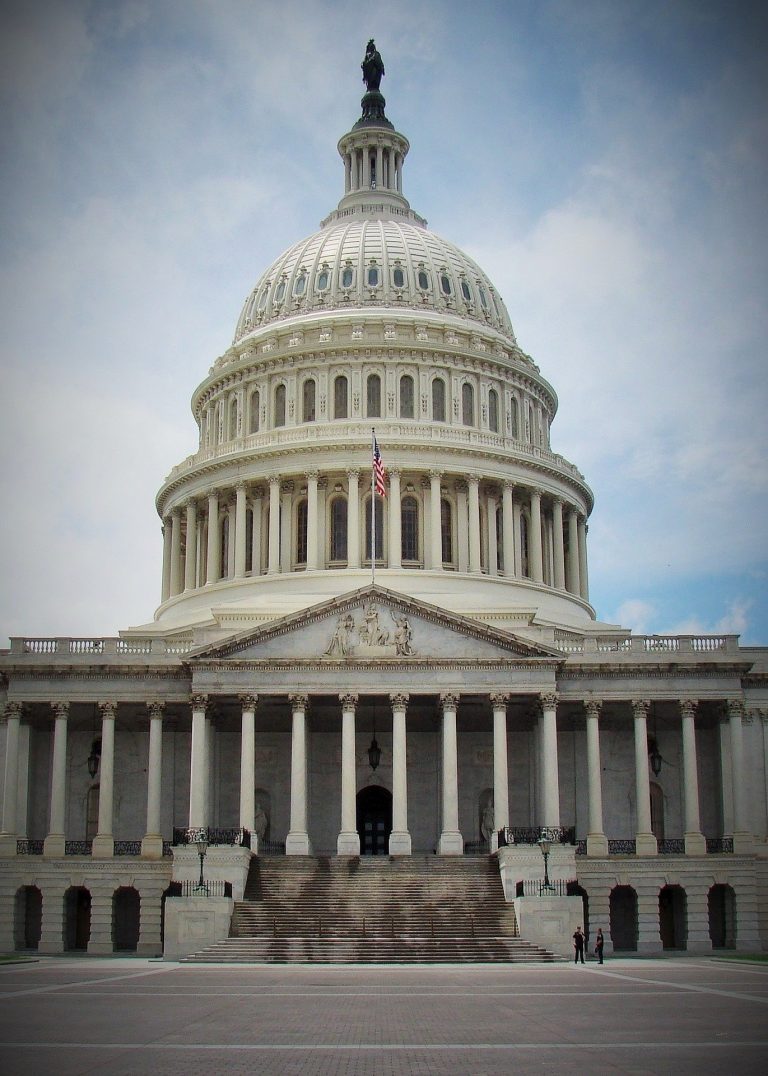
Here we stand, in the shadow of a Capitol dome that was completed amid the Civil War, when the Union itself hung in the balance.

Yet we endured and we prevailed.

Here we stand looking out to the great Mall where Dr. King spoke of his dream.

Here we stand, where 108 years ago at another inaugural, thousands of protestors tried to block brave women from marching for the right to vote.

Today, we mark the swearing-in of the first woman in American history elected to national office – Vice President Kamala Harris.

Don’t tell me things can’t change.

Here we stand across the Potomac from Arlington National Cemetery, where heroes who gave the last full measure of devotion rest in eternal peace.

And here we stand, just days after a riotous mob thought they could use violence to silence the will of the people, to stop the work of our democracy, and to drive us from this sacred ground.

That did not happen.

It will never happen.

Not today.

Not tomorrow.

Not ever.

To all those who supported our campaign I am humbled by the faith you have placed in us.

To all those who did not support us, let me say this: Hear me out as we move forward. Take a measure of me and my heart.

And if you still disagree, so be it.

That’s democracy. That’s America. The right to dissent peaceably, within the guardrails of our Republic, is perhaps our nation’s greatest strength.

Yet hear me clearly: Disagreement must not lead to disunion.

And I pledge this to you: I will be a President for all Americans.

I will fight as hard for those who did not support me as for those who did.

Many centuries ago, Saint Augustine, a saint of my church, wrote that a people was a multitude defined by the common objects of their love.

What are the common objects we love that define us as Americans?

I think I know.

Opportunity.

Security.

Liberty.

Dignity.

Respect.

Honor.

And, yes, the truth.

Recent weeks and months have taught us a painful lesson.

There is truth and there are lies.

Lies told for power and for profit.

And each of us has a duty and responsibility, as citizens, as Americans, and especially as leaders – leaders who have pledged to honor our Constitution and protect our nation — to defend the truth and to defeat the lies.

I understand that many Americans view the future with some fear and trepidation.

I understand they worry about their jobs, about taking care of their families, about what comes next.

I get it.

But the answer is not to turn inward, to retreat into competing factions, distrusting those who don’t look like you do, or worship the way you do, or don’t get their news from the same sources you do.

We must end this uncivil war that pits red against blue, rural versus urban, conservative versus liberal.

We can do this if we open our souls instead of hardening our hearts.

If we show a little tolerance and humility.

If we’re willing to stand in the other person’s shoes just for a moment.
Because here is the thing about life: There is no accounting for what fate will deal you.

There are some days when we need a hand.

There are other days when we’re called on to lend one.

That is how we must be with one another.

And, if we are this way, our country will be stronger, more prosperous, more ready for the future.

My fellow Americans, in the work ahead of us, we will need each other.

We will need all our strength to persevere through this dark winter.

We are entering what may well be the toughest and deadliest period of the virus.

We must set aside the politics and finally face this pandemic as one nation.

I promise you this: as the Bible says weeping may endure for a night but joy cometh in the morning.

We will get through this, together

The world is watching today.

So here is my message to those beyond our borders: America has been tested and we have come out stronger for it.

We will repair our alliances and engage with the world once again.

Not to meet yesterday’s challenges, but today’s and tomorrow’s.

We will lead not merely by the example of our power but by the power of our example.

We will be a strong and trusted partner for peace, progress, and security.

We have been through so much in this nation.

And, in my first act as President, I would like to ask you to join me in a moment of silent prayer to remember all those we lost this past year to the pandemic.

To those 400,000 fellow Americans – mothers and fathers, husbands and wives, sons and daughters, friends, neighbors, and co-workers.

We will honor them by becoming the people and nation we know we can and should be.

Let us say a silent prayer for those who lost their lives, for those they left behind, and for our country.

Amen.

This is a time of testing.

We face an attack on democracy and on truth.

A raging virus.

Growing inequity.

The sting of systemic racism.

A climate in crisis.

America’s role in the world.

Any one of these would be enough to challenge us in profound ways.

But the fact is we face them all at once, presenting this nation with the gravest of responsibilities.

Now we must step up.

All of us.

It is a time for boldness, for there is so much to do.

And, this is certain.

We will be judged, you and I, for how we resolve the cascading crises of our era.

Will we rise to the occasion?

Will we master this rare and difficult hour?

Will we meet our obligations and pass along a new and better world for our children?

I believe we must and I believe we will.

And when we do, we will write the next chapter in the American story.

It’s a story that might sound something like a song that means a lot to me.

It’s called “American Anthem” and there is one verse stands out for me:

“The work and prayers
of centuries have brought us to this day
What shall be our legacy?
What will our children say?…
Let me know in my heart
When my days are through
America
America
I gave my best to you.”

Let us add our own work and prayers to the unfolding story of our nation.

If we do this then when our days are through our children and our children’s children will say of us they gave their best.

They did their duty.

They healed a broken land.
My fellow Americans, I close today where I began, with a sacred oath.

Before God and all of you I give you my word.

I will always level with you.

I will defend the Constitution.

I will defend our democracy.

I will defend America.

I will give my all in your service thinking not of power, but of possibilities.

Not of personal interest, but of the public good.

And together, we shall write an American story of hope, not fear.

Of unity, not division.

Of light, not darkness.

An American story of decency and dignity.

Of love and of healing.

Of greatness and of goodness.

May this be the story that guides us.

The story that inspires us.

The story that tells ages yet to come that we answered the call of history.

We met the moment.

That democracy and hope, truth and justice, did not die on our watch but thrived.

That our America secured liberty at home and stood once again as a beacon to the world.

That is what we owe our forebearers, one another, and generations to follow.

So, with purpose and resolve we turn to the tasks of our time.

Sustained by faith.

Driven by conviction.

And, devoted to one another and to this country we love with all our hearts.

May God bless America and may God protect our troops.

Thank you, America.

__
Source: whitehouse.gov

RK Budathoki murder: One man detained; Budathoki’s widow reacts

Nepalese police have detained a man earlier this year as investigations into the murder of RK Budathoki, the founding president of the exile-based Bhutan People’s Party (BPP), continue.

Devi Charan Dhaurali was allegedly hiding in Dhangadi in the Siraha district in Nepal under the alias Aarif Sharma when he was arrested by police. He was taken to the Jhapa district court.

According to a local source in Nepal, Dhaurali will be sent to prison as directed by the court following a COVID-19 test. Dhaurali was teaching in a local school. Currently Dhaurali is being held in custody facing charges. 

Budathoki was hacked to death in broad daylight on September 9, 2001 at the party’s youth wing office in Damak where he was attending a meeting. Budathoki was pronounced dead from knife injuries to the neck at the AMDA hospital in Damak.

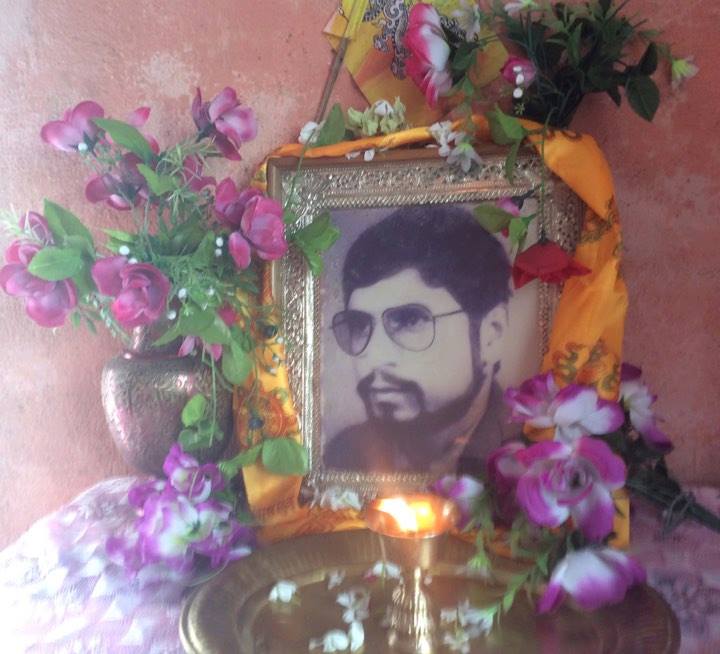
Late RK Budathoki. Photo/BPP.

According to the current president of BPP, the Bhutan Revolutionary Free Students’ Force which left behind pamphlets on the day of the incident had claimed responsibility for the killing. He said that while the court charged 39 individuals with the crime, only nine individuals were arrested and tried on the court. Many among those arrested were acquitted; rest are on the loose. 

RK Budathoki left Bhutan in 1989 and launched the movement for democracy from the Indian soil through the formation of BPP on June 2, 1990. Later he came to Jhapa, Nepal along with the refugees and continued the campaign for the political movement in Bhutan.

Budathoki’s widow, Jasoda Budathoki, who resettled in Melbourne, Australia in 2017 told BNS that the arrest of Dhaurali has brought some peace and a sense of relief.    

“My happiness has reached no bounds after hearing that Dhaurali is finally apprehended,” she said, adding– “There are many others who continue to remain loose — they must be brought to justice as well.”

Ms. Budhathoki said she had previously lost hope that the perpetrators would ever be brought to justice. “I now have a renewed hope, and that the Nepalese authority should go after the remaining perpetrators who committed the heinous crime.”  

“I wish those who assassinated my husband, indeed a cherished leader in the Bhutanese movement, will suffer in the same way my family has suffered for years now,” she added.  

__
TP Mishra, the Executive Editor of this news site talked with Balaram Poudyal, the current President of the BPP, who is based in Nepal, to seek his party’s reaction. Excerpts: 

What is your reaction that now the Nepalese authority has detained Dhaurali? 
Although this news came late, I feel that a bit of justice has been served to the Bhutanese community. 

But the main other alleged fugitives are still on the loose.
Yes, that’s true. Dhaurali is one among those main fugitives. Ram Chandra Subedi, Tanka Subedi, Baliraj Giri, Beeboy Subba and dozens of other main fugitives continue to remain on the loose. It is imperative that all of them be booked to justice sooner than later. 

Some people have already served time in jail in connection with the Budathoki murder case. Since many of them were ultimately acquitted by the court, they accuse that your party framed them. What do you say?   
We cannot forget the fact that the murder of late RK Budathoki not only left BPP in pain and grief, its spill-over effect was greatly felt also by the entire Bhutanese community. Since it is the role and duty of the judicial court to determine legal matters, I think this question is irrelevant. Those with criminal intent cannot ever have an accurate perception. The series of assassinations of other front-line leaders in the refugee camps speaks of that fact.     

There used to be claims that the government of Bhutan was behind the assassination of Budathoki. What is your take on that?   
Dozens of proofs are available to corroborate the fact that the Bhutan government had a hand in killing him. The government was well aware of his political background. Just before his murder, Channel Nepal had broadcast his interview in which he had spoken of country’s grim situation; that the government could not digest it. After his assassination, mystery of collaboration of some anti-social element in the act got revealed. A lot of financial transactions had taken place at the time.

Isn’t the arrest of criminal minded people disguised as rights activist itself a proof of the accomplice in his murder? Had it not been an act of plotting the murder, it would not have been possible for the murderers to escape in broad day light. This can be judged valid by the evidence of having led the murderers to another rights leader said to be staying in Phuentsholing, Bhutan at that time.

You were with Budathoki when he was assassinated. What do you recall about the incident?
I was also one of the attendees in that meeting in Damak. A group of 13 youths requested that they wanted to have a separate meeting with late Budathoki once the general meeting was done. That’s when they hacked him to death with a sharp knife. The assailants also tried to hack me, but luckily Narad Dahal from the party’s youth wing was able to snatch the knife from them. Sadly, the incident continues to haunt me even today.

_
Dhaka Timsina and Buddha Mani Dhakal contributed to this report. 

This is why I’ll take the COVID-19 vaccine

26,644

When it is my turn I’ll take the COVID-19 vaccine with full confidence because I am convinced that it has been developed following thorough research and clinical trials.

Pfizer and Moderna, the companies behind one of the vaccines, report about 95% efficacy for its product while AstraZenca, another producer, says the efficacy of its vaccine among youth and children is 70.4%; they have yet to test it on those aged 55 and over.

All these vaccines work differently in order to reduce the severity of the illness and strengthen  the body’s immune system. Currently the US Food and Drug Administration (FDA) has given emergency authorization use for Pfizer and Moderna, and AstraZenca is in the process of being reviewed for its approval while this article is being drafted.

Though several companies are developing vaccines, there is not enough data to prove which is the best. Phases one to three of the trials have shown a growing level of effectiveness. This has provided reassurance for many that the severity of the virus can be reduced as can the death rate.

In addition to the hope of reducing the severity of illness caused by the virus, the fact that so many companies are working flat out to try to develop the most effective vaccine has increased the confidence of many of those who are thinking of taking the vaccine. The recommendations made by Dr. Anthony Fauci and several other experts have helped me decide to take the vaccine when it becomes available to me, which might seem to be sometimes in mid 2021.

As of December 26, the U.S. has administered 1.9 million vaccine doses and distributed 9.5 million doses of the two authorized vaccines made by Pfizer-BioNTech and Moderna.

The
Centre for Disease Control and Prevention (CDC) has released the first data from its Vaccine Adverse Event Reporting System, which collects reports of allergic reactions and other adverse events from healthcare providers, vaccine manufacturers, and the public. 

Adverse Event Reporting System, which collects reports of allergic reactions and other adverse events from health-care providers, vaccine manufacturers, and the public reported that, as of December 25 there are 353 adverse events across 48 states, Puerto Rico, and Washington, D.C. Most mirrored the mild-to-moderate reactions observed during the clinical trials, and only eight were classified as serious. Only four incidents led to hospitalizations, and none has resulted in death, with  73% of reported events occurring in young adults aged 18 to 49.

Based on the research and development by doctors and scientists, it seems the pros outweigh the cons and therefore it’s recommended to take the vaccine as it becomes available.

If you are not sure whether to take the vaccine or not, please be informed that based on what we know about vaccines for other diseases, experts believe that getting a COVID-19 vaccine may help keep you from becoming seriously ill even if you do contract the virus. Getting vaccinated yourself may also protect those around you, particularly people who are at an increased risk of  severe illness.

There are also pros and cons regarding whether to take the vaccine early and late. Some experts recommend taking the vaccine as it becomes available, others say the longer you wait the greater the chance of being given the most effective vaccine. However you might be a threat to those around you, particularly people at increased risk for severe illness from COVID-19, if you delay.

As unfounded rumors about the COVID-19 vaccines have started to float around in our community, those of us who are already better-informed have bigger roles to play. Although whether or not to take the vaccine is purely a personal decision, we need to make sure our community is aware of all the firsthand science and facts-based information.

__
The author holds a Masters degree in clinical social work from the Westfield State University, Westfield, MA and is currently residing in Harrisburg, PA. He is currently a social worker in Harrisburg. He has done research in Autism Spectrum Disorder and PTSD.


COVID-19 and Children: What do we know so far

26,644

At the beginning of the COVID-19 pandemic, it was believed that children are just carriers of the coronavirus because only fewer cases of the COVID-19 infections were reported among children compared to adults. 

In addition, if children were infected, they would have only mild symptoms, and with their strong immune system, they won’t get severely ill with the virus. In a congressional hearing on July 31, 2020, Dr. Anthony S. Fauci, Director of the National Institute of Allergy and Infectious Diseases mentioned that children are not immune to getting the virus, and if they get infected, they have lower hospitalization because of their infection being less severe than the older population. 

The Center for Disease Control and Prevention (CDC) reported that taking ages 18-29 years old as a baseline, ages 0-4 years old have four times lower hospitalization rate and nine times lower death rate. Similarly, ages 15-17 years old have nine times lower hospitalization rates and sixteen times lower death rate. If compared, the hospitalization among ages 75-84 years old is eight times higher and 220 times higher death rate.

Does this mean that there should not be any worry about children getting COVID-19? Despite the above promising data, 231 children between the ages of 0-17 have died from COVID-19 infection as of January 13th, as reported on the CDC website. 

Children with underlying illnesses such as asthma or chronic lung disease, diabetes, genetic, neurologic, or metabolic conditions, heart disease since birth, and immunosuppression have a higher chance of severe illness and can die. 

The data of hospitalization and death among children and the projections by different epidemiological models presents less immediate impact among children/youth, but the question of longitudinal health issues are still unknown. The question of how the children infected with COVID-19 grow physically, mentally, emotionally, or intellectually over time is unanswered. 

The COVID-19 pandemic is new, and there has not been any study conducted on the long-term impact of the virus among children and youths. However, a recent study by the National Center for Biotechnology Information, a branch of the National Institute of Health, suggested that pandemic related stress cannot be observed immediately and will only be detected throughout child development. 

Similarly, in a Webinar hosted by the Alliance for Health in partnership with the Children’s Hospital Association, the doctors and healthcare advocates highlighted a higher possibility of negative impact on children’s behavioral health due to the COVID-19 infection. Lack of enough evidence regarding inverse health outcomes due to COVID-19 among children post-pandemic does not necessarily mean that children won’t have any health issues throughout their developmental period.

Yet, we should not undermine the impacts of this deadly virus even on children. It should alarm us that children are not completely free from the chances of contracting COVID-19.  

In addition to protecting children from COVID-19, there have been many discussions on COVID-19 and its impact on pregnancy. An article published by the Harvard Medical school mentioned that the risk of severe COVID-19 illness and death among pregnant individuals is low. However, it is higher when compared to nonpregnant individuals from the same age group. 

The article also states that having COVID-19 might increase premature birth risks, particularly for pregnant women with severe illness. In contrast to the study by the Harvard Medical School, the CDC suggests that pregnant women with COVID-19 might be at increased risk of adverse pregnancy outcomes, such as preterm birth, compared with pregnant women without COVID-19.

 If you are expecting and worried about the inverse impact that could cause your unborn children, you shouldn’t just get it without consulting your doctor. However, if you are considering, you should accept the vaccine as soon as it is available to you as the COVID-19 vaccine is not believed to affect future fertility. The COVID-19 vaccines by Moderna and Pfizer did not include pregnant women in their trials limiting the safety of COVID-19 vaccines during pregnancy. Since the vaccines were developed through mRNA, experts are optimistic that it is most likely safe for breastfeeding even though breastfeeding women were not included in the trials.

___
The author is a public health professional who currently resides in Grand Rapids, MI. He works as an Early Intervention Specialist at the Grand Rapids Red Project and he is also the president of the Bhutanese Community of Michigan. He has also done research in mental health among teens and adolescence and healthcare leadership. 


Fire in refugee camp left one dead and huge destruction

26,644

Another inferno has gutted the Beldangi refugee camp in eastern Nepal yet again on January 11, 2021 that claimed a human life and left behind huge loss to the camp residents.

According to BNS local source in Jhapa, Nepal, the deceased has been identified as Deshman Rai, 60, who was not able to escape the fire because of his health condition. Rai is said to have paralysis.

According to our source, the inferno has left a destruction estimating Rs 800,000 (USD 6,828) which includes ornaments, cash, and other household items.

Domestic terrorism blights our new home 

26,644

As I watched the insurrection at the Capitol Building live in Washington DC on January 6, I struggled to control my emotions. The disturbing images and video footage filled me with dismay and disbelief.

The scenes brought back some old memories, which I had hoped to erase permanently. Not once after I made the United States my new home in 2009 did I imagine I would see what played out on Wednesday night.

While waiting for my resettlement to the United States, I learned that everyone looked up to this nation as a “beacon of hope”; on January 6 I felt we, as a country, witnessed an attack on that vision.  

As I attempted to shield my five-year-old daughter from those terrifying images, I wondered whether the country of her birth is no longer a safe place. This awful incident at the Capitol could be part of a new era where Trump and his allies might continue to play the cards of violence and chaos in order to divide and rule.  

I draw this conclusion because I’ve seen and experienced firsthand how dictators and autocratic regimes rise by spreading misinformation and inciting violence in an attempt to remain in power. 

The regime in Bhutan, where I was born, did everything it could in the 1980s and 1990s to blame others in the same fashion Trump does now. It also deliberately singled-out people who weren’t native-born.

In Nepal, where I stayed as a refugee for close to two decades, I saw how the dictatorial king made an unsuccessful attempt to rule the country forever. In the same country, I also witnessed closely how insurgent Maoists took thousands of innocent lives and caused billions of dollars of damage to infrastructures. Despite those horrendous realities, maoists always claimed they were peaceful.         

Now as a United States citizen building a life and a family here, I feel the same — Trump has dictatorial tendencies, and he is capable of using home-grown terrorists and other extremists to advance his political agenda and attempt to remain in power.

The Capitol incident is nothing less than an act of ‘domestic terrorism’ incited by a serving president and executed by a crowd of his supporters including some who could, by their actions, be well described as ‘domestic terrorists’. 

Those hoisting the confederate flags, and others who were armed and stormed the Capitol Building, clearly had plans to incite violence aimed at overturning the outcome of the election. 

And it seems they felt inspired by Trump’s call to those attending a rally a few hours earlier – at which he spoke – to march on the Capitol Building. He even said he would march with them, which of course he didn’t, rather choosing to watch the situation unfold from the comfort of the White House.

This insurrection not only shook the country, it also left the world watching in disbelief. Some world leaders were quick to point the finger at Trump for inciting such a violence. 

Trump, although he has now reversed his position, initially called these acts a peaceful protest, which is and should be a cause of grave concern; some might have joined the rally to air their political beliefs, but it is clear that others had more sinister aims to terrorize the nation. 

As the stand-off at the Capitol Building continued, president-elect, Joe Biden, took a different view describing events as “one of the darkest days in the history of our nation”.

And Biden went further. “Don’t dare call them protesters,” he said, “they were a riotous mob. Insurrectionists. Domestic terrorists. It’s that basic. It’s that simple.”

There was a shift of tone from Trump 24 hours after the march on the Capitol Building when he claimed he was “outraged by the violence, lawlessness and mayhem” and promised that his focus would now turn to “ensuring a smooth, orderly and seamless transition of power.”

Despite the change in rhetoric, the more Trump lingers in the office, the more damage he could create by promoting his unsubstantiated claims about the election results despite the fact Congress has certified the votes from every state and affirmed Biden’s win. We still have less than two weeks before Biden is sworn in, and that’s a heck lot of time for Trump to cause more damage to our democracy and the country.

But what about the future? As Trump and his allies attempt to rewrite American history with hatred and violence, those of us who consider such concepts as alien have a different and a significant role to play. Our role is to restore the values and principles that are the foundation of this country in order to ensure that the US remains a beacon of hope and a land of opportunities. 

__
The author is the Executive Editor of this news site. Views expressed here are those of the author. BNS welcomes diversity of opinion. 


From Bhutanese refugee camp to NASA: Subedi’s journey

26,644

Known for his recent career at the National Aeronautics and Space Administration (NASA), Hari Subedi, a former refugee from Bhutan who arrived in the United States when he was 18-year-old, is trending on the social media sites within the Bhutanese diaspora after the agency featured his story. In this interview with the Bhutan News Service (BNS), Subedi talked to Bhuwan Gautam exclusively about his long journey from the Bhutanese refugee camp to NASA. He shares his experiences, talks about his resilience in pursuing his goals, and shares a message for the Bhutanese community’s youth. 

Congratulations on this huge success. It must be exciting to be such an example for the Bhutanese community worldwide.
Yes, I am honored to have such a level of support from the community. I would like to use this opportunity provided by BNS to thank my family, friends, and teachers since my early childhood, who are dispersed around the globe, for playing a vital role in shaping my career. I hope that it provides encouragement for the younger Bhutanese generation to pursue their dreams and pray that they succeed in their endeavors.

Your childhood classmates describe you as someone who always wanted to focus on studies despite dire circumstances; What gave you the fortitude?
I was always interested in learning something new and improving myself, which helped me move forward.

How did you know you loved science? How did you choose to pursue a career in the field of engineering?
At this point, it sounds like a cliché but growing up I enjoyed watching the sky and the stars at nighttime. When (my brothers and I) heard in the news about meteor showers or comets being visible, we would stay up late to watch these phenomena. I read about batteries and worked on extending the battery life so that we could listen to the radio for a few more days or even a week. Those were fun times. We would even watch the airplanes and occasional helicopters flying above. Oftentimes, we walked miles to watch airplanes take-off and land. I wanted to understand it all, so I took interest in science classes. Learning about these subjects made me happy, so I continued my career in the relevant field.  

Many of us who were raised in the refugee camps recall adversities. How did you move forward? How did you meet the day-to-day challenges?
I was and still am an avid sports enthusiast – both as a player and as a follower. I was also interested in general knowledge quiz competitions, hence I was preoccupied with preparing for the next interclass or inter-school competitions. These helped me cope with the difficulties. Besides, classes, homework, and projects kept me busy.

In addition to the support you received, what drove you to dream so big and consistently pursue your goals?
My self-belief and can-do attitude that were validated by my academic success helped me remain on the path to where I am today. 

What piece of advice do you give to those other aspiring youth within the Bhutanese community who are either motivated or discouraged to set bigger academic goals?
I would advise them to work hard, continue to push forward, believe in themselves, always learn something new, keep themselves motivated, and network with people in their field.

Are there teachers, mentors or others who you’ve encountered along the way whom you might single out for their encouragement?
To be honest, there were a lot of mentors and teachers along the way. To name just one would not be fair. 

When you encounter people outside the Bhutanese community, what is it you hope they will learn and understand about us? Also, what do you hope the next generation, born here in the U.S. should understand about our past?
I would like them to learn that despite the sufferings and disadvantages we faced we are hopeful, forward-looking, fair, and hardworking individuals. I hope the next generation learns and comprehends our journey and heritage – the sacrifices and sufferings of our parents and grandparents.  

How would you encourage resettled refugees to, in turn, encourage their children to achieve? And to identify their passions?
This is a tough one to answer. I am a firm believer in individual choices. Parents should let their kids be involved in sports, entertainment, and other career possibilities. Academic career and well-paying corporate jobs are not the only worthy fields to pursue. Everyone should have the opportunity to lead a meaningful and happy life. Kids should pursue different avenues with good faith not just to sound cool or for the sake of doing it.

After achieving this tremendous success, what do you envision next?
Working as technical/project lead in future missions is what I aspire to do next. 

From your successful position at NASA, do you see ways you can help the Bhutanese community?
Yes, I would like to get involved and help my community to the best of my abilities. If anyone would like to reach out, my email is [email protected].

Lastly, how do you define success and failure?
I have both quantitative and qualitative definitions for success and failure. Quantitatively, it is easy to define them. Either you meet a certain predetermined goal, or you don’t. Qualitatively, success would mean you learned something valuable and were able to apply it and improve your or someone else’s life. Success also means that whatever you accomplish brings happiness to your life and people close to you. Even a quantitative failure could be classed  as a success if it leads to new and useful findings and conclusions.