Exiled Bhutanese, who have been excluded from receiving facilities including the ration provided by the UNHCR, have obstructed the regular works at the offices of the aid-agencies, among others.
Despite their earlier vow to make the officials lay “pen-down”, the demonstrators in some locations even padlocked the offices of agencies. The demonstrations launched in various places in all seven camps led the offices of aid-agencies including the UNHCR, Lutheran World Federation, Nepal Red Cross Society, among others halted for hours.
Demanding that they be treated equally as other refugees in camps; provide ration and other facilities, the demonstrators even restricted aid-agency officials and Nepal government staffs from entering their offices early on Tuesday.
At estimated 3,000 plus exiled Bhutanese are reported to have been restricted from getting ration due to various reasons.
Exiled Bhutanese, who have been excluded from receiving facilities including the ration provided by the UNHCR, have obstructed the regular works at the offices of the aid-agencies, among others.
Demonstrators holding banners displaying their demands.
Despite their earlier vow to make the officials lay “pen-down”, the demonstrators in some locations even padlocked the offices of agencies. The demonstrations launched in various places in all seven camps led the offices of aid-agencies including the UNHCR, Lutheran World Federation, Nepal Red Cross Society, among others halted for hours.
Demanding that they be treated equal as other refugees in camps; provide ration and other facilities, the demonstrators even restricted aid-agency officials and Nepal government staffs from entering their offices early on Tuesday.
At estimated 3,000 plus exiled Bhutanese are reported to have been restricted from getting ration due to various reasons.
Coinciding the 10th anniversary of the South Asian Free Media Association’s (SAFMA), Bhutanese journalists came together in Thimphu on July 3.
Needrup Zangpo, the editor of Bhutan Observer and President of the Bhutan chapter spoke on SAFMA’s activities and achievements in the region. He said that, although not much could be done until then, Bhutan chapter was planning several activities for the coming months.
It was announced that SAFMA Bhutan chapter will elect its new office bearers including the secretary general, vice president, and coordinator for South Asia Media Commission. While the secretary general, Kuensel’s Dzongkha editor Rinzin Wangchuk, is out of the country for long-term studies, other office bearers are no longer with the media.
The Bhutan chapter held its last election for office bearers 11 months ago on August 9, 2009. Bhutan was the last of the eight south Asian countries to join SAFMA on August 5, 2007. Despite its commitment to advocate for press freedom in the country, the Bhutan Chapter of SAFMA has been a mute spectator to various incidents relating threat on media freedom.
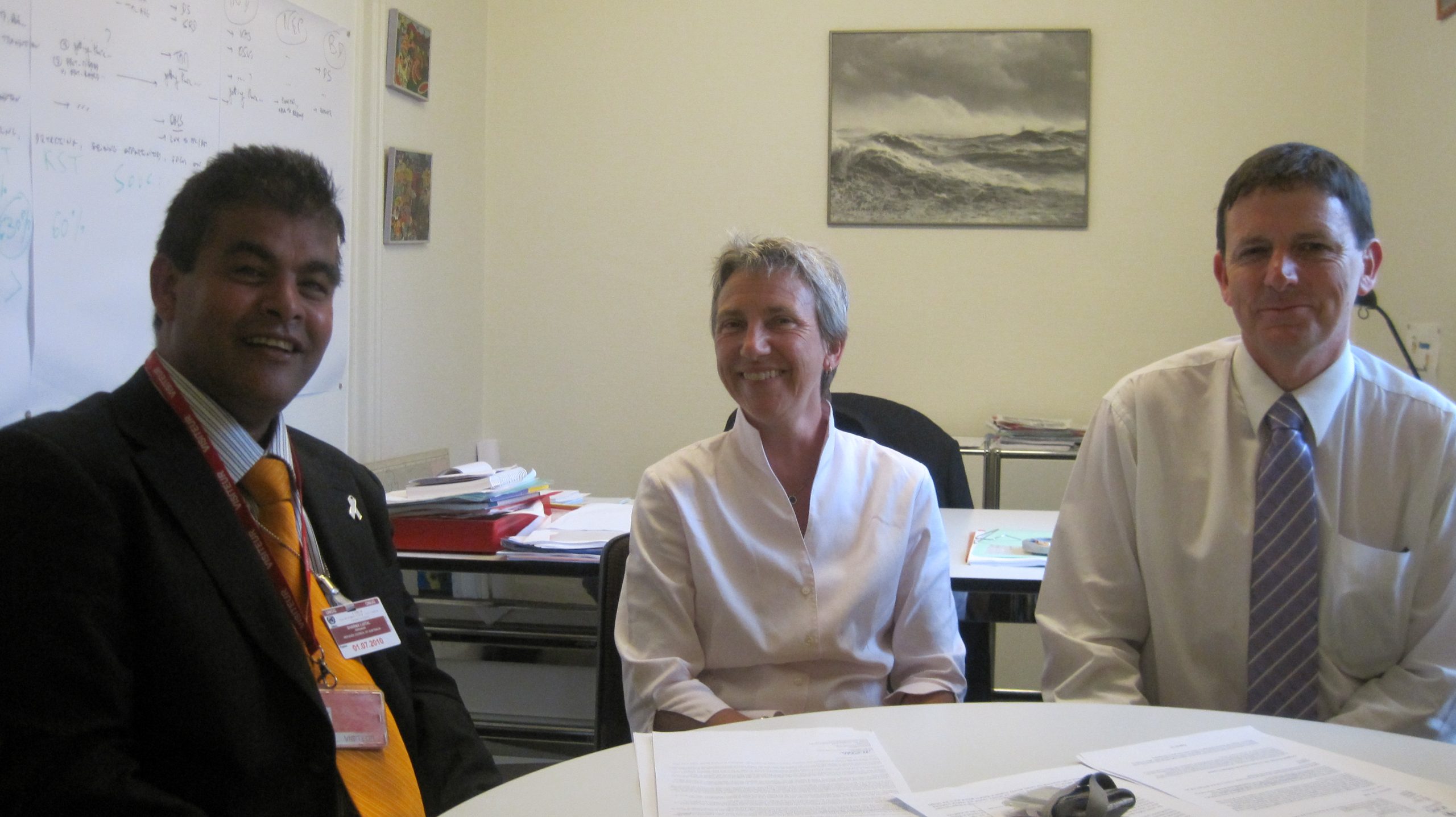
An Australian citizen of Bhutanese origin, Parsuram Sharma Luital has raised various issues relating Bhutan and Bhutanese refugees in the 48th Standing Committee Meeting of the UNHCR and Annual Consultations with the NGOs in Geneva from June 22 to July 1.
Sharma, who was selected to represent the Refugee Council of Australia, was scheduled with the responsibilities to advocate on behalf of the refugees and settlement issues of South Asian countries.
According to Sharma, he met the representatives of the seven resettling countries (core group countries) including the United Kingdom which has declared to take refugees in the near future. Luitel on behalf of the Bhutanese refugee community extended message of gratitude and requested them to keep continuity to support the refugees remaining in the camps.
Meanwhile, Sharma raised the issues of unregistered refugees in Nepal and India, family reunion, concerns of single mothers and widows languishing in refugee camps and some resettling countries, provision of visa issuance to resettled refugees for traveling between the resettling countries, help the repatriation process of the Bhutanese refugees who choose to return back to Bhutan.
The Netherlands delegates informed that the core group countries were updated on the current situation of refugee camps. A briefing was made by delegate from the US who had recently visited the camps in Nepal.
In the second week of the meeting, Sharma met with different senior level UNHCR officials including Pascale Moreau, Deputy Director, Bureau for Asia and the Pacific, and senior desk officer Karim Amer responsible for Bhutan and other officials responsible for other Asian countries. Sharma also raised the issue of unregistered refugees in Nepal (around 1,500) and India (around 25,000) as one of the main concerns.
Sharma also strongly raised the issue of family re-union, single mothers and widows, the inaccessibility of “marginalized” refugees to approach the UNHCR Sub Office Damak in Jhapa, Nepal, among others.
Sharma further informed BNS that the concerns of the silent Internally Displaced People (IDPs) inside Bhutan and Rohinga refugees from the Arakan state in Myanmar were discussed, both in the main thematic sessions and separate meetings with the senior UNHCR officials. The meeting also discussed with top priority about the plight of 81,000 Bhutanese inside Bhutan, many of whom are displaced from their original homes and lands and are stateless without any legal rights.
The director of Human Rights Watch Bill Frelick said in the meeting that there are 82,000 Bhutanese inside Bhutan who are stateless. He further said that this issue is a blind spot for UNHCR for so long and this needs to be addressed.
Sharma also discussed the difficulties faced by the former political prisoners of Bhutan, who were released after several years of imprisonment to get registered with UNHCR and join the family members for resettlement with Monica Zanarelli, Deputy Head of operations for South Asia, ICRC, HQ in Geneva. In response, Zanarelli has assured all possible help, including issuance of lesser passer if there is problem to obtain travel document, given that a host country is willing to settle the concerned refugees.
A key member of the Australian delegation, Paul Power, CEO, Refugee Council of Australia has stressed to explore all possible means to resettle the political prisoners. He has suggested to raise the issue with the UNHCR separately (which was arranged and discussed), delegates from the core group of countries in the tri-partite meeting starting July 6.
According to Sharma, the senior most UNHCR officials were very supportive of the issues raised and to address them for the benefit of the Bhutanese refugees. As per the official, the Bhutanese refugee issue has been the largest UNHCR resettlement operations in the world in 2009 where the largest numbers of refugees were resettled, followed by refugees from Myanmar. Sharma was also selected as a penal speaker on ‘Violence Against Women’ in one of the sessions in the meeting.
Reported by Tejman Rayaka Monger, Munich, Germany for BNS
Mitra Mishra, 20, who went missing from home last night at around 11.30, has been found dead at the Scheller Park today morning in Syracuse, New York.
A team of police led by Steve Kilburn, detective of Syracuse Police Department Criminal and Investigations Division is undergoing necessary investigation about the incident.
Mitra Mishra. Photo/Leela Adhikari, friend of late Mishra.
Police involved in the investigation have suspected that Mishra might have committed suicide. The exact reason behind the death, however, is not yet known.
The dead body has been taken for postmortem at the Onondaga County Medical Examiner’s Office. It is reported that family members can have access to the deceased body only on Tuesday.
Originally from Lalai in Sarbhang District, Mishra, who moved to Syracuse in August 2009 through resettlement program, hailed from Timai refugee camp.
The close-door meeting of the freshly elected board of directors of ABA has agreed to decide the name of Chairman and Executive Director (ED) only after few days.
One of the newly elected board of directors on condition of anonymity informed BNS that a meeting of the board members held today morning decided to finalize the name in a few days.
When asked about the timeframe to elect the chairman and ED, the board member further said “it might take a week or little more than that.” According to him, the meeting also decided to finalize those positions after extensive discussions.
Resettled Bhutanese in Washington State of United States have announced the formation of a new community based organization ‘Bhutanese Community Resource Centre’ on Saturday.
Representatives from six different cities including Everett, Burien, Tukwila, Kent, SeaTac and Rainier grouped together to draft the by-laws of the organization and also formed 27 central working committee members.
Meanwhile, Tanka Dhital was elected as chairman followed by Yug Dawadi as Vice-chairman, Durga Siwa as Secretary and Huma Poudel as a Treasurer.
According to newly elected Vice-Chairman Yug Dawadi, the organization was formed following regular discussions with the public for maintaining community harmony and provide pure social service. He further explained that the organization will mainly work in organizing cultural and social events, promote Bhutanese identity and work for the benefits of the Bhutanese people in Washington.
According to Dawadi, around 70 people attended the function representing the six cities of Washington.
The Association of Bhutanese in America (ABA) has said that publicizing the names for the position of Chair and Executive Director (ED) will take a little while.
According to ABA, the names will be publicized amidst a cultural program later today at around 6.00 PM. According to their by-laws, newly elected members of the board of directors will elect the chairman, executive director and four other members for the board of directors.
Travelling north on the Mechi Highway, terraced rice fields give way to tea plantations that carpet the foot of the hills. From Happen Chowk, strangely named after the shorts, we head east, driving through a deeply-rutted road penetrating the Burne tea plantation in Jhapa towards the Timai refugee camp.
The Timai camp, one of the seven UNHCR-overseen Bhutanese refugee camps, sits on the edge of the Timai River. About 100 km away from Bhutan, the area adjacent to the hills is as topographically close to the refugees’ homeland as it can get. But for now, home is a small bamboo hut where life is spent just waiting.
Amid the hundreds of huts, we drive towards the end of the sprawling camp. Past the stupas and the settlement of Sarchops, one of the three major ethnic groups of Bhutan and probably the original inhabitants of the country, we come to a hut with a solitary inhabitant. Fifty-year-old Karma Zangpo weaves a sweater while waiting for us. A mother of two, her eyes are rheumy and her words punctuated by sobs. Karma has earned a different epithet inside the camp; she is known as the wife of the most high-profile political prisoner in Bhutan—Tenzing Zangpo.
Portrait of Zangpo. Photo/E-kantipur
Fifty five-year-old Zangpo, the general secretary of Druk National Congress-Democratic (DNC-D), a splinter group founded by the Sarchops, was deported to his country by the Indian state of Assam’s police in April last year. On Nov. 10, 2008, he was arrested in Guwahati along with Sabin Boro of the National Democratic Front of Bodoland, a separatist outfit active in northeast India. The Assam Police booked him under the Explosive Substances Act and Unlawful Activities (Prevention) Act, 1967.
But these charges turned out to be false, and after three months, Zangpo was released in April. Karma had deposited bail for her husband in two installments of IRs. 10,000. The court passed a release order on Apr. 3, 2009, but the day he was supposed to be released, he was arrested again. Later, it was confirmed that Zangpo had been handed over to Bhutanese authorities.
I first met Karma in April that year. She was still coming to terms with the fact that her trip to Assam, made in the hope of reuniting with her husband, was shattered in front of her eyes. Short and slender, she appeared to be a demure woman forced into dealing with the complex and often ruthless world of politics involving three countries: Nepal, India and Bhutan.
Zangpo’s case is an example of how India and Bhutan work hand in hand for their interests and how Nepal’s Bhutanese refugees—marked by factionalism and petty interests—are helpless in lobbying for one of its leaders’ release. Though he was a member of the DNC-D when he was arrested, Zangpo had been a member of two more parties earlier: the Bhutan National Democratic Party, and the Bhutan People’s Party. Karma bitterly complains about DNC-D’s failure to demand his release. Referring to the party president Thinley Penjore, she says, “Since he’s our leader, he should have called me. I was not expecting him to feed me.”
Karma has made it a point to establish contacts with her husband and know his whereabouts. She has procured a form from the International Red Cross Committee (ICRC). After submitting it, ICRC will hand it over to Zangpo during one of its monitoring visits, if the jail where he is detained falls under its purview. Apart from legal recourse, Karma has also sought divine intervention through a Lama in Sikkim, who told her that her husband was fine, but it would take time to know all the details.
Still, Karma hasn’t lost hope. She lives mostly in a friend’s house in Birtamod, where she weaves woollen sweaters and shawls for living. She says her husband’s food rations have been slashed, forcing her to rely on the allowances of her two children, 15-year-old daughter Sangey and 10-year-old son Minjure. To add insult to the injury, she has been de-registered from the camp because she wasn’t there to collect her ration card. She is now waiting for the regular UNHCR census to register her case, which is why she is in the camps these days.
Little is known about her husband who is projected as a national threat to his country. Because of his arrest with a separatist leader, he was projected by the Indian media as someone having links with insurgents. In a picture taken immediately after his arrest, he wears a flower-embroidered shirt and looks much thinner than earlier. Bhutanese leaders who worked with him say that he frequently travelled to the North-East where he had good contacts. Zangpo was a loan officer in the Agriculture Department in Chukha district before he left Bhutan in 1993. His colleagues describe him as a dedicated refugee leader who was very fluent in English. A vocal opponent of the monarchy and a relentless fighter for the refugees’ right to return, his friends say he was amicable and independent.
For those who think that the refugees consist of only the Lhotsampas (Nepali-speaking south Bhutanese), Zangpo will seem like an oddity. But the Sarchops, the largest ethnic group in Bhutan, has faced suppression and discrimination from the ruling elites of Thimpu dominated by the Ngalongs. As a result, several Sarchop dissidents have fled the kingdom to escape persecution. Rongthong Kunley Dorji, a prominent Sarchop businessman, fled the country in 1993 after being jailed for over a month. He sought asylum in Nepal where a year later he founded Druk National Congress. In 1997, he was arrested in New Delhi and
then released a year later with severe restrictions on his movement. In December
last year, the Delhi High Court eased the restrictions: he can now travel abroad after obtaining permission from authorities. Thinley Penjore, another Sarchop, now heads DNC-D from Kathmandu. These three prominent Sarchop leaders are now scattered in the three countries.
Where could Zangpo be? Though the Bhutanese regime is extremely secretive about its political prisoners, rumours about his presence in a certain jail continue to float around in the camps. According to a refugee, a few months back, a police personnel saw Zangpo in a Bhutanese jail. Another refugee claims that he’s detained in Chemgang, which is notorious as a death camp. But Chemgang, which has the largest number of political prisoners, is frequently visited by ICRC, and new prisoners will be highlighted by the organisation—which seems unlikely in Zangpo’s case. Balaram Paudel, president of Bhutan People’s Party, says that Zangpo might have been taken to Dradulmakhang, an underground army prison—Bhutanese refugee leader Tek Nath Rizal has described this jail as a place “whose very name evoked fear.” Paudel believes Zangpo was first shifted to Chukha jail after he was deported, where the Bhutanese government had filed a case accusing Zangpo of embezzling 200,000 ngultrum. In 1993, Kuensel, the government mouthpiece, had published a notice of death penalty for him.
In her spartan hut in Timai, Karma recalls the times she spent with her husband. She says he had already predicted his deportation. “He would often worry about the family in case he was arrested and handed over to Bhutan,” she says. Nevertheless, she is sure that Zangpo will return. “I’m waiting for that day,” she says, with a small smile.
The third national convention of the Association of Bhutanese in America (ABA) has begun in Atlanta, Georgia. BNS will blog the event live from the convention hall. The live reporting is done by Pashupati Timsina from Atlanta in Georgia while the online update is done byTP Mishra from Raleigh in North Carolina.
9.15 AM: The formal registration process begins. Participants coming from outside of the State Guests are stepping in to register for the convention
Participants of the convention. Photo/ABAconvention.org
9.45 AM: The registration process continues. All most all members of the board of directors including chairman DP Basnet seen inside the hall. The Dias is decorated well; the banner containing convention details is seen placed at the back of the Dias. Flags of both Bhutan and USA waves on the Dias. Participants from various States from across the USA continue to step in
10:10 AM: Registration process still continues. By this time, it is reported that participants from at least 11 States from across the USA have entered the convention hall. Informal talks, introduction among each other, among other informal chats noticed in full swing
10:20 AM: Registration continues. At least 50 individuals have formally registered. Organizer expects more registration. The onoing World Cup Football between ‘Germany and Argentina’ have been cited by many as a reason for the delay of participants’ entry into hall from venue-near-by area, Atlanta
10:25: Hari Acharya of ABA informs that the formal program begins after five minute. Participants entry continues
Dr. Dhakal.
10: 45 AM: TP Mishra of BNS reaches out to Dr. DNS Dhakal, who is now in North Carolina, for a brief comment. Dhakal says such convention has been proved helpful in establishing our own identity. “It is good to know that our fellow Bhutanese are trying to establish our own identity,” says Dhakal, adding that as a political activist he is yet to see if such convention or formation of organisations in long-run would be a part of contribution for the establishment of true democracy in Bhutan. Dhakal also comments that division among the resettled refugees, however, have been noticed here in USA
10: 55-11:oo AM: Formal program begins. Chair of Board of Directors, DP Basnet gives opening remarks. Welcoming every participants in the convention, Basnet said that ABA is the power of self-help. He also mentioned about the activities of ABA. Basnet, who sworned in as Chair in 2008 and whose tenure completes today, also said that he is sad to see the formation of two national-level organisations in a parallel way despite his repeated requests to the executives of Organisation of Bhutanese Communities in America (OBCA) to come forward and lead ABA rather than to declare the new organisation. Click here to read the whole content of Basnet’s speech
11:18 AM: The organisers are displaying ABA’s activity report in a projector
11:20-11:55 AM: Hari Acharya, board of director of ABA briefed the participants about various provisions for getting into ABA. Acharya also informed about their “ongoing” project in Maryland. “ABA will focused on service to the community and development of the community in the days ahead.” Acharya further urged exiled Bhutanese to take membership of ABA and try to change the working procedures in accordance with their wish
12: 15 PM: Questions-answer session begins. All members of board of directors sitting on Dias infront of the participants to answer questions raised by the floor. Around 100 people seen inside convention hall
12: 50 PM: Participation of 13 different States from across the USA has been just confirmed. The questions-answer session continues
1: 30 PM: At least nine participants raised questions, most of them included about their concern for unity with OBCA. Birendra Dhakal, DP Basnet, Ganesh Subedi and Hari Acharya from ABA answered the questions of the floor. As far the questions regarding unity with OBCA was concerned, the board of directors opine that ABA is always open for unification with OBCA. Participants also raised the questions about the failure of ABA for not being able to come out with “reliable outreach program” to places where Bhutanese refugees have been resettled in USA. A majority of the questions were clearly hinted at “unification” of ABA and OBCA, for which the panelists vowed their committment for possible unity.
1.35 PM: Lunch time begins. We will continue to blog live about the event
1:40 PM: Based on the fact that many wish for the formation of one national level organisation of Bhutanese in USA, and that the concern for the unification of ABA/OBCA is growing, BNS is attempting to reach out to the Chairman of OBCA for his brief comments and thoughts
2.05 PM: Finally, TP Mishra of BNS catches Yam Kharel, newly elected Chairman of OBCA over phone. Before opining on BNS query, Kharel extends his best wishes to ABA for its successful completion of the ongoing convention. “I wish that the convention will come out with a good avenue in according to the wish of the ground-level people,” said Kharel, adding- “The ground voice floating in around is that we should not have two national level organization.
Yam Kharel
As an individual and as the chairman of OBCA, I second this demand and thought of the people.” Kharal further opines that his organization is ready for the unification with other organizations. “I have felt that the OBCA/ABA unification certainly will strengthen the spirit of the Bhutanese community in America. The unification will generate wiser ideas, doubtless support and stronger commitment from far and wide.”
“The most important thing that every visible icon on the screen should selflessly and seriously second is that- ABA/OBCA unification will permanently erode all the barriers of dis-unification from the past, in the present and future. Thus, I see if we “truly” want to work for the community, unification is genuine,” added Kharel.
2:45 PM: After-lunch session begins. ABA declares the formation of election comission that includes Narayan Katel, Mitra Ghaley and Chimmi Dorji Wangchuk. Discussions on ‘how to conduct election’ keeps going. Number of attendees of the conference has decreased after lunch time; around 60 people seen inside convention hall
3:00 PM: List of the candidate for the board of directors comes out. It include Dr. Purna Chhetri, Khageswar Mishra, Puja Pradhan, Mukti Gurung, TB Bhandari, Jiwan Subba, Bishnu Pradhan, Rabi Gurung and Rajen Giri. It is reportedly learnt that only the members of ABA will be allowed to caste “vote” for the position of board of directors. According to the by-laws of ABA, new directors and current directors to fill the vacant position shall be elected or re-elected by the voting members at the Annual General meetings in accordance with the provision in Article 5.1.2. Directors shall be elected on the basis of maximum votes secured.
3.12 PM: Candidates for the board of directors addressing the convention participants with their short-election-campaign speeches.
3.20 PM: Dr. Purna Chhetri addressing the participants of the convention says that he is in favor of “unification” of ABA/OBCA. He also points out on the need to address the problems faced by freshly resettled Bhutanese in USA
3: 40PM: Voting begins; voters are casting their vote in a ballot box. It is reportedly learnt that voting was also done through electronic means i.e. email by ABA members
4:00 PM: Voting session almost comes to the end. The election commission is seen busy counting the votes. Participants are eager to hear the result of the vote
RP Subba.
4:o5 PM: At a time when the vote-counting session continues, TP Mishra reaches out to RP Subba, political analyst, writer and a community leader in Virginia for brief comments. Subba says such convention indicates that we are trying to move forward in an organized way. “It is perhaps sad that we have two national level organizations for the same purpose and established with almost the same objectives,” says Subba, adding that the majority of Bhutanese are neither for ABA nor for OBCA.
“All they wish is unity and a single national level organization.” Subba further opines that this third force can be taken as another organization, which is the strongest one. “I strongly believe that there is no alternative to “unification” at this hour.”
4:25 PM: Election result declared. Dr. Purna Chhetri bagged 54 votes followed by Rabi Gurung with the same number of votes. Jiwan Subba convinced with 52 while Puja Pradhan scores 49 votes.
Newly elected members of the board of directors. Photo/ABAconvention.org
Meanwhile, Mukti Gurung bagged 47 votes followed by Bishnu Pradhan and Rajen Giri with 44 votes each and TB Bhandari receives 27 votes. All of these newly elected members of board of directors were welcomed to the Dias by DP Basnet with “khada“. It is reportedly learnt that the tenure for Hari Bangaley and Bahadur Subba, who have been recently nominated as the members of board of directors, has not yet been completed, thus they will hold the same position until ABA’s next convention.
4: 45 PM: According to the by-laws of ABA, Chairman and Executive Director should be elected by the members of the board of directors. Citing this reason, the newly elected board of directors are holding a close-door meeting to disscuss on “when and how” the election/nomination of Chairman and Executive Director should take place. For floor, its a break time
4.50 PM: The close-door meeting finalised that they will publicize the name of Chairman and Executive Director along with four other members for board of directors by 4pm tomorrow. It is reported that extensive discussions from among the newly elected board of directors will finalise the name of the chairman and Executive Director. With a vote of thanks from Birendra Dhakal, on behalf of organising comittee members, to everyone, today’s session concludes. ABA has scheduled a DJ night for the participants at 7PM today.
With the welcome dinner party for out of state guests today, the third national convention of the Association of Bhutanese in America (ABA) has begun in Atlanta, Georgia.
ABA has said that the 3-day 2010 convention will be a celebration of their first federally funded project in partnership with an established resettlement agency in Maryland and the second election to the Board of Directors. Hari Acharya of ABA further informed BNS that the preparations for the convention have been completed.
The convention will see election to the Board of Directors on Saturday followed by DJ night, sight-seeing tour to Stone Mountain and Georgia Aquarium and cultural programs.
Meanwhile, BNS will “blog live” about the event from the convention hall.