Remembering Pritam Adhikari with Locks of Love

26,644

“My name is Indira Adhikari from Atlanta, Georgia, USA. Before two weeks we have donated our hair to Locks of Love through Great Clips Salon. 15 of us had filled up the donation form too. … We donated our hair in the name of Pritam, one of our brothers who passed away due to cancer. We are remembering and appreciating him by donating our hair in his name.”

So wrote Pritam’s sister Indira to the Locks of Love, an organization that serves financially struggling families in North America. The Locks of Love provides natural hairpieces to their children under age 21 who are suffering from long-term hair loss due to any medical diagnosis, including cancer.

L-R: Hema Adhikari and Hari Adhikari Neupaney after cutting their hair (Pictures courtesy: Indira Adhikari)
L-R: Hema Adhikari and Hari Adhikari Neupaney after cutting their hair (Photo courtesy: Indira Adhikari)

When Pritam Adhikari died this year on January 5, news of the scholar-hero-friend’s death at age 22 quickly spread to family, friends, teachers, and coworkers worldwide via word of mouth and social media. Born in Bhutan, Pritam grew up in the Bhutanese Refugee Camp of Beldangi-II in Nepal, when his 100,000-person community was ethnically cleansed from its homeland. When Pritam’s family joined the growing Atlanta Bhutanese refugee community in 2008, he took advantage of every opportunity to achieve his early childhood dream of becoming an aerospace engineer. Applying to colleges in 2010, Pritam wrote in his personal essay, “Life circumstances required me to follow a long, nontraditional route toward my goal, and though I am financially poor, mentally, I’m rich!” He passed away two days before he was to begin studies at Georgia Tech.

Bhola N. Adhikari, Pritam’s father, praying after lighting 23 candles on Pritam’s 23rd birthday (Picture courtesy: Indira Adhikari)
Bhola N. Adhikari, Pritam’s father, praying after lighting 23 candles on Pritam’s 23rd birthday (Photo courtesy: Indira Adhikari)

“We lit 23 candles at home — one candle for each of his years on earth”

Though their hearts were broken, Indira, joined by her sisters, cousins, and friends, quickly turned the staggering loss into a project honoring Pritam’s life and legacy of hard work, diligent study, and loving kindness. They committed to “donating our hair in his name on his birthday, August 23, because he would have turned 23 years old this year,” she explained.

“I hope our donation will help somebody”

For nearly half a year, “Team Pritam” reached out and coordinated donations around the USA. They conceived a plan, set a goal, and reached it while working, studying, and helping their families and communities in the challenging work of resettlement. In Indira’s post on Facebook’s Bhutanese Refugee Atlanta Group, she encouraged people to donate. “I hope we will get the chance to reach to lots of people who knew Pritam,” she said. “I think that most of them would love to donate their hair because the little donation will help to bring a smile to those little “Cancer Survivor Girls” and others.”

Indira Adhikari holding the thank-you postcard Locks of Love sent (Picture courtesy: Narayan Subedi)
Indira Adhikari holding the thank-you postcard Locks of Love sent (Photo courtesy: Narayan Subedi)

Now, after successfully completing their project, Indira hopes to reach many Bhutan News Service readers and encourage them to help others “even if they do not have nothing with them.”

Team Pritam: the Donors
From Georgia: sisters Hema Adhikari, Indira Adhikari, Yamuna Adhikari, Hari Adhikari Neupaney; cousins Rhea Sharma, Shavika Subedi; Friends Uma Acharya, Radhika Gurung, Sabitra Khatiwoda, Doua Morris; and Great Clips Salon at Northlake Crossing, Tucker, Georgia

Rhea Sharma after cutting her hair (Picture courtesy: Revaz Sharma)
Rhea Sharma after cutting her hair (Photo courtesy: Revaz Sharma)

From Texas: cousins Dambari Adhikari, Yashoda Adhikari

From Pennsylvania: Bedi Dhital, friend

From Ohio: Asha Gurung, friend

Indira gives special thanks to Doua Morris, Director, Refugee Women’s Network, where Indira worked this summer. “When I told Doua about Pritam’s story and what we were going to do, she was eager to join us. I was touched by her willingness to help us.”

Congratulations to all the donors for cutting their locks to make wigs and hairpieces to help children hold their heads high in dignity and joy.

Author’s note: Deep thanks to Indira Adhikari for contributing to this article by sharing with me the project from dream to realization via private messages on Facebook and email, and for contributing the photos and providing descriptions and credits. Indira studies in the Nursing Program at Georgia Perimeter College, Atlanta, Georgia.

4 Tamar OrvellTamar Orvell writes and creates multimedia content to help individuals, teams, and organizations communicate effectively with diverse audiences. An active volunteer with at-risk communities, she is a dual citizen of the U.S. and Israel, where she lives in Tel Aviv. Readers can reach her at [email protected]


Fire displaces one family in Columbus

26,644

An unidentified inferno in an apartment rented by a resettled Bhutanese has displaced five-members of the family in Columbus, Ohio on Sunday.

IMG_1374The fire broke out in Leela Dhital’s apartment at 4766 Carahan Road Sunny Isles in Columbus, confirmed Tara Dhungana, Ad-hoc Chairperson of the Bhutanese Nepali Community of Columbus (BNCC).

According to Leela’s son Kumar, there was no any member in the apartment at the time of the mishap.

“We were out in a relative’s house to observe Laxmi Puja and play Deusi-Bhaii,” Kumar told BNS, “No one in the apartment. We knew about the incidence when fire extinguisher trucks arrived. We couldn’t save valuables.”

The American Red Cross and BNCC are assisting the displaced family.

“The incident has occurred in the eve of festival. We ask the displaced family members not to feel otherwise as the entire community is with them. I want to assure all possible helps from our side,” said Dhungana.

Dhungana said that the community is exploring the neighborhood for available resources to help the family.

BNS Correspondent, Roshan Shanker, who is also a volunteer of the American Red Cross, visited Dhital’s apartment earlier today. He has been coordinating with the Red Cross to assist the displaced family with food, clothing and furniture.

Ethnic school holds cultural event in Adelaide

26,644

The Bhutanese Ethnic School (BES) organized a cultural and literary event on Nov. 2 at Farley Grove in Salisbury of Adelaide, South Australia.

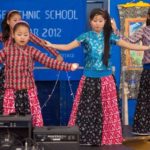
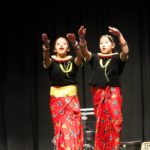
Young children on cultural dress

The event was held to observe Dashain-Tihar amidst presentations of various literary and cultural flavors, and commemorate the 205th birth anniversary of one of the greatest poets of Nepali horizon Mahakavi Laxmi Prasad Devkota.

The event organized as an annual program of the school included the cultural aspects of the resettled Bhutanese community with songs, dances and items of traditional, cultural, linguistic, literary and ethnic importance.

The school said the event aimed at giving continuity to its annual cultural event that it started organizing from last year.

In the presence of guests Mr. Binh Nguyen, the Chairperson of the Ethnic School’s Association of South Australia Inc, Ms. Zoe Bettison MP, State Member for Ramsay, Ms. Ina Kusumaningrum from Embracing Diversity Salisbury, Chairperson of the Bhutanese Australian Association of SA, Mr Suren Ghalley and the Chairperson of the School Mr. Kamal Dahal, the cultural event embraced a presence of some 500 individuals.

2
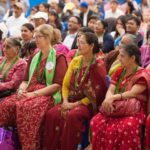
Audience of the cultural event

Organized on the partial sponsorship of Nepali Grocery, Namaste Nepali Shop, Wagley Interprises, Indian Shop-Salisbury, GNG Auto repairs and from the personal contributions from Nick Champion, MP for Wakefield and showcasing the performances of the Ethnic school’s children and artists from within the community, the audience crowded in the Farley Grove hall were refreshed with more than 30 items for more than three hours. The organizers also arranged raffle system with prizes from the funds generated from the sponsors.

The Bhutanese Ethnic School (BES) is a Nepali language school established in the March of 2012 to educate the children of Bhutanese Community about their language, arts, culture and heritage.

Set up as a non-profitable value based institution by a handful of committed volunteers, it has around 90 students who take class every Saturday of week in St John’s Church.


Annual cultural program in Louisville

26,644

The Bhutanese Society of Kentucky (BSK) held its annual cultural program today at Iroquois High School, the school where largest number of Bhutanese students are studying under ESL program.

The annual cultural program absorbed much of the time of BSK board members and it was quite a assiduous planning, which also included the program of honoring high school students who graduated since 2009.

High school graduates being honored

The program became successful in making the young dancers and singers participate in the program and rejuvenate their talents together with  showing the cultural dress, according to the organizers.

Young girls and women donned with sari, lehanga and kurta salwar became the point of attraction for the local guests. Martin Kinny, the ESL director of JCPS, attended the event as the chief guest who handed medals of recognition to the high school graduates.

Some attractions were the Deusi song by Bhutanese singer, Govinda Phuyel; dance on Bhailini song by Yashoda Phuyel and Leela Subedi; solo song daali daali ma.. by Bindya Rasaili while the stage was rocked by Jeet Limbu with the old time song of Gopal Yonjan,  Uhile ta bajeko pala ma …jutta ma herda thuloma her buhari herda sano ma her.

Special to the program was guest Dr. Govinda Rizal who flew to Kentucky from Philippines to meet his parents some days ago.

Similarly, Suhas Kulkarni the director of Office of Globalization at the Mayor’s office and his wife Surekha Kulkarni arrived late to the program to exchange the felicitations of Deepawali.

One kills self in KY; Another suicide-attempt survivor dies in NY

26,644

Ram Bahadur Thapa’s funeral is slated for Saturday at 5 p.m. after his dead body is returned from postmortem. Thapa in his 40s hung himself to death in a nearby tree just behind his new home at Bannon Crossings  Louisville, Kentucky two days ago.

SuicidesignRam had been missing from his home since three days, and his whereabouts  not known at home until a relative called the family on Thursday to say that Ram was not seen for two days and need to file a missing report.

He originally hailed from Neoly Bhutan and had lived in Beldangi-2 camp.

In another similar case early this week, Ganga Poudel died in a hospital in Buffalo, NY after six days in ICU treatment following an  incomplete suicide attempt she made by hanging in her apartment.

She attempted to finish herself when her  husband went out to pick his child from nearby school.

She is survived by three children and a husband. Nobody knows the cause for her attempted suicide as there was nothing to suspect of any wrongdoings in the family.

Causes of both the suicides were not immediately known.

If someone you know exhibits warning signs of suicide in the United States, call the U.S. National Suicide Prevention Lifeline at 800-273-8255. A free, 24/7 service that can provide suicidal persons or those around them with support, information and local resources.

This news has been edited since last published. 

Bandanko Chino echoes in Pittsburgh

‘Bandanko Chino Haaraii Laiidina Sakdina
Tara Timilaii Potay Lagai Deula…’

Pratap Subba being honored by BCAP

And yes, these were the much anticipated lines for the crowd gathered at Baldwin High School, auditorium, in Pittsburgh Sunday evening from Pratap Subba – known to be one of the pioneers of music forum in Bhutan. He thrilled the crowd to their satisfaction.

Kishor Pradhan and KN Timsina honored Subba with a framed letter of appreciation on behalf of BCAP applauding his contribution and for being a source of inspiration to the younger generation both inside and outside Bhutan.

Subba’s  Timi Deau Ya Nadeau’ was the first song aired officially through Radio Nepal in 1982 followed by the popular Bandanko Chino’ in 1984. He has recorded dozens of his songs in Music Nepal hence then.

Jagdish Samal
Jagdish Samal

To mark the annual cultural event- Bhutanese Community Association of Pittsburgh (BCAP) also invited Jagdish Samal, New York based Nepali singing star, who also made the crowd dance with cheers as he sang – Aljhay chha kyara pachauri cheyako botaii maa…’ While, he stunned the crowd with ‘Yeti thulo sansarama timi eklaii hunchaeu hola.

Samal originally from Illam in Eastern Nepal has been entitled with Radio Nepal, Hits FM, Kantipur FM and Kalika FM Awards and many more.

Then appeared Lokesh Gurung an emerging Bhutanese singer in diaspora from Missouri.

‘Purnimako chandrama laii, badalu lagna thalyo, Kailay kahii timro maya sankha lagna thalyo…’

Within three years of his resettlement, 18-years-old artist Gurung invested around US $3,200 for the production of his solo album ‘Pratiksha‘, which is a fusion of Nepali gazal songs.

“I started singing right from the age of nine,” explained Gurung. “The motivation that I have been receiving from senior artists have inspired me to come up with the album,” he added.

Lokesh Gurung
Lokesh Gurung

According Gurung, the album is under circulation within various states in America and Canada.The album has altogether seven songs including his own lyrics. Other lyricists included Dawa Tamang, Deepak Dasnami and Kiran Gazmere.

The Rhythmscreen Creation, a recording studio owned by resettled Bhutanese in Georgia, has done the task of recording and mixing of the ‘Pratiksha‘. Elaborating his future plans, Gurung says, preparation for doing a music video in one of his songs in Nepal is currently underway.

The four-hours long  event entertained the audience with number of dances, solo and duet songs by the local Bhutanese artists. BCAP organizes annual cultural event each year in the month of October to promote the community’s culture and encourage younger generation in the mission.

(Pictures used in the report are by Jeetan Gurung, BCAP)

Barsatko Tyo Raat by Lokesh Gurung

Two Concord teens arrested for holding Bhutanese refugees at knife point

26,644

Two Concord teens with prior arrest records are due in court this morning after attempting earlier this month to rob four Bhutanese refugees at knife point, the police announced this morning.

Tyler Burley and Brett Reno (Photo courtesy: Concord Monitor)

The men, Tyler Burley and Brett Reno, both 19, were arrested late Friday, Lt. Timothy O’Malley said in a press release. They’re accused of threatening the group outside an East Side Drive apartment complex shortly after midnight on Oct. 13. Burley and Reno share an apartment at the address, as do some of the victims, O’Malley said.

The victims, who the police have not identified, were taking out their trash when Burley and Reno allegedly stopped them in the parking lot and said, “Give us $20 or we will kill you guys.” Burley, the taller of the two, brandished a knife, the victims told the police.

When they refused to hand over any cash, one of the two men struck one of them in the face with his hand, O’Malley said. Burley subsequently punched another victim in the mouth, causing a severe laceration.

The victims reportedly fled the scene, running to one of their cars and driving to a friend’s house, where they phoned 911.

The police said the victims believe they were targeted because of their national origin and the suspects’ assumption that they would not report the robbery.

“The suspects allegedly told the victims that they knew they were Nepali and that they wouldn’t report the crime,” O’Malley said. O’Malley said the victims are of Bhutanese heritage but appear to have spent time in Nepal before arriving in the United States.

Reproduced from Concordmonitor.com

New Novel From Bhutan Explores Dark Side

26,644

Rape. Prostitution. Child labor.  Corruption. Alcoholism.  Welcome to Shangri-La.  Society’s ills in Bhutan, hidden to tourists who pay for pricey vacations there, are the main “characters” of a new book by author Doji Dhratyul called Escapades Awakenings: A Novel From the Kingdom of Happiness.

Happiness isn’t very evident in this 590-pages novel, six years in the making.  It is at once riveting, disturbing, and important.

To Bhutanese, the themes will be familiar, if not taboo; to outsiders who idealize the nation as unspoiled, and believe it exempt from problems that plague the rest of the world, they will be shocking.

New Novel from BhutanThe book’s main character is the fictitious Chechey, a modern Bhutanese woman whose given name is “Thruebaab,” for the blessed rainy day on which she was born.  She is the product of forced encounter: her teenaged mother, Gakeey, had been forced to sleep with a visiting dignitary (who remains unaware of the consequences of his actions, and who reappears later in the book.)  Chechey’s 7-year old-brother is sold into the service of a rich Thimphu-dwelling family who can only be described as evil.

By force of will, and a healthy dose of karma, Chechey manages to save him, and to exact revenge: By becoming the richest and most powerful woman in the nation.  She does that with her feminine wiles in a shocking way.

Author Dhratyul (his pen name) is a father of two.  After he reached out to me on Twitter, we arranged to have his book hand-carried to the US, where I live, by an American tour guide. It is available in Bhutan and internationally on Amazon.

The following interview was conducted via email, and edited for space:

Q: Where are you from in Bhutan? What kind of work do you do now?
DD: From Bumthang now settled in a small village called Mepisa in Chukha District. Presently I am working with the Ministry of Agriculture and Forests to help our farmers market their produce.

Q: Is the book based on real incidents in your life or that you’ve observed?
DD: Yes and no. Yes ! because they are mostly based on real life’s incidents. They are part of my life’s journey. But you will know better that how many more such sad stories are being enacted in many parts of the world as I write this. Well, real lives stories may be more tragic but surely not as dramatic like as I have tried to portray.

No ! because Thruebaab alias Chechey is my creation. But I like to believe that there could be many living and dead Bhutanese women who could easily connect themselves with some or complete parts of Chechey’s life.

The novelist
The novelist

Q: Writing a book is a long and thankless and isolating process.  What was your aim in telling the epic story of Chechey / Thruebaab?
DD:To me so far I must say it was a fun, enjoyable and a fulfilling. Strictly speaking the book was a pleasant surprise outcome of my writing hobby.

The motivation to write this story originated in 2006 in one of my work related tours to lower Zhemgang. We had about a week of walking during the tour. It was during this tour when I saw the stark differences between the lives in these villages and the urban areas which I wanted to share with my luckier urban population. I think it was basically an outburst of my deep-rooted personal concerns on these and some other aspects of our society.

Also it is my sincere hope that this book will – Encourage, Enthuse and Entice Bhutanese Women to Empowerment and Excellence.

Q: Fascinating that you chose to write the story of a woman, mostly. Do you consider yourself a feminist?
DD: Well for sure I don’t qualify to be labeled as feminist. But I always had a deep concern for women’s rights. I guess this has got to do with my experience with my mother’s life.

Mamung Village the author mostly writes about
Mamung Village, the author mostly writes about

Q: Do you feel like there are strides being made to combat child slavery and rape in Bhutan?
DD: The situation has changed a lot from those that I described in my book but many challenges still are hovering. Actually this book is also an outcome of my personal interest and concern on the subject of gender issue especially from the point of view of women gender as the disadvantaged one even in our context. Most of us tend to claim that Bhutanese women enjoy equality with men and while I have been always feeling uncomfortable with such views.

You know we have since couple of years RENEW (Respect, Educate, Nurture and Empower Women) dedicated to uplift the opportunities for women and NCWC (National Commission for Women and Children), a government agency responsible to uphold or support the rights and opportunities of women and children. Also many legal instruments supporting women and children are being put in place. But having said that I believe we have a long way to go.

Q: A lot of Bhutanese get angry with foreigners (like me) who they feel idolize or glamorize Bhutan, or criticize it. Have any Bhutanese been angry with you for being frank about the flip side of the so-called Shangri-la?
DD: I believe there is no reason in the book for anyone to be offended or get angry. We cannot be oblivious and ignorant to isolated sad true stories such as in my book. If we do not expose and nip them in its infancy, many more such sad stories could indeed easily be not just the flip side but permanent way of life as is evident everywhere else. But you will kindly agree that happiness is not yet the flip side of development but the mainstay of Bhutanese life and society. I hope this is appreciated and for all to observe in Bhutan.

My book portrays issues such as child labor, sexual exploitation of rural women, alcoholism and many others but I would not call these as the flip side of the Shangrila. We believe Shangri-la is Bhutan. People no matter how poor or sad they may be, I still believe there is lot of contentment, smiles, joys, fresh air and water everywhere. It is not for anything that Bhutan is the land of Gross National Happiness. Happiness is the vision. Happiness is the goal. Happiness is the way of life. My dream is… Bhutan will continue to be the Kingdom of Happiness for all times to come as I have captioned on the front cover of my book.

[The writer, who is also the author of the Radio Shangri-La, contributed this piece to BNS from Los Angeles, California. She blogs at Lisanapoli.com. ]

Waiting for the King

26,644

Bhutan recently held its second round of general elections. Is the government in Thimphu serious about extending full citizenship to the Lhotshampas who remain in the country?

There had been a minor celebration that afternoon at Raj’s house in central Thimphu, the capital of Bhutan. A few relatives had gathered to eat cake together – the remains on small plates were still visible in the kitchen when I joined them for dinner in the evening. The reason for their shared joy was a small, off-white card, resembling that issued by any bank. Only this one had the name and picture of Raj’s uncle Vivek on it, and the essential letters CID: Citizenship Identity Card.

Vivek had been stateless for more than 20 years. As many other ethnic Nepalis in Bhutan, he says he lost his Bhutanese citizenship during the uprisings of the early 1990s. Two of his brothers and his parents were amongst the estimated 80,000 people who left the country at that time. They are in the US now, after having spent two decades in a camp in Nepal. For Vivek, missing his close relatives was just the beginning of his troubles. Soon after they fled he was registered by census officials as ‘F5’ (a non-national man married to a Bhutanese woman), and until now all attempts to revive his citizenship had been in vain.

As a result, Vivek had no access to any government job, his children had no access to higher education, the whole family needed a special road permit to travel through the country, he was denied a loan and he lost the right to his family’s land and property in south Bhutan. Time lost cannot be regained, so the kitchen celebration was a bitter-sweet one – even more so because some of those present were still waiting for their luck to turn around. Like five-year old Anuj – Raj points him out: “He is my nephew, born stateless. Both his parents have a CID now, but he does not. We don’t know why.” Such cases highlight how arbitrary the nature of the granting of citizenship in Bhutan can be, with the power to do so still vested solely with the King.

Editor’s note: The article originally appeared in the Himal Southasian on October 28, 2013. A part of this article has been reproduced here with kind courtesy of the magazine. The full texts of the article can be read from Himalmag.com

[The author is a freelance print and radio journalist from the Netherlands. She has been living in and travelling around South Asia since 2008 and can be followed on Twitter @alettaandre or on [email protected], and the report was supported in part by the Postcode Loterij Fonds for journalists by Free Press Unlimited.]

Time for Reorganizing

26,644

Thinley & NaradPerhaps it will be difficult for anybody to believe that we, the Bhutanese people, spent over two decades of our precious lives struggling for a vibrant and inclusive democracy in Bhutan. We wanted our country to be glorified with the establishment of true democracy, where we anticipated that each one of us would live a free, secured, happy and dignified self-sufficient life.

With democracy becoming a global trend, the world community saw monarchy as obsolete, and the people of Bhutan were not an exception whereby we too thought to embrace democracy within the framework of the established monarchy. As for modern kingship, peoples’ voice for parliamentary democracy under constitutional monarchy was thought to best serve the interest of both people and the palace in Bhutan; the country could move forward on the path of modernization. Ironically, however, people’s genuine quest for democracy suffered a deaf ear by the then regime, thereby culminating the mass peaceful movement for human rights and democracy. The popular demonstration faced heavy crackdown by the government.

As a result, our journey to an exiled life in the refugee camps in Nepal took heavy toll in the course of two decades lingering with the hope to bring about solution to the problem with just repatriation as an alternative. This never materialized, as the bilateral negotiations between Kathmandu and Thimphu failed. More frustration and disappointment continued to be fueled in the refugee camps while government began resettlement of so-called landless people in the south thereby building human walls for fear of any untoward retaliation by refugee youths that were deeply frustrated for want of justice and repatriation.

Nevertheless, as we trace back to the point from where we began our journey, we find some level   of satisfaction and feel that our efforts have not really gone in vain. We know, however, when we say satisfaction, it will certainly hurt the sentiments of our friends who are still waiting in the refugee camps in Nepal looking forward to repatriation and those political prisoners  languishing in the prisons anticipating release even after the establishment of so-called democracy. At the same time, we cannot forget our martyrs, whose soul cannot be in peace until true democracy flourishes in Bhutan.

Simultaneously, during the long struggle for human rights and democracy, we went through the vicissitudes of human life, especially in terms of managing and running our party owing to almost non-existent or too scarce resources. The means of strength for our survival had been our unity within the party and perennial source of both logistic and moral supports and solidarity extended by our friends, relatives and families. We also take this opportunity to acknowledge the friendly and harmonious relationship we enjoyed with other Bhutanese political parties, human rights and social organizations despite several anomalies.

That said, things have definitely changed a lot in Bhutan compared to what was in place two decades ago. Whether the monarchy accepts or not, leveraging democracy became possible clearly because of our continued and persistent efforts, for which each and every one of us in exile own the credits.  However, this does not mean that our struggle for human rights and democracy has come to be ceased now.

The period from 2008 to 2013 witnessed tremendous change of the situation both within the country and outside in exile. In the country, the biggest change has been the formation of an elected government with bicameral parliament replacing the authoritarian government through popular ballots. Again, this does not mean that we fully endorse and accept whatever change that has occurred in Bhutan. Nonetheless, we do accept and hope nobody will disagree that even the minimal change occurred in Bhutan has obviously created a potential avenue to further accelerate our two decades old struggle for justice.

Now with our shift to developed world, better opportunities are apparently visible for all of us to use a different method: not through aggressive confrontation but opting to softer diplomacy and brighter path towards reconciliation, peace and communal harmony.

Considering the five years (2008 to 2013) as the period of internationalization of the Bhutanese movement, and given the fact that over eighty thousands of fellow Bhutanese – majority of whom have lived the most degraded and painful lives in the refugee camps- are relocated in different parts of the world. They are now getting empowered themselves in terms of education, experience, exposure, and of course building self-sustained economy, making everyone financially independent and strong enough to face any hardships, if any, in the days ahead.

Time has come to acknowledge these great resources gained by the Bhutanese movement.  We believe that if we all can utilize these resources, we not only will make Bhutan a different country to live in peacefully and happily, but also contribute substantially as global citizens for world peace and prosperity.

This is, therefore, the right time to think for the new strategy, a new phase of the Bhutanese movement, where we all can work under an umbrella theory. We consider this as the best and matured time to join with solemn faith in the mainstream of the national movement within the country, opening a new chapter of Bhutanese movement. This would mean developing trust that will  bridge diaspora with those broad and like-minded think tanks inside Bhutan thereby paving our way forward towards achieving the common goal of socio-economic development taking into consideration the changed context of Bhutan’s political milieu.

By entering into this new phase, we believe that we can do much better for our fellow countrymen, who are either languishing in the refugee camps or living a painful life behind iron bars in Bhutan.  We can, together, make our demands for repatriation stronger, campaign effectively for the release of those political prisoners, create force to usher in inclusive democracy more substantially, and of course, take measures to ensure human rights and freedom of press and media more realistically which would be in line with the global trend – as the   beginning of third phase of the Bhutanese struggle for justice.

Let’s all develop a common thought, strategy and vision, and enter into a new platform of international arena, irrespective of minor difference of opinion or thoughts if existed at all. We hope this new phase of the movement will bring new energy and new vision for all of us to work together for a new Bhutan – where we can visit and meet our friends and relatives. We can invest and move forward together, no matter where we are living today.

After all, the entire world has become a global village, and as neighbors, we can live to make ourselves more prosperous and happy, and aspire for a peaceful and harmonious land to live happily.

In order to pave our ways forward, we the authors of this piece, of Druk National Congress (Democratic) have resigned from the party with effect from October 8, 2013, realizing that adhering to any single political party or associated organizations any more would be less worthy than integrating to greater diaspora believing that working together in this changed context is much more stronger.

To conclude, we would like to thank fellow Bhutanese citizens—both inside and outside the country—exile-based political and human rights organizations, our own colleagues in the party, media groups, the political, human rights and social organizations of the host country, Nepal, and India—particularly the neighboring states, cross border social organizations and those from other parts of the world, for their support and solidarity in the acceleration of Bhutanese movement for so many years.

[Penjore and Adhikari served as President and General Secretary respectively of the Druk National Congress -Democratic (DNC-D) since its foundation. It has come to our notice unofficially that  Rinzin Dorji and Lop Karjey are serving as Acting President and General Secretary respectively of the party after the duo (writers) resigned. ]